By The Worldonomics Times Business Desk
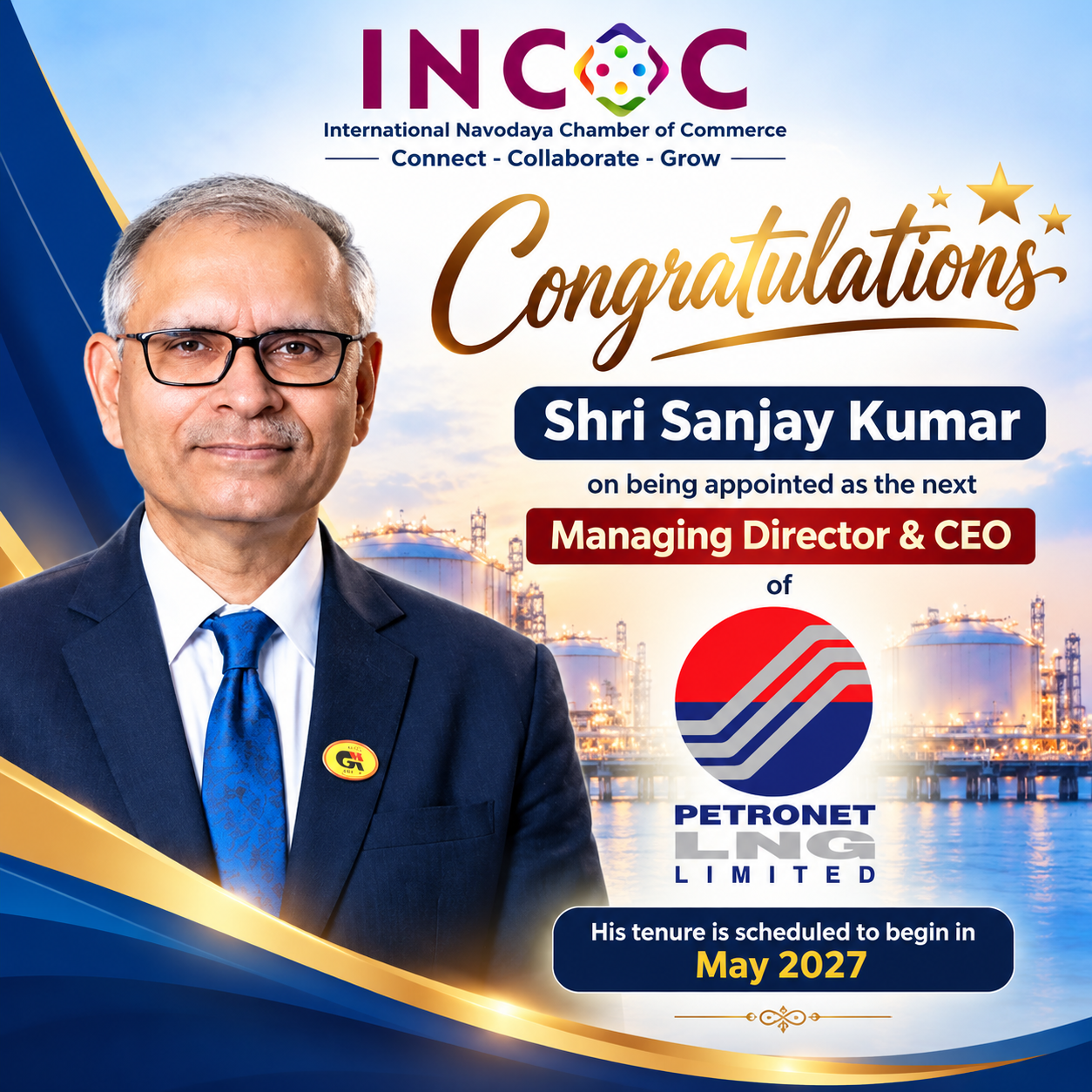
The leadership of India’s liquefied natural gas (LNG) sector is set for an important transition with Sanjay Kumar of GAIL (India) Limited) named as the next Managing Director and Chief Executive Officer of Petronet LNG Limited. His tenure is scheduled to begin in May 2027, marking an important leadership development for one of India’s key gas infrastructure companies.
The appointment assumes significance at a time when India is seeking to increase the role of natural gas in its energy mix, strengthen LNG infrastructure, diversify energy supplies and build a more flexible and resilient energy system.
For Petronet LNG, which operates critical LNG receiving and regasification infrastructure, the next phase will require a combination of commercial discipline, infrastructure expansion, customer diversification and strategic understanding of India’s rapidly changing energy requirements.
A Leadership Move with Sector-Wide Significance
Sanjay Kumar’s experience at GAIL brings significant relevance to the role.
GAIL is one of India’s largest natural gas companies, with operations spanning natural gas transmission, marketing, processing, petrochemicals and related energy infrastructure. Experience within such an organisation provides exposure to the broader gas value chain—from sourcing and transportation to marketing and downstream consumption.
That background could be particularly valuable at Petronet LNG, where the economics of LNG are closely connected with global gas prices, shipping costs, domestic pipeline infrastructure, industrial demand and long-term supply contracts.
The appointment therefore represents more than a routine executive transition. It could influence the strategic direction of one of India’s most important LNG infrastructure platforms.
Why Petronet LNG Matters
Petronet LNG has emerged as a significant player in India’s natural gas infrastructure.
The company’s Dahej LNG terminal in Gujarat is among the country’s most important LNG import and regasification facilities. Its operations connect imported LNG with India’s expanding natural gas market.
LNG provides India with an important source of energy diversification because domestic natural-gas production alone may not be sufficient to meet the country’s growing requirements.
Imported LNG can support sectors such as fertilisers, city gas distribution, refineries, petrochemicals, power generation and industrial manufacturing.
Consequently, the performance and expansion of LNG infrastructure have implications far beyond the company itself.
India’s Growing Natural Gas Ambitions
India has been working toward increasing the contribution of natural gas to its overall energy mix.
Natural gas is often viewed as a relatively lower-carbon fossil fuel compared with coal and oil, although its climate impact depends on methane emissions and the complete supply chain.
For India, gas can play an important transitional role while renewable energy, battery storage, green hydrogen and other clean-energy technologies continue to expand.
This creates a complex strategic environment for Petronet LNG.
The company must simultaneously serve today’s LNG demand while preparing for an energy market that could look very different over the next decade.
Challenges for the Incoming MD & CEO
One of the biggest challenges for Sanjay Kumar will be managing the volatility of international LNG markets.
Global LNG prices can change significantly due to geopolitical developments, weather conditions, supply disruptions, shipping constraints and demand from major markets such as China, Japan, South Korea and Europe.
For an Indian LNG importer, these global developments can directly influence the economics of imported gas.
The company’s leadership therefore needs to balance long-term contracts with spot-market opportunities while maintaining reliable supplies for Indian customers.
Another challenge is capacity utilisation.
LNG terminals represent capital-intensive infrastructure. Maintaining high utilisation levels is essential for achieving attractive returns on investment.
Expanding the customer base and ensuring connectivity with India’s pipeline network will therefore remain important priorities.
Opportunity in India’s Gas Economy
India’s expanding city gas distribution network presents another major opportunity.
Natural gas is increasingly being supplied to households, commercial establishments, compressed natural gas (CNG) networks and industrial customers.
As pipeline infrastructure expands across states and cities, LNG regasification terminals can become increasingly important gateways for imported gas.
Petronet LNG can potentially benefit from this structural growth.
The company can also explore opportunities associated with new LNG infrastructure, storage, logistics and emerging energy applications.
Balancing Growth with Financial Discipline
For any large infrastructure company, expansion must be supported by careful capital allocation.
Petronet LNG operates in an industry where new terminals, pipelines and associated infrastructure require substantial investment.
The incoming leadership will therefore need to balance expansion ambitions with financial returns.
For finance professionals, this makes the role particularly interesting.
A successful strategy will require close attention to project economics, return on capital employed, debt management, LNG procurement costs, contract structures, foreign-exchange exposure and long-term demand forecasts.
The MD & CEO will also need to work closely with the board, government stakeholders, joint-venture partners, regulators and customers.
Importance for India’s Energy Security
LNG has an important role in India’s energy-security strategy because imported gas can diversify the country’s energy supply.
However, dependence on international markets also creates exposure to global disruptions.
A strong LNG infrastructure network can provide India with greater flexibility in sourcing gas from different geographical markets.
Petronet LNG’s position in this ecosystem makes its leadership strategically significant.
The company must therefore focus not only on commercial growth but also on reliability, supply security and operational resilience.
Implications for PSU Leadership
The appointment of Sanjay Kumar also highlights the importance of professional leadership within India’s public-sector ecosystem.
Modern CPSEs operate in highly competitive markets and increasingly require executives with experience in commercial strategy, finance, technology, international markets and stakeholder management.
Leadership positions such as MD & CEO therefore demand much more than operational knowledge.
Executives must understand changing markets while balancing commercial objectives with national economic priorities.
A Career Perspective for Finance Professionals
For CA, CMA, CS and other finance professionals, senior appointments in companies such as Petronet LNG demonstrate the wide range of career opportunities available within India’s public-sector ecosystem.
Finance leaders in energy PSUs are involved in capital budgeting, project finance, treasury management, risk management, taxation, investor relations, regulatory reporting and strategic decision-making.
The evolution of India’s energy sector is likely to create continued demand for professionals who understand both finance and infrastructure economics.
The Worldonomics View
Sanjay Kumar’s appointment as the next MD & CEO of Petronet LNG comes at an important moment for India’s energy sector.
The country needs reliable energy supplies, competitive gas infrastructure and financially sustainable energy companies while simultaneously accelerating its transition toward cleaner sources of energy.
The next phase for Petronet LNG will therefore require a careful balance between growth and financial discipline, energy security and market efficiency, infrastructure investment and shareholder value.
Sanjay Kumar’s experience at GAIL could provide a strong foundation for navigating this environment.
The real measure of his leadership, however, will ultimately be determined by how effectively Petronet LNG expands its role in India’s evolving gas economy while creating sustainable long-term value.