Introduction
Environmental, Social and Governance (ESG) is often associated with large listed companies, multinational corporations and institutional investors.
But ESG is becoming increasingly relevant for Micro, Small and Medium Enterprises (MSMEs) as well.
An MSME may not be legally required to publish a comprehensive sustainability report. However, it can still face ESG expectations from:
- Large corporate customers
- Export buyers
- Banks and financial institutions
- Investors
- Government procurement
- Supply-chain partners
- Employees
- Consumers
- Business partners
This means ESG is gradually moving from a large-company reporting issue to a business competitiveness issue for MSMEs.
In India, the development is particularly important because MSMEs form a major part of manufacturing, services, employment, exports and supply chains.
SEBI’s current framework provides that ESG disclosures for the value chain of the top 250 listed entities are voluntary from FY 2025-26, and associated assurance or assessment is also voluntary. However, large companies can still seek ESG information from their suppliers for their own business, risk-management and reporting purposes.
For MSMEs, the message is therefore clear:
You may not have to publish a large ESG report today, but you should be prepared to provide credible ESG information when the market asks for it.
1. What Is ESG for an MSME?
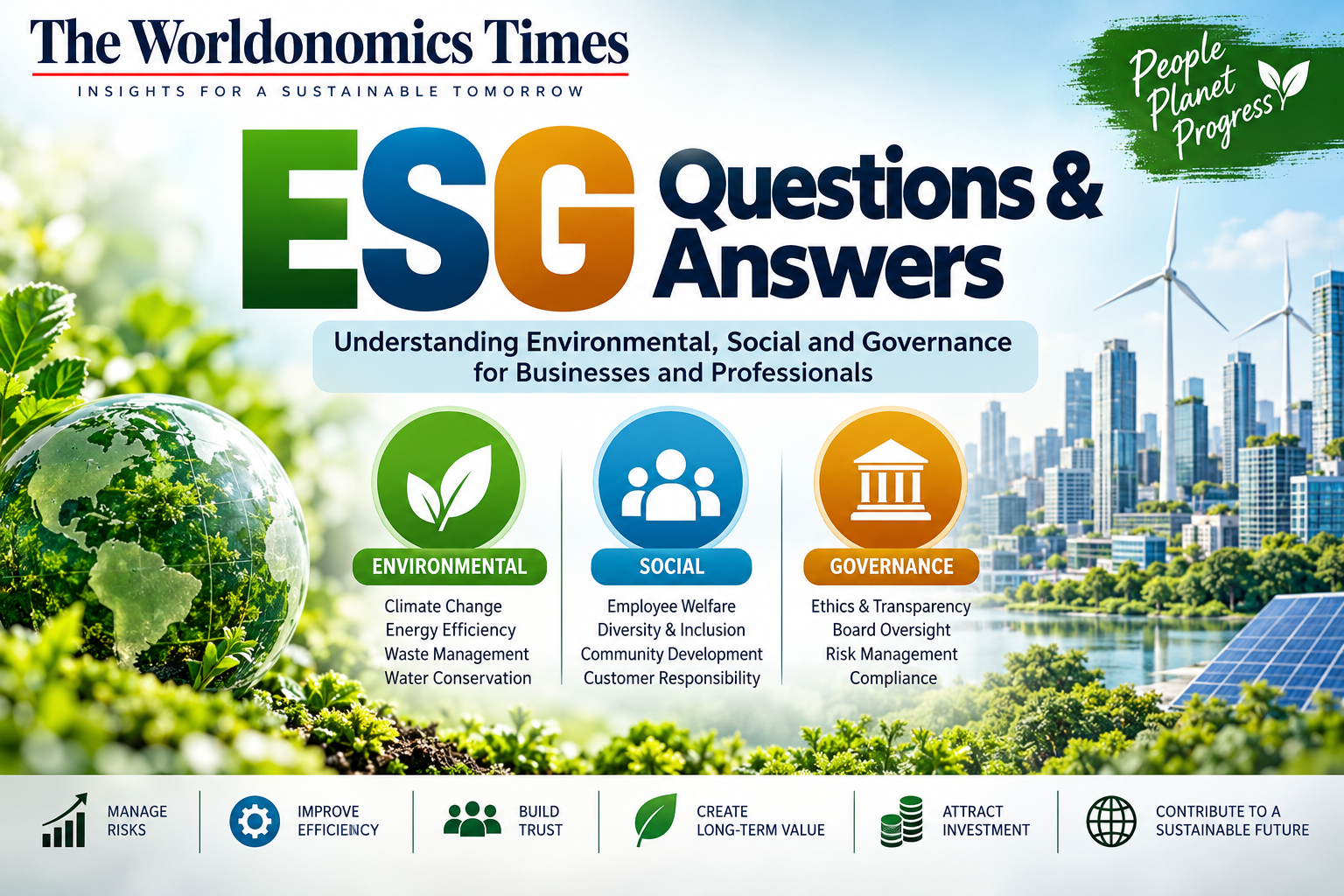
ESG for an MSME means managing and measuring three broad areas:
Environmental
How does the business affect the environment?
Examples:
- Energy consumption
- Carbon emissions
- Water use
- Waste
- Pollution
- Renewable energy
- Resource efficiency
Social
How does the business treat people?
Examples:
- Employee safety
- Working conditions
- Labour practices
- Training
- Diversity
- Human rights
- Customer welfare
- Community impact
Governance
How responsibly is the business managed?
Examples:
- Ethics
- Compliance
- Financial controls
- Anti-bribery
- Data protection
- Whistleblower mechanisms
- Board/management oversight
- Supplier policies
ESG does not mean that every MSME needs a sophisticated sustainability department.
It means the business should understand and manage its material environmental, social and governance risks.
2. Why Should MSMEs Care About ESG?
There are five major reasons.
1. Customers
Large companies increasingly ask suppliers for sustainability information.
2. Finance
Banks and financial institutions may increasingly consider environmental and climate-related risks in lending and risk management.
3. Exports
International customers can require information about emissions, labour practices, human rights and environmental performance.
4. Cost Reduction
Energy efficiency, waste reduction and resource optimisation can reduce operating costs.
5. Competitive Advantage
An MSME with reliable ESG practices can differentiate itself from competitors.
Therefore, ESG is not only about compliance.
It can become a business-growth strategy.
3. Is ESG Reporting Mandatory for All MSMEs in India?
No.
There is no general requirement that every Indian MSME must prepare and publish a comprehensive ESG report.
SEBI’s BRSR framework primarily applies to listed entities within the applicable regulatory scope.
The value-chain ESG provisions are also directed at listed entities and their value chains rather than imposing a universal ESG reporting obligation on every MSME. SEBI’s current FAQ confirms that value-chain ESG disclosures for the top 250 listed entities are voluntary from FY 2025-26.
However, an MSME may still face indirect ESG requirements from customers, lenders, investors or supply-chain partners.
4. What Is Indirect ESG Reporting?
Indirect ESG reporting occurs when an MSME provides sustainability information to another organisation even though the MSME itself is not directly required by law to publish an ESG report.
For example:
An Indian MSME supplies components to a large listed company.
The listed company may need information about its value chain.
It may therefore ask the MSME for:
- Electricity consumption
- Fuel consumption
- GHG emissions
- Waste information
- Employee data
- Safety information
- Environmental certifications
The MSME may not publish a sustainability report, but it still needs to provide ESG data.
5. Why Is the Supply Chain So Important?
A large company’s ESG performance can be significantly influenced by its suppliers.
Consider an automobile manufacturer.
Its ESG risks may involve:
- Steel suppliers
- Plastic suppliers
- Battery manufacturers
- Logistics companies
- Packaging suppliers
- Component manufacturers
Therefore, the large company needs information from its suppliers.
This creates a cascading effect:
Large company → Tier 1 supplier → Tier 2 supplier → Tier 3 supplier
ESG expectations can therefore move throughout the supply chain.
6. Does This Mean Every MSME Needs a CSRD or BRSR Report?
No.
An MSME should not automatically attempt to prepare the same report as a large listed company.
Instead, it should adopt a proportionate ESG approach.
The objective should be to collect reliable information that is relevant to:
- Its business
- Its customers
- Its lenders
- Its investors
- Its industry
- Its regulatory environment
A small manufacturing company may need more environmental data than a small professional-services firm.
7. What Are the Most Important Environmental KPIs for MSMEs?
A basic MSME ESG dashboard can begin with:
Energy
- Electricity consumed
- Fuel consumed
- Renewable energy percentage
Emissions
- Scope 1 emissions
- Scope 2 emissions
- Material Scope 3 categories where practical
Water
- Water consumption
- Water recycling
- Wastewater treatment
Waste
- Total waste
- Hazardous waste
- Recycled waste
- Waste disposal method
Resources
- Raw-material consumption
- Recycled materials
- Resource efficiency
An MSME does not need hundreds of indicators to begin.
Start with the data that matters most.
8. What Are the Most Important Social KPIs?
MSMEs can begin by tracking:
- Number of employees
- Employee turnover
- Training hours
- Workplace accidents
- Lost-time injuries
- Employee benefits
- Gender diversity
- Worker grievances
- Health and safety training
- Labour-law compliance
For manufacturing businesses, occupational health and safety should be a particularly important priority.
9. What Are the Most Important Governance KPIs?
Governance does not require a large corporate board.
An MSME can begin with:
- Statutory compliance
- Tax compliance
- Financial controls
- Anti-bribery policy
- Conflict-of-interest policy
- Supplier code of conduct
- Data-security procedures
- Customer complaint system
- Employee grievance mechanism
- Whistleblower or ethics reporting process
Strong governance can reduce fraud, errors, disputes and reputational risks.
10. How Can ESG Reduce Costs for MSMEs?
ESG and cost management can work together.
Energy efficiency
Lower electricity consumption can reduce the power bill.
Waste reduction
Reducing material waste can lower raw-material costs.
Water efficiency
Water conservation can reduce operating expenses.
Preventive maintenance
Efficient equipment can reduce downtime and energy consumption.
Employee safety
Better safety can reduce accidents, compensation costs and production disruption.
Therefore:
ESG is not necessarily an additional cost.
In many situations, it can identify opportunities for cost reduction and productivity improvement.
11. What Is Green Investment for MSMEs?
Green investment means allocating capital toward technologies, processes or assets that improve environmental performance.
Examples include:
- Energy-efficient machinery
- Solar power
- Waste-treatment systems
- Water-saving equipment
- Electric vehicles
- Efficient motors
- Energy-management systems
- Recycling equipment
- Cleaner production technology
India’s MSME ecosystem includes the MSE GIFT initiative under the RAMP programme, which supports MSEs in accessing finance for green technologies and practices. The scheme includes areas such as resource efficiency, waste management, water management, green buildings, pollution control and clean transportation.
12. What Is MSE GIFT?
MSE GIFT stands for MSE Green Investment and Financing for Transformation.
It is designed to help micro and small enterprises adopt green technologies and practices.
The official RAMP portal states that the scheme includes an interest-subvention component and risk-sharing support for eligible MSE financing, with focus areas including resource efficiency, waste management, water efficiency, pollution control and clean transportation.
This illustrates an important point:
Government support for MSMEs is increasingly connected with sustainability and green transformation.
13. What Is Circular Economy for MSMEs?
A circular economy aims to reduce the traditional linear model:
Take → Make → Use → Dispose
and move toward:
Reduce → Reuse → Repair → Recover → Recycle
MSMEs can apply circular-economy principles through:
- Scrap recovery
- Product repair
- Reuse of packaging
- Recycling
- Industrial by-product utilisation
- Refurbishment
- Resource-efficient production
Circularity can reduce both environmental impact and material costs.
14. How Can MSMEs Measure Their Carbon Footprint?
A simple starting formula is:
Emissions = Activity Data × Emission Factor
Examples of activity data include:
- Litres of diesel
- Units of electricity
- Kilograms of fuel
- Distance travelled
The MSME should first identify major emission sources and establish a reporting period.
It can then gradually expand from:
Scope 1 → Scope 2 → Material Scope 3
The goal should be reliable measurement rather than unnecessarily complicated calculations.
15. What Is Scope 1 for an MSME?
Scope 1 represents direct emissions from sources owned or controlled by the business.
Examples:
- Diesel generator
- Company vehicles
- Boilers
- Furnaces
- Manufacturing processes
A small factory can begin by maintaining accurate fuel-consumption records.
16. What Is Scope 2 for an MSME?
Scope 2 relates to emissions associated with purchased electricity or other purchased energy.
The easiest starting point is therefore:
Monthly electricity consumption
The MSME can maintain:
- Electricity units consumed
- Electricity cost
- Renewable electricity
- Production output
This information can then support both ESG reporting and cost analysis.
17. What Is Scope 3 for an MSME?
Scope 3 includes indirect emissions across the value chain.
Examples:
- Purchased raw materials
- Transportation
- Business travel
- Employee commuting
- Waste
- Use of products
- Supplier activities
Scope 3 can be challenging for smaller businesses because supplier data may not be available.
Therefore, MSMEs should initially focus on material Scope 3 categories.
18. Why Are ESG Data and Documentation Important?
An ESG claim without evidence can create credibility problems.
For example:
Claim: “We reduced energy consumption by 25%.”
The MSME should be able to demonstrate:
- Previous-period consumption
- Current-period consumption
- Reporting boundaries
- Production volumes
- Calculation methodology
- Supporting bills or meter records
This is why ESG should be treated as a data-management exercise, not only a marketing exercise.
19. How Can MSMEs Avoid Greenwashing?
MSMEs should avoid unsupported claims such as:
- 100% green
- Completely sustainable
- Zero carbon
- Environmentally friendly
- Fully eco-friendly
unless they can clearly substantiate the claim.
Instead, use specific statements.
For example:
“The company installed a 100 kW rooftop solar system in FY 2026-27.”
This is more meaningful than simply saying:
“We are a green company.”
Specific information is generally more credible.
20. Can ESG Help MSMEs Win Large Corporate Contracts?
Yes.
A large buyer may evaluate suppliers based on:
- Quality
- Price
- Delivery
- Compliance
- ESG performance
- Environmental standards
- Labour practices
- Governance
An MSME that can provide organised ESG information may therefore be better positioned in competitive procurement.
This is especially relevant for suppliers serving:
- Multinational companies
- Large Indian corporates
- Exporters
- Listed companies
- Public-sector enterprises
21. ESG and Government Procurement
Government procurement can increasingly incorporate quality, sustainability, environmental and compliance considerations depending on the tender.
MSMEs should therefore maintain:
- Certifications
- Compliance records
- Quality systems
- Environmental records
- Safety documentation
- Supplier policies
The Ministry of MSME’s schemes already include initiatives aimed at improving market access, tender participation and competitiveness of MSEs.
ESG readiness can complement these broader competitiveness initiatives.
22. How Can ESG Improve Access to Finance?
Financial institutions increasingly need information about business risks.
An MSME that can demonstrate:
- Stable governance
- Strong compliance
- Efficient resource use
- Lower operational risks
- Clear environmental practices
- Good employee policies
may present a stronger overall risk profile.
However, ESG performance does not automatically guarantee cheaper finance.
The benefit depends on the lender, sector, project, risk profile and applicable financing programme.
23. What ESG Policies Should an MSME Have?
A small business can start with a basic policy framework.
Environmental
- Environmental policy
- Energy-efficiency policy
- Waste-management policy
Social
- Health and safety policy
- Equal-opportunity policy
- Employee grievance policy
- Human-rights principles
Governance
- Code of conduct
- Anti-bribery policy
- Conflict-of-interest policy
- Whistleblower mechanism
- Data-protection policy
These policies do not need to be hundreds of pages.
They should be clear, practical and implemented.
24. What Is an MSME ESG Dashboard?
An MSME can create a simple monthly or quarterly dashboard.
| Area | KPI |
|---|---|
| Energy | Electricity consumption |
| Energy | Renewable energy % |
| Emissions | Scope 1 |
| Emissions | Scope 2 |
| Water | Water consumption |
| Waste | Total waste |
| Employees | Headcount |
| Safety | Number of incidents |
| Training | Training hours |
| Governance | Compliance status |
| Suppliers | ESG assessments |
| Customers | Complaints resolved |
The dashboard can be maintained in a simple spreadsheet initially.
25. What Should a 90-Day MSME ESG Plan Look Like?
Days 1–30: Understand
- Identify ESG risks
- Identify customer requirements
- Identify major environmental impacts
- Review compliance
- Assign ESG responsibility
Days 31–60: Measure
- Collect electricity data
- Collect fuel data
- Measure major waste streams
- Record water use
- Establish workforce KPIs
- Review supplier information
Days 61–90: Improve
- Set ESG targets
- Introduce basic policies
- Identify energy-saving opportunities
- Improve waste management
- Establish governance controls
- Prepare an ESG dashboard
At the end of 90 days, the MSME should have a basic ESG information system.
26. What ESG Targets Can an MSME Set?
Targets should be realistic and measurable.
Examples:
Environmental
- Reduce electricity consumption per unit of production by 10%
- Increase renewable electricity to 20%
- Reduce waste sent to landfill by 15%
- Reduce water consumption by 10%
Social
- Zero fatal workplace accidents
- 100% safety training
- Increase employee training hours
- Improve grievance resolution
Governance
- 100% statutory compliance
- Annual code-of-conduct training
- Supplier compliance assessment
- Zero tolerance for bribery
Targets should have:
Baseline + Target + Deadline + Responsible Person
27. Should Every MSME Hire an ESG Consultant?
Not necessarily.
A small MSME can begin internally.
It may need external support for:
- Carbon accounting
- ESG assurance
- Complex customer questionnaires
- Certifications
- Environmental assessments
- Sustainability strategy
But basic ESG management can often begin with existing finance, HR, operations and compliance teams.
The important requirement is clear responsibility.
28. What Is the Role of the CFO or Finance Head?
The finance function can play a central role in MSME ESG.
Finance can maintain:
- Energy costs
- Fuel expenses
- Environmental investments
- ESG KPIs
- Cost savings
- Carbon-related costs
- Supplier information
- Sustainability budgets
This creates a connection between:
ESG → Cost → Profitability → Cash Flow → Investment
That makes ESG more useful for management decision-making.
29. What Is the Role of CA Professionals?
Chartered Accountants can help MSMEs with:
- ESG data systems
- Internal controls
- Compliance
- Risk management
- ESG reporting
- Assurance readiness
- Sustainability-related financial analysis
- Governance
CA professionals can help ensure that ESG information has the same discipline as important financial information.
30. What Is the Role of CMA Professionals?
Cost and Management Accountants have a particularly strong role in helping MSMEs understand the economics of ESG.
They can support:
- Environmental costing
- Energy-cost analysis
- Waste costing
- Carbon costing
- Product profitability
- Resource efficiency
- Budgeting
- Cost reduction
- ESG KPIs
- Investment appraisal
For an MSME, the question should not only be:
“How sustainable are we?”
It should also be:
“How can sustainability improve our cost structure and competitiveness?”
31. ESG and Product Pricing
Environmental costs can eventually influence product economics.
For example, a manufacturer may discover that a particular product consumes:
- More electricity
- More raw material
- More water
- More packaging
- More transportation
Management can use ESG information alongside cost accounting to determine the true economic impact.
This can support:
- Better pricing
- Product redesign
- Supplier negotiation
- Process improvement
- Investment decisions
32. ESG and Export Competitiveness
For export-oriented MSMEs, ESG readiness can become increasingly important.
International buyers may ask about:
- Carbon footprint
- Energy sources
- Labour practices
- Human rights
- Environmental compliance
- Waste
- Packaging
- Supply-chain traceability
An exporter that already maintains this information can respond faster.
This can become a competitive advantage.
33. What Is the Difference Between ESG and CSR for MSMEs?
CSR generally focuses on an organisation’s social responsibility and, in India’s legal context, can have specific statutory requirements for companies meeting the applicable Companies Act criteria.
ESG is broader.
It covers:
Environmental + Social + Governance
For most MSMEs, ESG should therefore be understood as a management and risk framework, not simply a charitable activity.
34. Can ESG Help an MSME Attract Investors?
Potentially.
Investors may consider:
- Governance
- Growth sustainability
- Environmental risks
- Social practices
- Regulatory exposure
- Resource efficiency
- Management quality
A business with transparent ESG information may be easier for an investor to evaluate.
However, ESG is only one part of investment analysis.
Investors will also consider:
- Revenue
- Profitability
- Cash flow
- Valuation
- Market opportunity
- Management
- Competitive advantage
35. What Are the Biggest ESG Mistakes MSMEs Make?
Mistake 1: Thinking ESG Is Only for Listed Companies
Supply-chain expectations can affect smaller businesses.
Mistake 2: Treating ESG as Marketing
Claims without data can damage credibility.
Mistake 3: Collecting Data Without Ownership
Someone must be responsible for each KPI.
Mistake 4: Ignoring Energy Costs
Energy efficiency can be one of the easiest ESG opportunities.
Mistake 5: Ignoring Employees
Safety and workforce practices directly affect business continuity.
Mistake 6: Ignoring Governance
Poor controls can create significant financial and reputational risks.
Mistake 7: Waiting for Customers to Ask
Preparation is easier before a major ESG questionnaire arrives.
36. What Is the Minimum ESG System an MSME Should Have?
A practical minimum system can contain:
5 Environmental Metrics
- Electricity
- Fuel
- Scope 1 emissions
- Scope 2 emissions
- Waste
5 Social Metrics
- Employees
- Safety incidents
- Training
- Turnover
- Grievances
5 Governance Measures
- Compliance tracker
- Code of conduct
- Anti-bribery policy
- Financial controls
- Complaint/grievance mechanism
This provides a strong starting point without creating excessive administrative burden.
37. ESG Readiness Checklist for Indian MSMEs
Before the end of the financial year, an MSME should ideally be able to answer:
- How much electricity did we consume?
- How much fuel did we use?
- What are our major emission sources?
- How much waste did we generate?
- How much water did we use?
- How many employees do we have?
- How many workplace accidents occurred?
- How much employee training was provided?
- Do we have basic governance policies?
- Are our statutory filings up to date?
- Do our major customers require ESG information?
- Can we provide supporting documents for our ESG claims?
If these questions can be answered reliably, the business has already made significant progress toward ESG readiness.
38. ESG as a Competitive Advantage for MSMEs
The strongest reason for MSMEs to adopt ESG is not simply regulation.
It is competitiveness.
An ESG-ready MSME can potentially achieve:
- Lower energy costs
- Lower waste
- Better operational efficiency
- Stronger customer relationships
- Better supply-chain positioning
- Improved risk management
- Better preparedness for international markets
- Stronger governance
ESG can therefore become a component of business strategy.
Conclusion
ESG is no longer exclusively a large-company issue.
For MSMEs, the transition is happening through customers, supply chains, finance, exports, procurement and market expectations.
India’s policy ecosystem is also increasingly supporting green transformation in the MSME sector. The Ministry of MSME’s RAMP programme includes initiatives such as MSE GIFT for green investment and MSE SPICE for circular-economy transformation.
At the same time, SEBI’s value-chain framework demonstrates how sustainability information can increasingly move from listed companies into their business ecosystems.
The right approach for an MSME is not to copy the sustainability report of a multinational corporation.
It is to build a simple, measurable and practical ESG system.
Start with:
Measure → Manage → Improve → Document → Communicate
For MSMEs, ESG should ultimately answer one important business question:
How can we reduce risk, improve efficiency, satisfy customers and build a more resilient business while creating measurable environmental, social and governance value?
The companies that begin this journey early will be better prepared for the ESG expectations of tomorrow.
The Worldonomics Times – ESG Knowledge Series