New Delhi | The Worldonomics Times
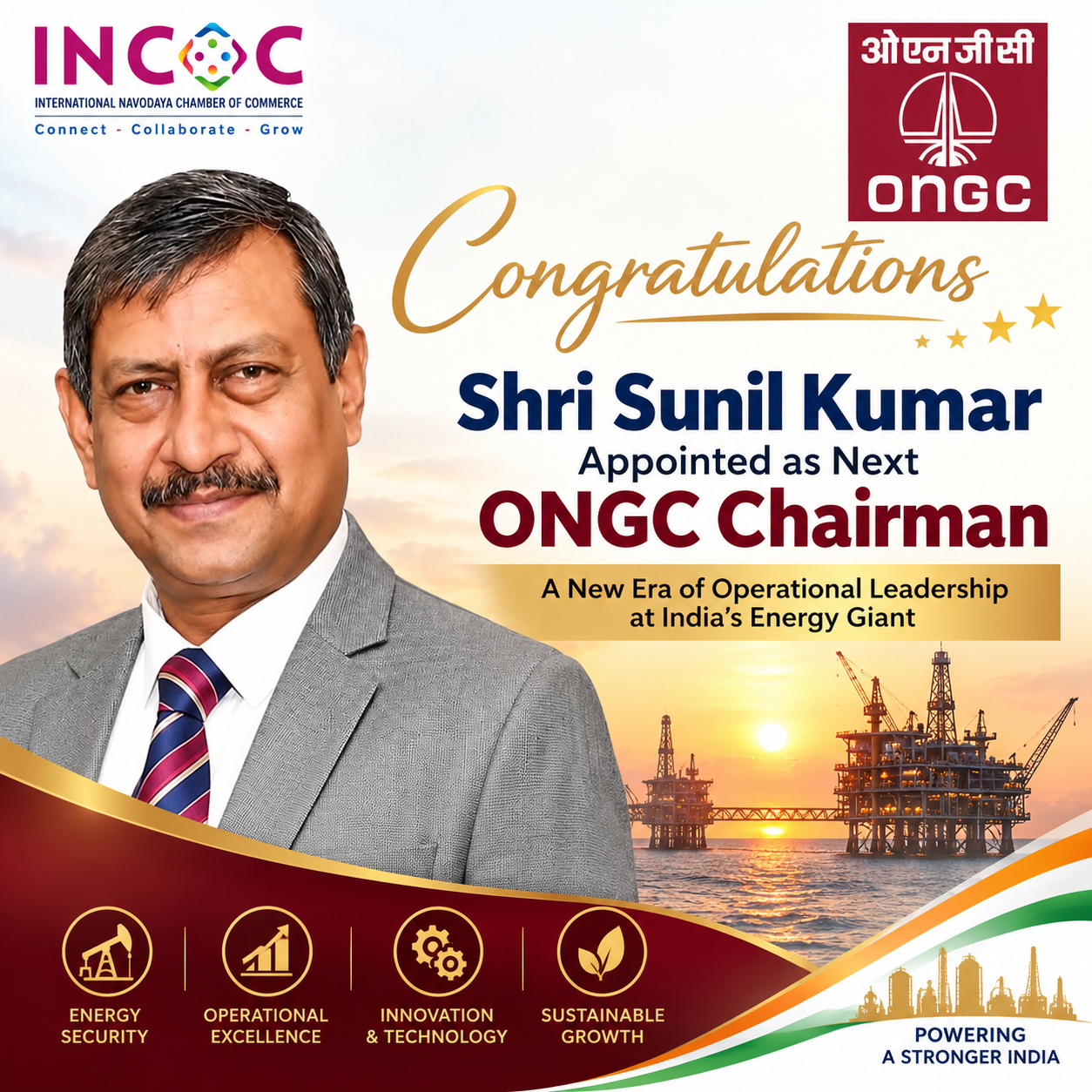
In a significant development for India’s energy sector, the Government of India has appointed Sunil Kumar, a senior Executive Director of Oil and Natural Gas Corporation Limited (ONGC), as the company’s next Chairman. His appointment marks a notable leadership transition at India’s largest oil and gas exploration and production company and represents a departure from the conventional route to the top position.
Sunil Kumar will take charge as Chairman of ONGC from December 7, 2026, succeeding Arun Kumar Singh, whose extended tenure concludes on December 6, 2026. His appointment has been approved by the Appointments Committee of the Cabinet (ACC), following a multi-stage selection process involving a search-cum-selection committee.
A Landmark Appointment for ONGC
The appointment of Sunil Kumar is historic for ONGC because he becomes the first executive in the company’s history to be elevated directly from the rank of Executive Director to Chairman.
Traditionally, the leadership pipeline at major public sector enterprises has often involved progression through board-level positions such as functional directors before reaching the Chairman and Managing Director position. Kumar’s elevation therefore signals the growing importance of operational expertise and direct industry experience in the leadership of strategic public sector companies.
His appointment comes at a crucial time for India’s energy sector, when the government is placing strong emphasis on increasing domestic oil and gas production, strengthening energy security and reducing dependence on imported hydrocarbons.
More Than Three Decades at ONGC
Sunil Kumar brings more than three decades of experience with ONGC. He joined the organisation in 1991 as an Assistant Executive Engineer (Production) in the Sivasagar-Nazira region of Assam.
Over the course of his career, he has worked across several important operational and technical functions, including production, well services and offshore operations. His professional assignments have taken him to locations including Sivasagar-Nazira, Mumbai, Delhi, Hazira and Kakinada.
His career has also included involvement in significant exploration and production projects, including deepwater and offshore developments. He has been associated with projects such as the Vasistha and S1 deepwater project, subsea development activities and the KG-DWN-98/2 Cluster II project in the Krishna-Godavari basin.
This extensive operational background could prove valuable as ONGC seeks to improve production from mature fields while simultaneously developing new resources and adopting advanced technologies.
Current Role at Mehsana Asset
Kumar currently serves as Executive Director and Asset Manager of ONGC’s Mehsana Asset, a position he assumed in January 2025. He has also served as an ONGC nominee director on the board of ONGC TERI Biotech Ltd.
His professional education combines technical and management expertise. He is a petroleum engineering graduate of the Indian School of Mines, Dhanbad, and also holds a postgraduate qualification in business management with specialisation in marketing and finance.
The combination of engineering, operational and management experience provides him with exposure to both the technical and commercial dimensions of the oil and gas business.
A Selection Process Involving Senior Energy Executives
The appointment followed an extensive search for ONGC’s next chairman. At least 19 candidates were initially considered for the position, including senior executives from ONGC and other major public sector oil and gas companies.
The candidates included senior ONGC executives responsible for exploration, production, technology, finance and field services, as well as leaders from other state-owned energy companies.
Following the first round of interviews, the field was narrowed to five candidates. Sunil Kumar ultimately emerged as the selected candidate after the subsequent selection process. The search-cum-selection committee was chaired by Public Enterprises Selection Board Chairperson Mallika Srinivasan, with Petroleum Secretary Neeraj Mittal and former Indian Oil Chairman B. Ashok as members.
Why the Appointment Matters
ONGC occupies a strategically important position in India’s economy. As the country’s largest producer of crude oil and natural gas, its performance directly influences India’s energy security, import dependence and broader economic stability.
India remains significantly dependent on imported crude oil. Consequently, increasing domestic production, improving recovery from existing fields and accelerating exploration are important components of the country’s long-term energy strategy.
Sunil Kumar’s operational background could be particularly relevant in this environment.
As Chairman, he will be expected to oversee ONGC’s exploration and production activities while balancing capital expenditure, technology adoption, project execution and financial performance.
The company will also need to manage the transition towards a broader energy portfolio. Like other global energy companies, ONGC is examining opportunities beyond conventional hydrocarbons, including renewable energy and other emerging energy businesses.
Focus on Domestic Production
One of the biggest challenges before the incoming leadership will be improving domestic hydrocarbon production.
India’s economic growth is closely connected with reliable and affordable energy supplies. Higher domestic production can help reduce the country’s exposure to international crude oil price volatility and geopolitical disruptions.
For ONGC, this means maximising output from mature fields, improving recovery rates and bringing new discoveries and development projects into production efficiently.
Kumar’s experience in production and field operations gives him a strong understanding of these challenges.
His leadership will also be watched for how effectively ONGC balances exploration risk with commercial returns and how quickly major projects can move from development to production.
Technology and Capital Allocation
The oil and gas industry is becoming increasingly technology-intensive. Advanced seismic exploration, artificial intelligence, digital field management, enhanced oil recovery techniques and offshore technologies are changing the economics of hydrocarbon production.
ONGC will require significant capital investment to modernise its assets and develop new resources.
As Chairman, Kumar will therefore have to make critical decisions regarding capital allocation, project prioritisation and technology adoption. The challenge will be to ensure that investments deliver sustainable returns while supporting India’s long-term energy requirements.
Leadership Transition at a Strategic PSU
The transition from Arun Kumar Singh to Sunil Kumar comes at an important stage for ONGC. Singh has led the company since December 2022, and his tenure was extended by one year through December 6, 2026.
The incoming leadership will inherit both opportunities and challenges.
India’s energy demand continues to expand, while the global energy system is undergoing structural changes. ONGC must simultaneously maintain its core oil and gas business, improve operational efficiency and prepare for the energy systems of the future.
This makes the Chairman’s role broader than conventional exploration and production management.
A Message for India’s PSU Leadership Pipeline
Sunil Kumar’s elevation also carries a broader message for India’s public sector leadership ecosystem.
His journey from an engineering position in 1991 to the chairmanship of one of India’s largest Maharatna enterprises demonstrates the potential of long-term institutional experience and operational expertise.
For professionals aspiring to senior PSU positions, the appointment highlights the importance of developing not only technical expertise but also leadership, financial understanding, project management and strategic decision-making capabilities.
The rise of executives with extensive operational backgrounds could also influence future leadership-selection practices across India’s public sector.
The Road Ahead
As Sunil Kumar prepares to take charge in December, expectations will be high. ONGC will need to strengthen domestic production, improve the performance of existing assets, accelerate major projects and maintain financial discipline while exploring opportunities in new energy.
His direct operational experience could give the company a leadership perspective closely connected with field realities.
For India, the performance of ONGC has implications far beyond corporate results. The company’s ability to discover, produce and manage domestic energy resources is closely linked to national energy security.