India’s Micro, Small and Medium Enterprises (MSMEs) are an important engine of economic growth, employment generation, manufacturing and exports. As India moves towards a sustainable and environmentally responsible economy, MSMEs must increasingly adopt energy-efficient technologies, renewable energy solutions and environmentally friendly manufacturing practices.
However, the transition towards green business operations often requires substantial investment. For smaller enterprises, the cost of modern machinery, pollution-control equipment, renewable energy systems and advanced technologies can become a financial challenge.
To address this issue, the Government of India introduced the Micro and Small Enterprises Green Investment and Financing for Transformation Scheme (MSE-GIFT) under the Raising and Accelerating MSME Performance (RAMP) Programme.
The scheme aims to provide affordable institutional finance and financial support to eligible micro and small enterprises adopting clean technologies and sustainable business practices.
1. Understanding the MSE GIFT Scheme
MSE-GIFT is a Government of India initiative designed to encourage green investment among micro and small enterprises.
Implemented through the Ministry of Micro, Small and Medium Enterprises, with the Small Industries Development Bank of India (SIDBI) as the implementing agency, the scheme seeks to reduce the financial burden associated with adopting environmentally sustainable technologies.
Its broader objective is to make green transformation financially accessible while improving the productivity, competitiveness and environmental performance of Indian enterprises.
The scheme has an overall outlay of ₹478 crore for a four-year period, with financial support structured around interest subvention, risk sharing and awareness initiatives.
2. Two Major Financial Benefits
The MSE-GIFT Scheme operates through two important financial components.
A. Interest Subvention Facility
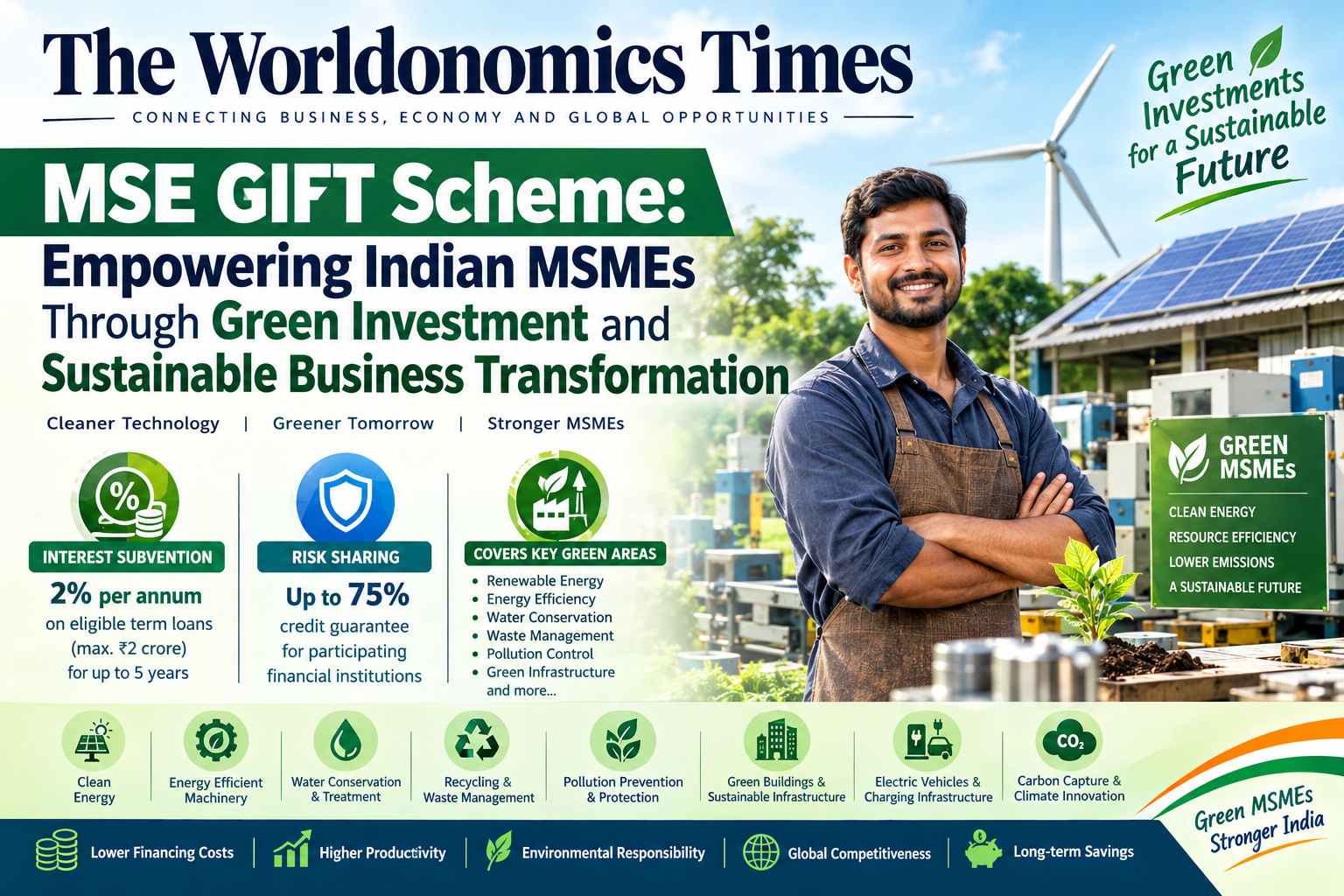
One of the major benefits is an interest subvention of 2% per annum on eligible term loans, subject to a maximum loan limit of ₹2 crore.
The interest support is available for a maximum period of five years, subject to scheme guidelines.
This facility can help MSMEs reduce borrowing costs when investing in energy-efficient machinery, renewable energy infrastructure, water conservation systems and other approved green technologies.
For example, a small manufacturing enterprise planning to install energy-efficient production equipment may obtain an eligible term loan through a participating financial institution and receive the prescribed interest support.
B. Risk Sharing Facility
The second component provides credit guarantee support to participating financial institutions.
Under this arrangement, eligible loans can receive up to 75% guarantee coverage, subject to applicable scheme conditions.
The objective is to encourage financial institutions to extend affordable credit to MSMEs undertaking green investment projects while reducing part of the lending risk.
Together, these two components aim to improve access to institutional finance and encourage more enterprises to invest in sustainable operations.
3. Which Industries Can Benefit?
The scheme covers several areas associated with environmental protection, resource efficiency and clean technology.
Important areas include:
- Renewable and clean energy solutions.
- Energy-efficient industrial machinery.
- Water conservation and wastewater treatment.
- Waste management and recycling.
- Pollution prevention and environmental protection.
- Green buildings and sustainable infrastructure.
- Electric and hybrid transportation.
- Electric vehicle charging infrastructure.
- Compressed biogas and bioethanol projects.
- E-waste management and waste-to-energy solutions.
- Carbon capture and other approved climate-related innovations.
These areas create opportunities for enterprises in manufacturing, engineering, food processing, automotive components, chemicals, textiles and other eligible industries.
4. Eligibility and Application Process
Micro and small enterprises registered on the Udyam Registration Portal are eligible to seek support under the scheme, subject to applicable guidelines and project requirements.
The financing facility is delivered through participating financial institutions, including eligible commercial banks, SIDBI, small finance banks and other approved lending institutions.
The general application process involves:
- Obtaining valid Udyam Registration.
- Identifying an eligible green investment project.
- Preparing a project report with estimated investment and expected benefits.
- Approaching a participating financial institution.
- Completing the lender’s credit assessment and documentation.
- Applying for eligible interest subvention or risk-sharing benefits through the prescribed mechanism.
Final approval depends on the applicable scheme guidelines, lender assessment and availability of support.
5. Benefits for Indian MSMEs
The MSE-GIFT Scheme offers opportunities beyond financial assistance.
Lower financing costs: Interest subvention can reduce the effective borrowing burden for eligible investments.
Improved productivity: Modern machinery and energy-efficient systems can improve production performance.
Environmental responsibility: Better waste management, water conservation and pollution control can reduce environmental impact.
Global competitiveness: International buyers increasingly consider environmental performance and sustainable supply chains when selecting suppliers.
Long-term cost savings: Efficient use of electricity, fuel, water and raw materials can help businesses manage operating expenses.
6. Contribution to India’s Green Economy
India has committed to reducing the emissions intensity of its GDP by 45% by 2030 from 2005 levels and achieving net-zero emissions by 2070.
MSMEs have an important role in supporting these national objectives.
The adoption of clean technologies across thousands of small manufacturing and service enterprises can contribute to energy conservation, reduced industrial emissions, resource efficiency and sustainable economic development.
The MSE-GIFT Scheme can also encourage innovation by creating financial opportunities for enterprises developing green products, services and technologies.
7. The Road Ahead
The success of MSE-GIFT will depend on awareness, accessible institutional finance, transparent implementation and effective cooperation between government departments, banks, financial institutions and industry associations.
Business chambers and MSME organisations can support the initiative by conducting awareness programmes, facilitating project preparation and connecting entrepreneurs with participating financial institutions.
Entrepreneurs should also assess the commercial viability of proposed green investments and understand the scheme’s eligibility and financing conditions before taking loans.
Conclusion
The MSE-GIFT Scheme represents an important step towards connecting MSME development with environmental sustainability.
By offering interest subvention and credit guarantee support for eligible green investments, the Government of India is encouraging smaller enterprises to adopt modern technologies and environmentally responsible business practices.
For Indian MSMEs, green transformation is not simply an environmental responsibility; it is also an opportunity to improve efficiency, reduce operating costs and strengthen their position in domestic and international markets.
A sustainable MSME sector can become a powerful foundation for a stronger, greener and more competitive Indian economy.