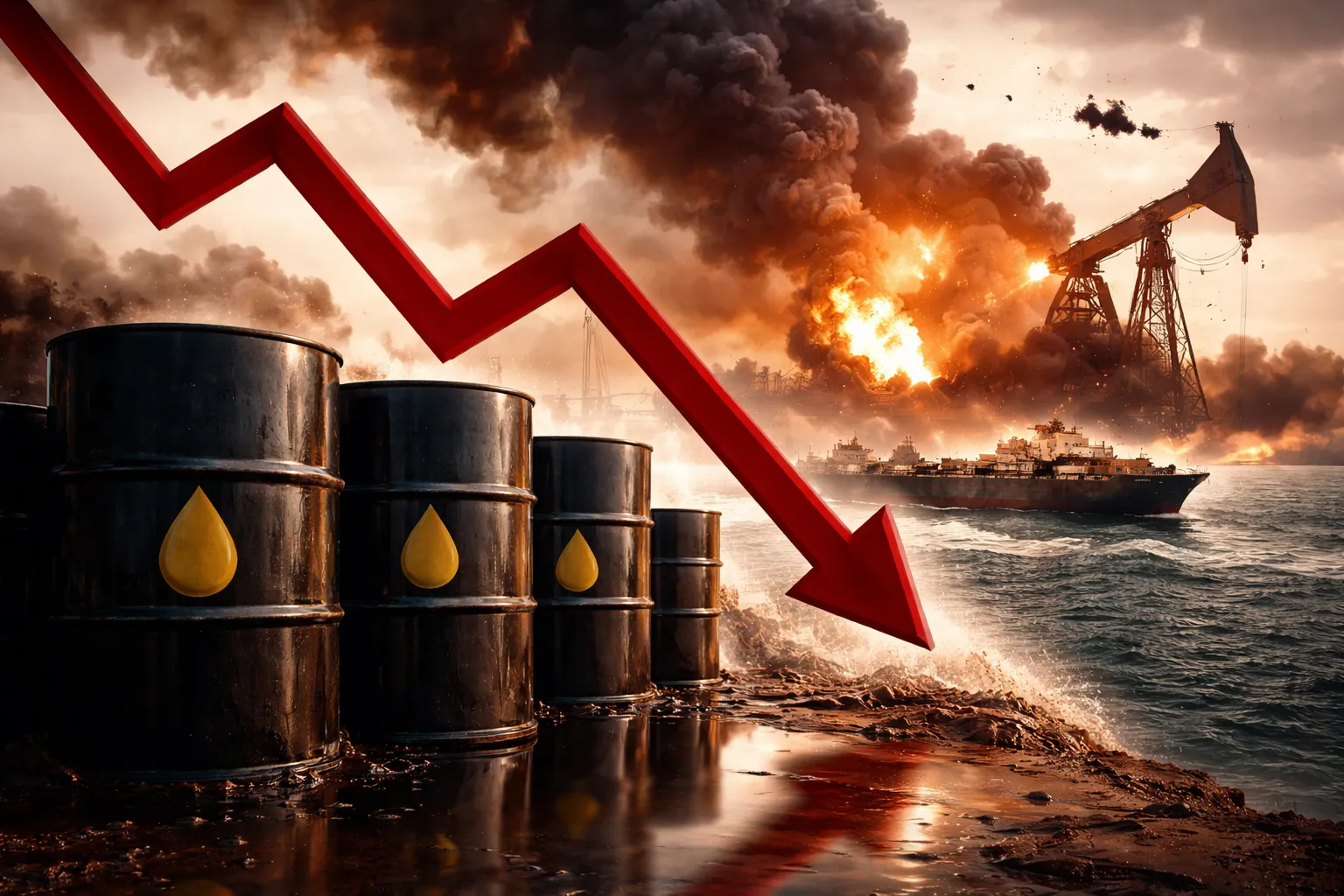
Escalating regional tensions, disruptions to critical shipping routes and threats to energy infrastructure are creating uncertainty in international oil markets, increasing inflationary pressures and challenging global economic stability.
The global energy market is facing significant uncertainty as continuing geopolitical tensions in the Middle East disrupt oil supplies and influence international crude prices. The region remains one of the world’s most important energy-producing areas, making political and military developments there particularly important for oil-importing and oil-exporting economies.
In November 2026, renewed concerns over tanker security, disruptions around the Strait of Hormuz and uncertainty surrounding diplomatic negotiations between the United States and Iran have kept international energy markets under pressure.
According to recent Reuters reporting, Brent crude rose to approximately $98.29 per barrel on November 5, following renewed tanker attacks and concerns about the security of international oil shipments. These developments demonstrate how quickly geopolitical events can influence global commodity markets.
Strait of Hormuz: A Critical Global Energy Route
One of the biggest concerns for international energy markets is the security of the Strait of Hormuz, a narrow maritime passage connecting the Persian Gulf with international shipping routes.
The waterway is strategically important because approximately one-fifth of global oil and liquefied natural gas trade normally passes through it.
Countries including Saudi Arabia, Iraq, the United Arab Emirates, Kuwait and Qatar depend significantly on this regional transportation network for energy exports.
Any prolonged disruption to shipping through the Strait can restrict global energy availability, increase transportation costs and create uncertainty among international buyers.
Although alternative pipelines and shipping arrangements can help maintain some exports, they cannot fully replace the importance of normal maritime operations.
The World Bank’s November 2026 analysis also highlights how reduced oil inventories have weakened the global market’s ability to absorb further supply disruptions.
Oil Prices Respond to Geopolitical Developments
International oil prices are influenced by several factors, including production levels, global demand, inventory availability and expectations about future supply.
However, geopolitical developments have become an especially important influence in the current market environment.
Whenever military tensions increase or energy infrastructure comes under threat, traders often anticipate possible supply shortages and adjust their market positions accordingly.
The result can be sudden movements in benchmark crude prices, even before an actual shortage reaches consumers.
According to the US Energy Information Administration, Brent crude averaged approximately $114 per barrel in September 2026 as attacks on regional energy infrastructure and transportation routes intensified.
The volatility demonstrates that oil prices are increasingly influenced not only by traditional supply-and-demand conditions but also by geopolitical risk.
Impact on Global Inflation and Economic Growth
Rising oil prices have consequences far beyond the energy industry.
Higher crude prices increase the cost of petrol, diesel, aviation fuel and industrial energy. These expenses eventually influence transportation, manufacturing, agriculture and food distribution.
For businesses, higher energy costs can reduce profit margins and increase the prices of finished products. Consumers may consequently face higher household expenses and reduced purchasing power.
Developing economies are particularly vulnerable because many depend heavily on imported crude oil and petroleum products.
Persistent energy price increases can also complicate central banks’ efforts to control inflation. If fuel and transportation costs remain elevated, inflation may become more difficult to manage, potentially limiting the scope for interest-rate reductions.
The IMF, World Bank, International Energy Agency and World Trade Organization have previously highlighted the unequal economic impact of the Middle East conflict, particularly on energy-importing and lower-income countries.
Challenges for Major Oil-Importing Economies
Countries such as India, Japan, China and several European economies are closely monitoring developments in the Middle East because of their dependence on international energy supplies.
India is particularly exposed to changes in international crude prices because a substantial portion of its petroleum requirements is met through imports.
Higher oil prices can increase India’s import expenditure, put pressure on the current account balance and contribute to domestic inflation.
Rising fuel costs can also affect transportation, logistics, aviation, fertiliser production and manufacturing.
For the Indian government, maintaining energy affordability while protecting economic growth remains an important policy challenge.
Diversifying crude oil suppliers, strengthening strategic petroleum reserves and accelerating renewable energy development can help reduce exposure to international supply disruptions.
Energy Security and the Shift Towards Alternatives
The current crisis has renewed international discussions about energy security and the importance of reducing excessive dependence on a limited number of supply routes.
Governments are increasingly recognising that energy security is closely connected to national economic security.
Investment in solar power, wind energy, nuclear electricity, battery storage and electric mobility can help countries reduce their dependence on imported fossil fuels over the long term.
However, the transition cannot happen overnight. Conventional energy sources will continue to play an important role in transportation, industrial production and electricity generation for many years.
Therefore, countries must pursue a balanced strategy that combines reliable traditional energy supplies with long-term investments in cleaner alternatives.
What Lies Ahead for Global Oil Markets?
The future direction of international oil prices will depend heavily on developments in the Middle East, the security of shipping routes and the pace at which regional production and exports recover.
The World Bank’s November 2026 analysis warns that depleted global oil inventories leave markets more exposed to additional supply disruptions.
A sustained diplomatic agreement and improved shipping security could help stabilise energy markets and gradually reduce geopolitical risk premiums.
Conversely, renewed attacks on tankers, pipelines or production facilities could trigger further price increases and create additional pressure on international economies.
Energy-importing countries will therefore need to remain prepared for continued market volatility.
The Worldonomics Times View
At The Worldonomics Times, we believe that the continuing Middle East conflict highlights a fundamental weakness in the global economic system: the excessive vulnerability of international energy markets to geopolitical instability.
Oil is not simply another internationally traded commodity. It is a strategic resource that supports transportation, manufacturing, agriculture, electricity generation and industrial development. Consequently, disruptions to energy supplies can quickly become broader economic challenges.
In our view, governments must treat energy security as a long-term economic priority rather than an issue that receives attention only during international crises.
Countries should diversify their energy suppliers, strengthen strategic petroleum reserves, improve domestic production capabilities where economically viable and accelerate investment in renewable energy.
For India and other emerging economies, reducing excessive dependence on imported energy is particularly important. Greater investment in renewable power, electric mobility, domestic refining capabilities and alternative energy technologies can improve long-term economic resilience.
We also believe that diplomatic engagement and international cooperation are essential. Protecting commercial shipping routes, preventing attacks on critical energy infrastructure and maintaining predictable international trade arrangements should remain global priorities.
The Worldonomics Times believes that the future of global energy security will depend not only on the availability of oil, but also on the ability of nations to build diversified, affordable and resilient energy systems.
The current crisis should serve as a reminder that geopolitical stability and economic prosperity are closely connected. A sustainable global economy requires secure energy supplies, responsible international cooperation and a clear commitment to reducing vulnerability to future disruptions.