By Adv. Ashutosh Jain
In an increasingly digital economy, personal data has become one of the most valuable assets for businesses. From e-commerce platforms and fintech companies to hospitals, educational institutions and technology startups, organisations routinely collect and process enormous volumes of personal information. However, the growing commercial value of personal data has also raised important questions concerning individual privacy, accountability and responsible data management.
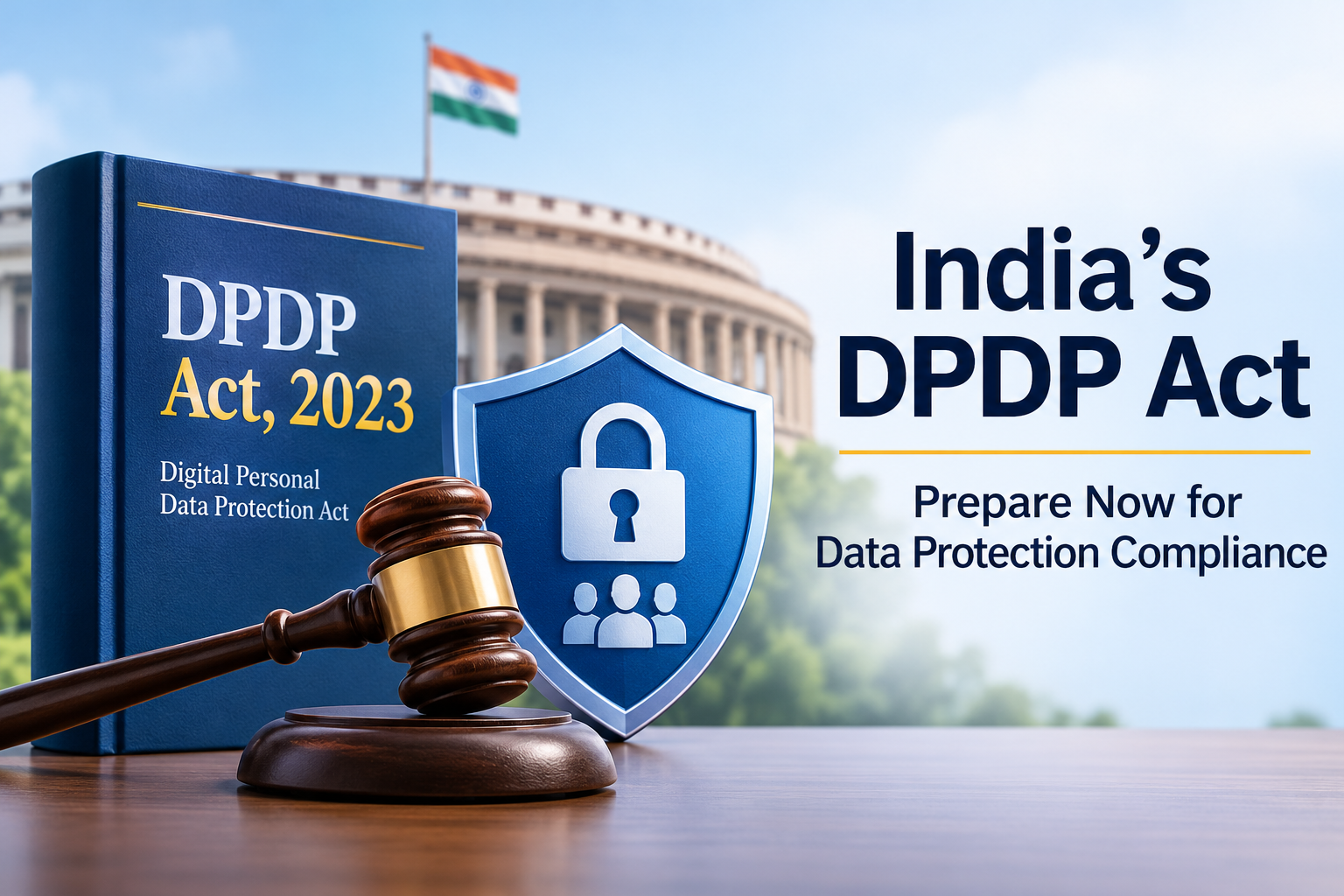
India’s response to these concerns is the Digital Personal Data Protection Act, 2023 (DPDP Act). With the notification of the Digital Personal Data Protection Rules, 2025, India has moved closer to establishing a comprehensive framework governing the processing of digital personal data. The focus must now shift from understanding the legislation to preparing for its practical implementation.
Understanding the Regulatory Framework
The DPDP Act establishes a framework regulating the processing of digital personal data. It recognises the rights of individuals, referred to as Data Principals, while imposing corresponding obligations on organisations, known as Data Fiduciaries, that determine the purpose and means of processing personal data.
The legislation is built around certain fundamental principles, including lawful processing, consent, purpose limitation, data minimisation, accuracy, security safeguards and accountability.
One of its most significant requirements is that consent must be free, specific, informed, unconditional and unambiguous. Organisations cannot simply rely on lengthy privacy policies or generic consent declarations. Individuals must be informed about the personal data being collected and the specific purposes for which it will be processed.
This requires businesses to reconsider how they collect, store, use and share personal information.
Consent Is No Longer a Mere Formality
For several organisations, obtaining customer information has historically been treated as a routine commercial activity. Registration forms, mobile applications, websites, customer databases and marketing platforms frequently collect personal information without adequately explaining how that information will subsequently be used.
The DPDP framework seeks to change this approach.
Businesses will need to provide clear and accessible privacy notices, identify the purposes of processing and establish mechanisms through which individuals can withdraw consent. Importantly, withdrawing consent must be as easy as giving it.
This has practical implications for customer onboarding systems, employee databases, marketing activities, CRM platforms and third-party service arrangements.
A business cannot treat consent as a one-time checkbox exercise. It must establish a system that respects the individual’s choices throughout the data-processing lifecycle.
The Cost of Non-Compliance
The financial implications of the DPDP Act deserve particular attention. The legislation provides for monetary penalties that can extend up to ₹250 crore for specified contraventions.
For instance, failure to take reasonable security safeguards to prevent personal data breaches may attract a penalty of up to ₹250 crore. Failure to notify the Data Protection Board and affected individuals of a personal data breach may attract a penalty of up to ₹200 crore.
These provisions demonstrate that data protection is no longer merely an IT or cybersecurity concern. It is also a matter of corporate governance, legal risk management and business accountability.
For startups and small and medium enterprises, the challenge may be particularly significant. Many such organisations collect sensitive business and customer information but do not necessarily have dedicated privacy teams or established compliance systems.
The Implementation Timeline: Why Businesses Should Not Wait
The DPDP Rules, 2025 were notified on 14 November 2025 and introduced a phased implementation framework.
Certain institutional and procedural provisions have already commenced. The provisions relating to Consent Manager registration are scheduled to become effective on 13 November 2026, while the principal obligations concerning notice, consent, security safeguards, individual rights and organisational accountability are scheduled to commence on 13 May 2027.
This phased approach provides organisations with an opportunity to prepare before the principal compliance obligations become enforceable.
However, the time available should not be mistaken for an absence of regulatory responsibility. Organisations that postpone compliance planning may find themselves attempting to restructure their entire data-management systems within a limited period.
What Should Businesses Do Now?
The first step should be a comprehensive data audit. Organisations must identify what personal data they collect, where it is stored, why it is collected and with whom it is shared.
Second, businesses should review their existing privacy policies, consent mechanisms, employee documentation and customer-facing agreements. These documents must reflect actual data-processing practices rather than merely contain generic legal language.
Third, organisations should examine their contractual relationships with vendors, cloud service providers, marketing agencies and other third parties that process personal data on their behalf.
Fourth, businesses should establish procedures for handling data breaches, responding to individual requests and addressing grievances. Such procedures must be supported by appropriate technical and organisational safeguards.
Finally, management should recognise that DPDP compliance requires coordination between legal, technology, human resources, marketing and business operations teams.
Beyond Compliance: Building Consumer Trust
The DPDP Act should not be viewed exclusively as another regulatory burden. Responsible handling of personal data can become an important business advantage.
Consumers are increasingly conscious of how their information is collected and used. Organisations that demonstrate transparency and accountability are better positioned to establish long-term customer relationships.
India’s digital economy is expanding rapidly, and the importance of personal data will only increase. The real challenge is ensuring that commercial innovation does not come at the cost of individual privacy.
The DPDP Act provides the legal foundation for this balance. Its success, however, will depend not merely on the existence of legislation but on how seriously businesses incorporate privacy into their everyday operations.