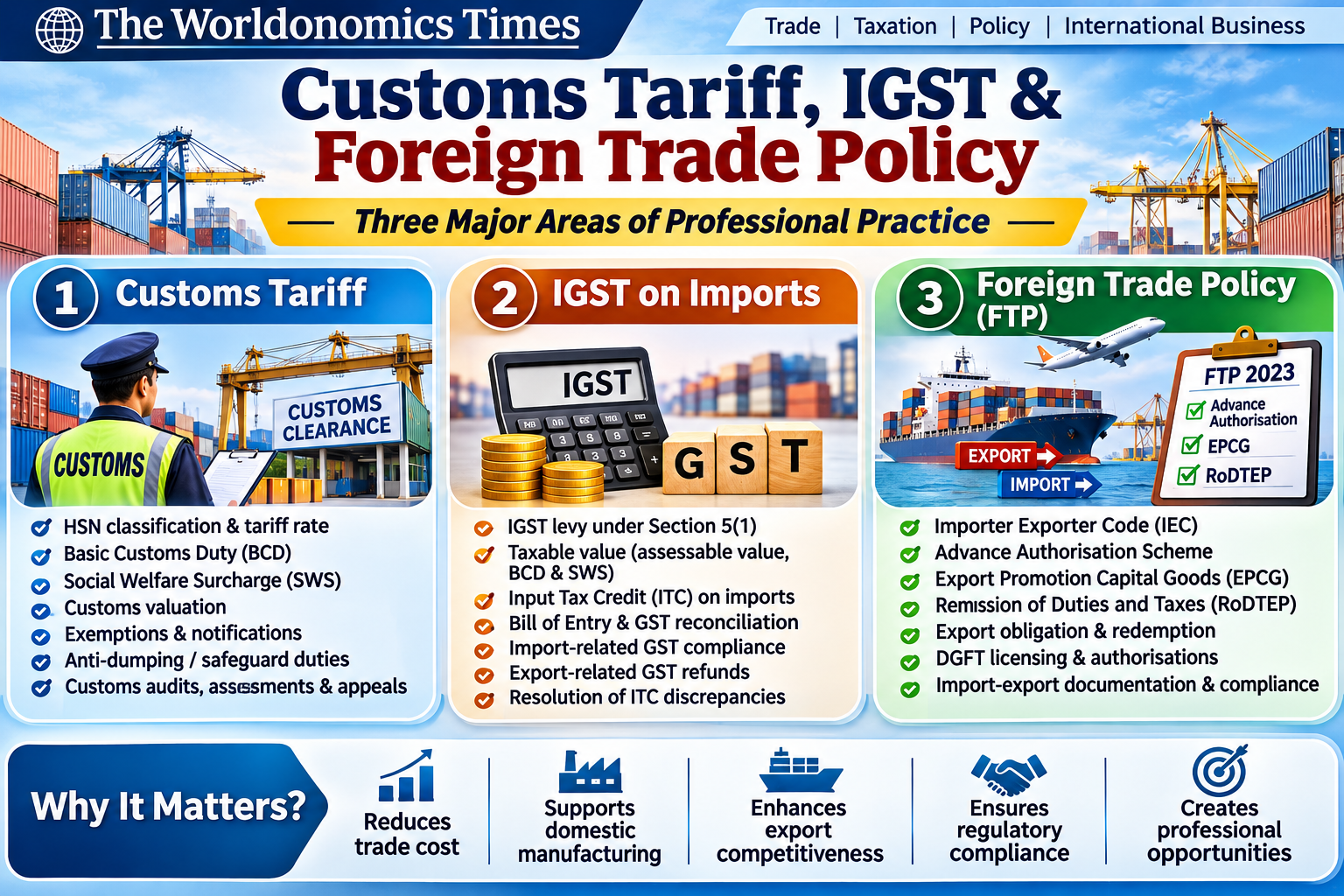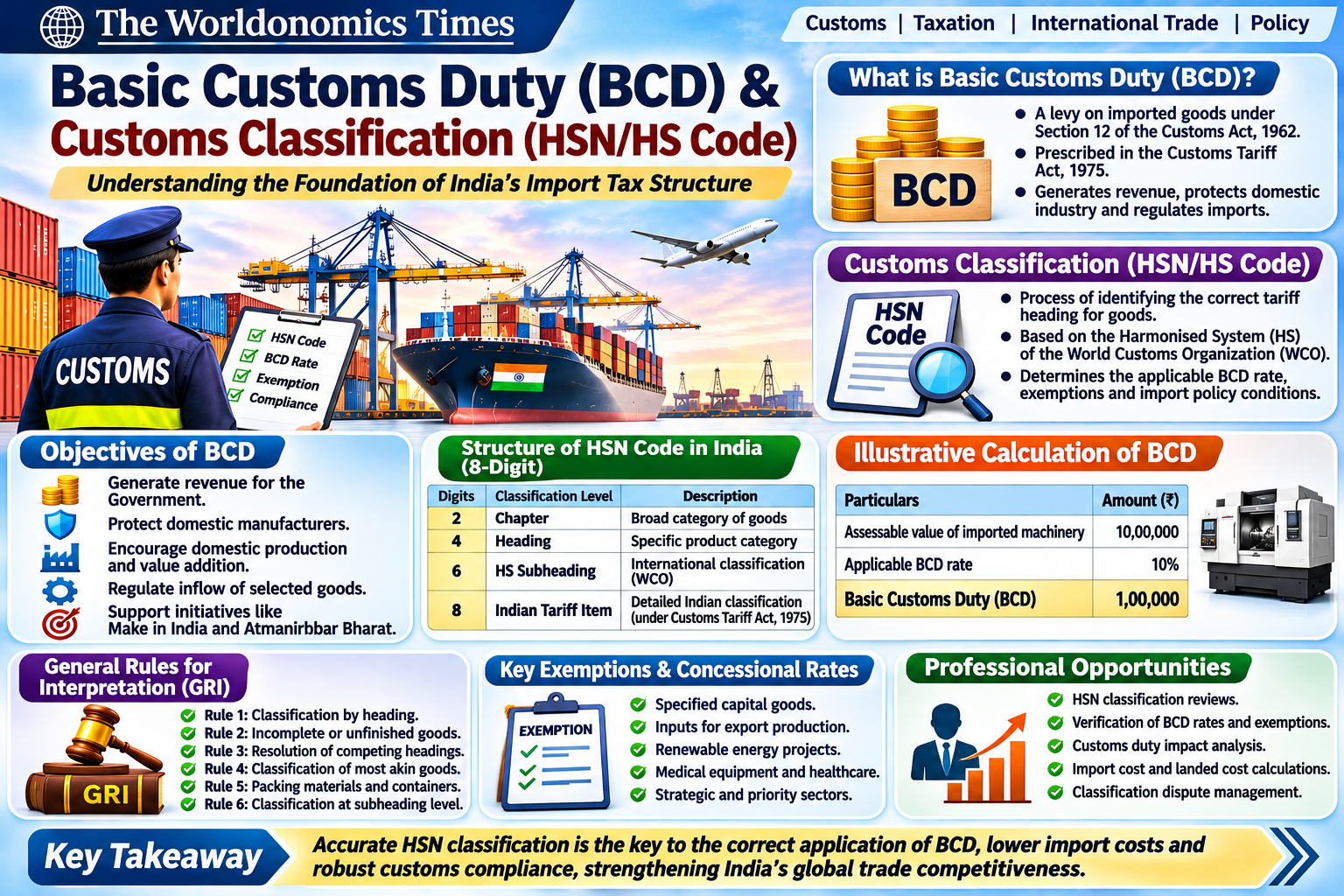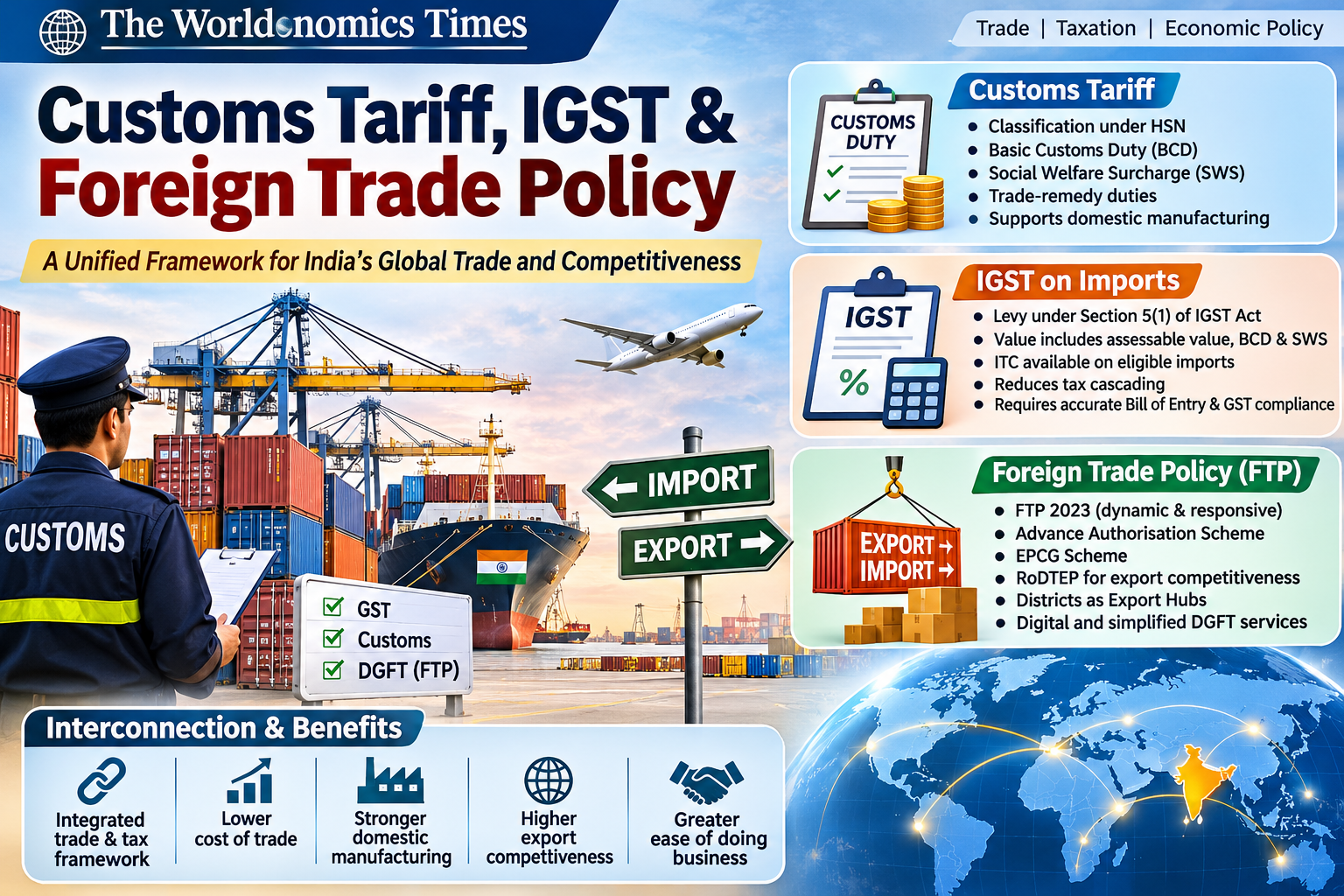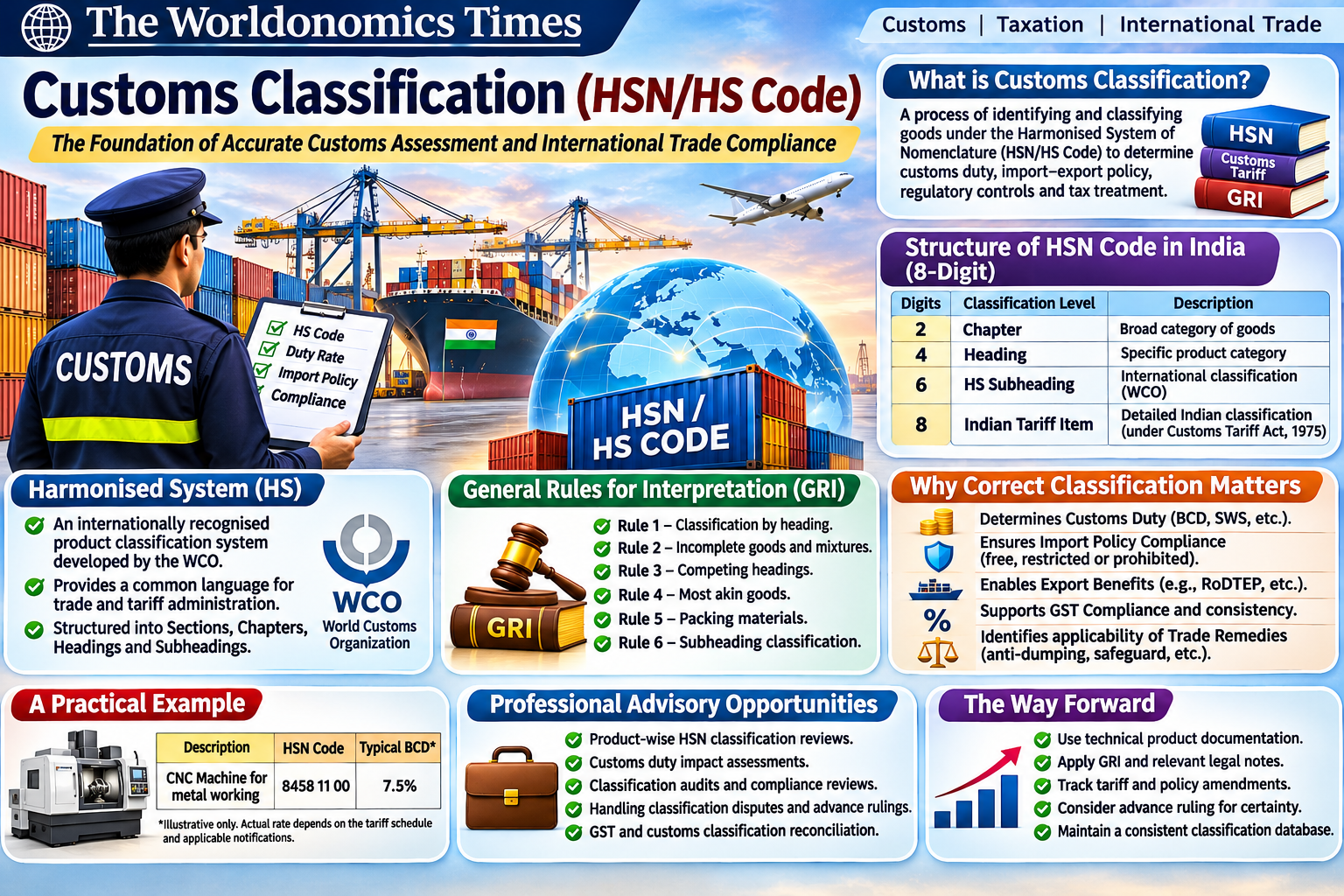
Customs classification is one of the most important aspects of international trade, customs administration and indirect taxation. Every product imported into or exported from India must be appropriately classified under the applicable Harmonised System of Nomenclature (HSN) or HS Code. This classification determines the customs duty structure, import-export policy conditions, applicable exemptions, trade restrictions and various regulatory requirements.
For importers, exporters, manufacturers and tax professionals, accurate product classification is not merely a documentation requirement; it is a critical component of financial planning, regulatory compliance and international business operations.
Understanding Customs Classification and the Harmonised System
The Harmonised Commodity Description and Coding System, commonly known as the Harmonised System (HS), is an internationally recognised product classification system developed by the World Customs Organization (WCO).
It provides a standardised method of identifying and classifying goods traded across international borders. The system enables customs authorities in different countries to apply a common classification language, facilitating international trade statistics, tariff administration and trade policy implementation.
The HS is structured around:
- Sections covering broad categories of goods.
- Chapters identifying specific product groups.
- Headings describing particular categories of products.
- Subheadings providing more detailed classification.
The international HS nomenclature generally uses six-digit codes. Individual countries may extend these codes to provide further national-level classification and regulatory detail.
In India, customs tariff classification is governed primarily by the Customs Tariff Act, 1975, read with its First Schedule and the General Rules for Interpretation.
2. Structure of HSN Codes in India
India follows an eight-digit customs tariff classification system, aligned with the international six-digit HS nomenclature.
| Digits | Classification level | Description |
|---|---|---|
| 2 digits | Chapter | Broad category of goods |
| 4 digits | Heading | Specific product category |
| 6 digits | HS Subheading | International classification |
| 8 digits | Indian Tariff Item | Detailed Indian classification |
For example, an international six-digit HS code is further extended to eight digits under India’s Customs Tariff Schedule to provide more precise identification of products. content.dgft.gov.in+2
3. General Rules for Interpretation (GRI)
The General Rules for Interpretation of the First Schedule to the Customs Tariff Act, 1975, provide the legal framework for determining the correct classification of goods.
The important principles include:
- Rule 1 – Classification by heading: Classification is determined according to the terms of headings and relevant Section and Chapter Notes.
- Rule 2 – Incomplete goods and mixtures: Covers incomplete or unfinished articles having the essential character of finished goods and certain references to mixtures or combinations.
- Rule 3 – Competing headings: Provides principles for resolving classification under two or more potentially applicable headings, including specific descriptions and essential character.
- Rule 4 – Most akin goods: Applies where goods cannot be classified under the preceding rules.
- Rule 5 – Packing materials: Provides treatment for certain containers and packing materials.
- Rule 6 – Subheading classification: Determines classification at the subheading level by applying the relevant subheading terms and notes.
These rules must be applied systematically, along with relevant legal notes and interpretative guidance. Sci API+1
4. Importance of Correct Customs Classification
Correct HSN classification has a direct impact on the financial and regulatory position of an importer or exporter.
A. Customs Duty Determination: Different tariff headings may attract different Basic Customs Duty rates, exemptions and additional applicable duties.
B. Import Policy Compliance: Classification determines whether goods are freely importable, restricted, prohibited or subject to special authorisation under the ITC (HS) Import Policy.
C. Export Benefits: Eligibility and applicability of export-related benefits, including RoDTEP and other schemes, may depend on the relevant tariff item and notified conditions.
D. GST Compliance: HSN classification is important for determining the applicable GST rate and maintaining consistency between customs and GST documentation, subject to the relevant tax provisions.
E. Trade Remedies: Anti-dumping duties, safeguard measures and other trade-remedy provisions may apply to specified tariff classifications and product descriptions.
5. Practical Example: Classification of Imported Machinery
Consider an Indian manufacturing company importing industrial machinery from Germany.
Before filing the Bill of Entry, the importer must establish:
- The technical description and intended use of the machinery.
- Its principal function and operating mechanism.
- Whether it is a complete machine, component or accessory.
- The relevant Section and Chapter Notes.
- The appropriate four-digit heading and six-digit subheading.
- The applicable eight-digit Indian tariff item.
- The corresponding customs duty rate and exemption notifications.
- Whether any import policy restrictions or regulatory approvals apply.
A wrong classification could result in an incorrect duty payment, denial of an exemption, delayed clearance or subsequent customs proceedings.
6. Professional Responsibilities and Advisory Opportunities
Customs classification offers significant opportunities for Cost Accountants, Chartered Accountants, tax consultants and international trade professionals.
Professional services may include:
- Product-wise HSN classification reviews.
- Customs duty impact assessments.
- Classification audits and compliance reviews.
- Examination of customs exemption notifications.
- Classification dispute management and representation.
- Import-export policy verification.
- GST and customs classification reconciliation.
- Advisory on advance rulings and departmental assessments.
A systematic classification database can also help businesses maintain consistency across purchase orders, invoices, Bills of Entry, shipping bills and GST returns.
7. Challenges and the Way Forward
Rapid technological developments have introduced new products and complex combinations of materials, software and machinery. Classification disputes frequently arise where products have multiple functions, composite characteristics or specialised applications.
Businesses should therefore avoid selecting HSN codes merely on the basis of commercial descriptions, supplier invoices or online search results.
A robust classification process should involve technical product documentation, legal interpretation, tariff verification and periodic review of amendments.
Where appropriate, businesses may explore the advance ruling mechanism under the Customs Act, 1962, to obtain greater certainty regarding classification and applicable customs treatment.