India’s clean energy transition enters a new phase as Solar Energy Corporation of India plans to expand its own renewable energy portfolio and strengthen its role in energy storage and green hydrogen development.
Introduction
India’s renewable energy sector is entering an important phase of expansion, with the Solar Energy Corporation of India Limited (SECI) preparing to significantly strengthen its position in the country’s clean energy ecosystem.
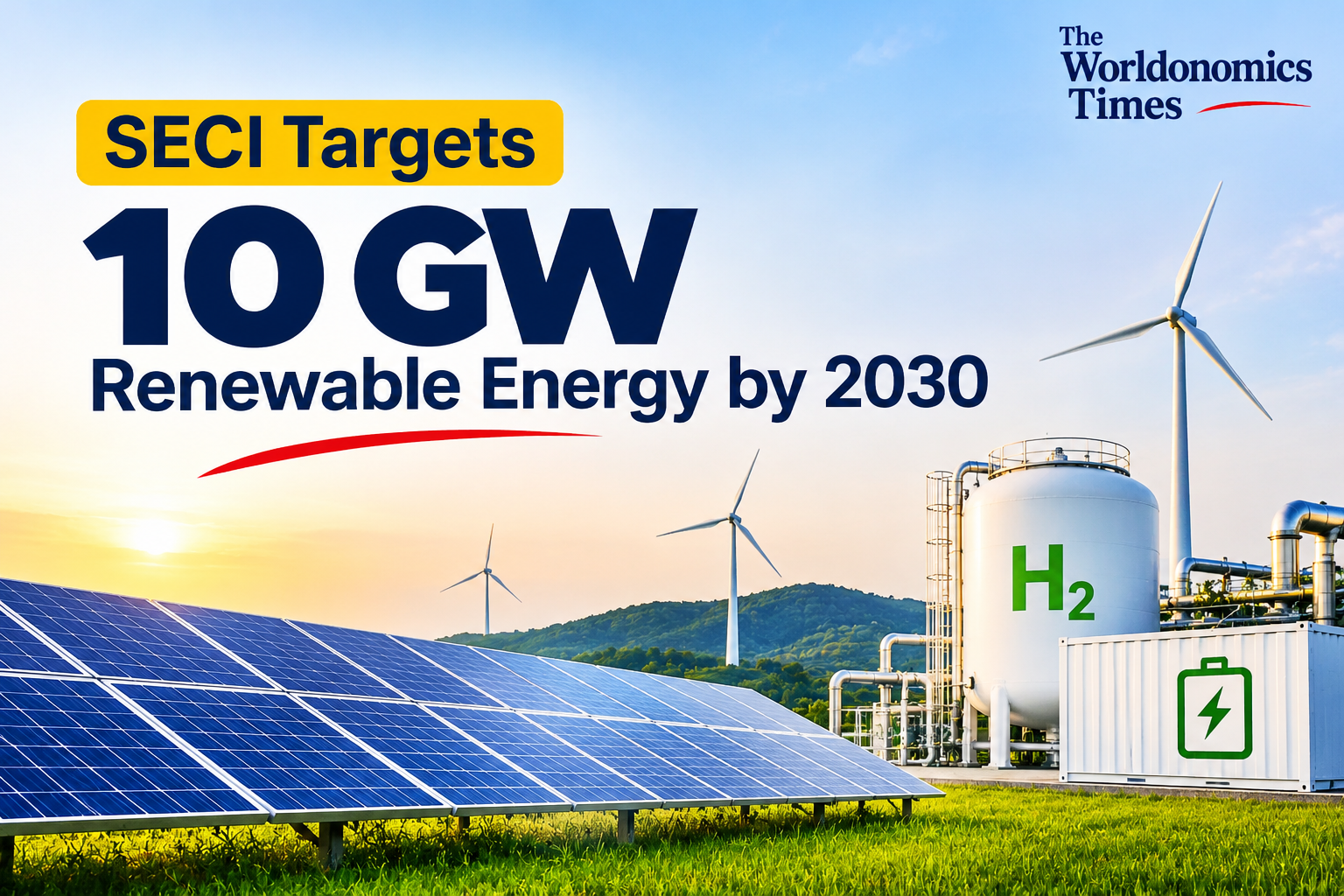
SECI has set an ambitious target of developing 10 GW of its own renewable energy generation capacity by 2030. The organisation is also planning to expand its activities in battery energy storage, green hydrogen, green ammonia and electricity trading.
The development represents an important shift in SECI’s role, from primarily facilitating renewable energy procurement to becoming a more active owner and developer of clean energy assets.
According to an interview published by ETGovernment on November 17, 2026, SECI Managing Director Akash Tripathi outlined the organisation’s expansion strategy and its contribution to India’s long-term energy transition. ETGovernment.com
1. SECI’s 10 GW Capacity Target
SECI has played an important role in facilitating renewable energy projects across India. Having facilitated the deployment of nearly 42 GW of renewable energy capacity, the organisation is now looking to increase its direct ownership of generation assets.
The target of 10 GW of owned capacity by 2030 reflects its intention to participate more directly in renewable energy generation.
This strategy could strengthen SECI’s long-term operational capabilities, diversify its revenue streams and increase its contribution to India’s energy security.
2. Greater Focus on Battery Energy Storage
One of the biggest challenges facing renewable energy is the intermittent nature of solar and wind power.
Solar electricity generation is concentrated during daylight hours, while electricity demand continues throughout the day and night. Battery energy storage systems can help address this mismatch.
SECI is therefore increasing its focus on battery storage procurement and associated infrastructure.
The expansion of storage capacity can create opportunities for:
- Battery manufacturing companies.
- Energy storage technology providers.
- Power management businesses.
- Renewable energy developers.
- Engineering, procurement and construction companies.
- Grid infrastructure and transmission operators.
This emerging market could also create opportunities for Indian MSMEs supplying electrical equipment, components and maintenance services.
3. Green Hydrogen and Green Ammonia
Green hydrogen and green ammonia are expected to play an important role in India’s industrial decarbonisation strategy.
Green hydrogen is produced using renewable electricity through electrolysis, while green ammonia is manufactured using green hydrogen as a feedstock.
These products have potential applications in fertilisers, refining, chemicals, shipping and other industrial sectors.
SECI’s expansion into green hydrogen and ammonia-related activities reflects the growing importance of clean fuels in India’s future energy mix.
4. Supporting India’s 500 GW Non-Fossil Energy Ambition
India has established a target of achieving 500 GW of non-fossil electricity capacity by 2030.
Achieving this ambition requires more than installing solar panels and wind turbines. It also requires stronger transmission networks, energy storage, domestic manufacturing, financial investment and efficient power markets.
SECI can play an important role by facilitating project development, attracting private investment and supporting innovative procurement mechanisms.
5. Opportunities for Businesses and Investors
SECI’s expansion strategy could create a wider business ecosystem around renewable energy.
Major opportunities include:
- Solar and wind power project development.
- Battery energy storage systems.
- Green hydrogen equipment manufacturing.
- Green ammonia production infrastructure.
- Power transmission and grid management.
- Renewable energy consultancy.
- Engineering and project management services.
- Operations and maintenance contracts.
MSMEs can also participate as equipment suppliers, contractors, technical service providers and component manufacturers.
6. SECI’s Institutional Growth and Future Outlook
SECI is also pursuing the ambition of attaining Maharatna status, supported by its plans for capacity expansion, investment and improved financial performance.
A stronger asset base and greater participation in renewable energy generation could help the organisation evolve into a more diversified clean energy enterprise.
However, achieving these ambitions will require efficient project execution, affordable financing, technology development, reliable power evacuation infrastructure and commercially sustainable energy procurement.
Conclusion
SECI’s proposed expansion to 10 GW of owned renewable energy capacity by 2030 represents an important development in India’s clean energy journey.
The organisation’s growing focus on battery storage, green hydrogen and green ammonia indicates that the future of renewable energy will depend on integrated energy solutions rather than generation capacity alone.
For Indian businesses, investors, technology providers and MSMEs, this transition offers significant opportunities to participate in one of the country’s fastest-evolving industrial sectors.
India’s renewable energy future will not only be about generating clean power but also about storing it, managing it and converting it into sustainable industrial growth.