The Worldonomics Times | Customs, Taxation & International Trade | November 2026
India’s customs taxation framework consists of several components designed to regulate international trade, generate government revenue and support broader economic and social objectives. Among these components, Social Welfare Surcharge (SWS) plays an important role in the taxation of imported goods. Although SWS is often considered a small component of the overall customs duty liability, its correct calculation is essential for import cost determination, customs compliance and accurate assessment of import taxes.
For importers, manufacturers, customs brokers and tax professionals, understanding the legal provisions, calculation mechanism and exemptions relating to SWS is important for avoiding errors and ensuring compliance with India’s customs regulations.
1. What is Social Welfare Surcharge (SWS)?
Social Welfare Surcharge was introduced through the Union Budget 2018 and became applicable from 2 February 2018. It replaced the earlier Education Cess and Secondary and Higher Education Cess on imported goods.
SWS is a customs duty levied on imported goods under Section 110 of the Finance Act, 2018. Its stated objective is to support the Government’s commitment towards financing education, healthcare and social security initiatives.
Unlike Basic Customs Duty (BCD), which is primarily associated with tariff protection and revenue generation, SWS has a specific social welfare objective. It is collected as an additional customs levy over and above other applicable duties.
2. Legal Framework Governing SWS
The principal legal provision governing Social Welfare Surcharge is Section 110 of the Finance Act, 2018.
Under Section 110(1), SWS is levied and collected as a duty of customs on goods imported into India that are specified in the First Schedule to the Customs Tariff Act, 1975.
Section 110(3) prescribes the general rate of SWS at 10% of the aggregate of specified duties, taxes and cesses levied and collected by the Central Government under Section 12 of the Customs Act, 1962, along with qualifying amounts chargeable under other laws as additions to customs duty.
Certain duties are specifically excluded from its calculation, including safeguard duty, countervailing duty under Section 9 and anti-dumping duty under Section 9A of the Customs Tariff Act, 1975.
Section 110(4) further provides that SWS is payable in addition to other applicable customs duties, taxes and cesses.
3. Calculation of Social Welfare Surcharge
One of the most important aspects of SWS is understanding its calculation base. It is generally calculated on the specified aggregate customs duties payable, rather than directly on the assessable value of imported goods.
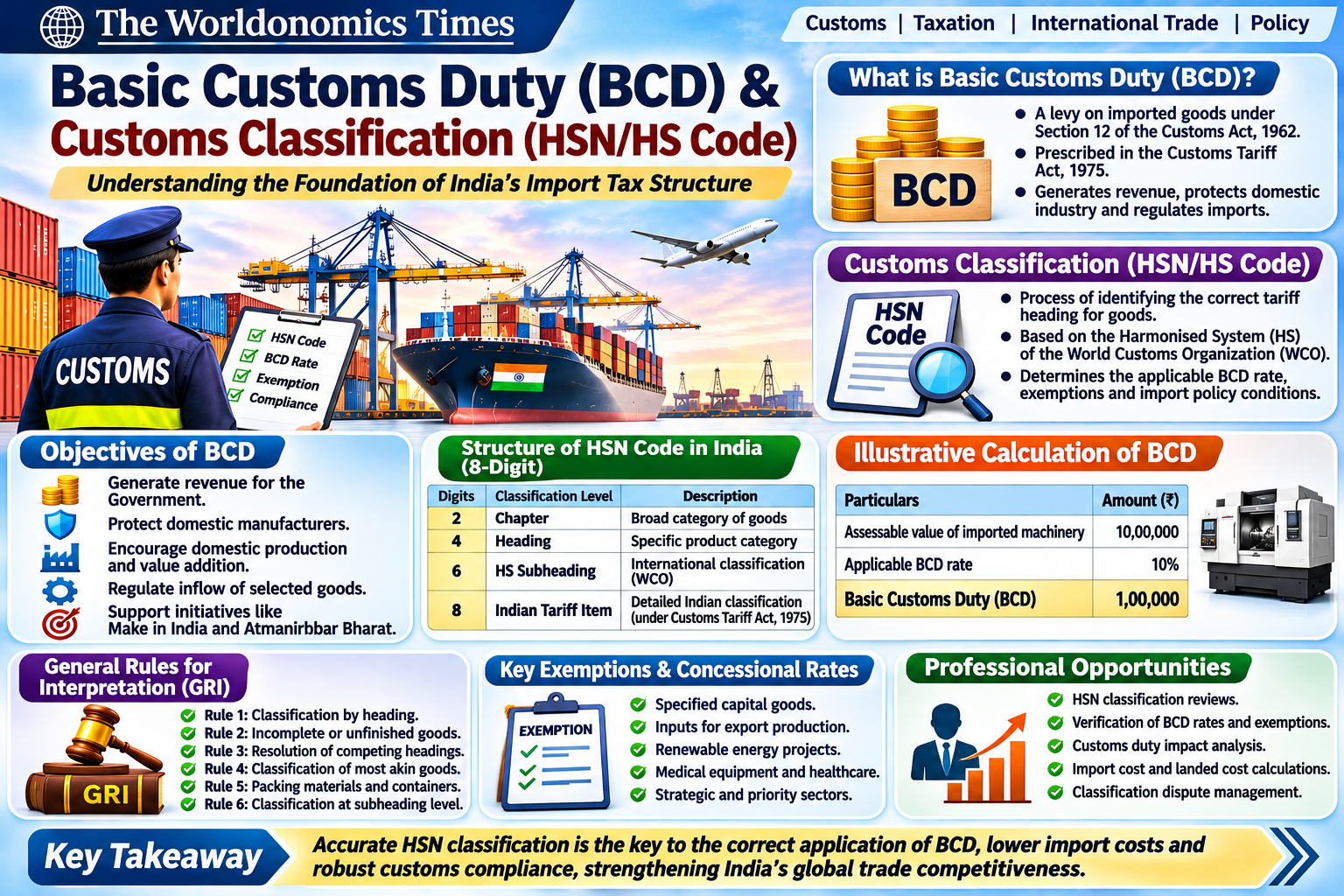
In a straightforward import transaction where BCD is the only duty forming the SWS calculation base, the surcharge is calculated at 10% of BCD.
Illustrative Example:
Assume an Indian importer purchases machinery from an overseas supplier with the following particulars:
| Particulars | Amount |
|---|---|
| Assessable Value | ₹10,00,000 |
| Basic Customs Duty (BCD) @ 10% | ₹1,00,000 |
| Social Welfare Surcharge @ 10% of BCD | ₹10,000 |
Therefore:
SWS = ₹1,00,000 × 10% = ₹10,000
The total BCD and SWS liability in this example is ₹1,10,000, before considering IGST and any other applicable customs levies.
4. Relationship Between BCD, SWS and IGST
SWS is an important component of the overall import taxation mechanism. Its calculation also affects the value on which IGST is determined.
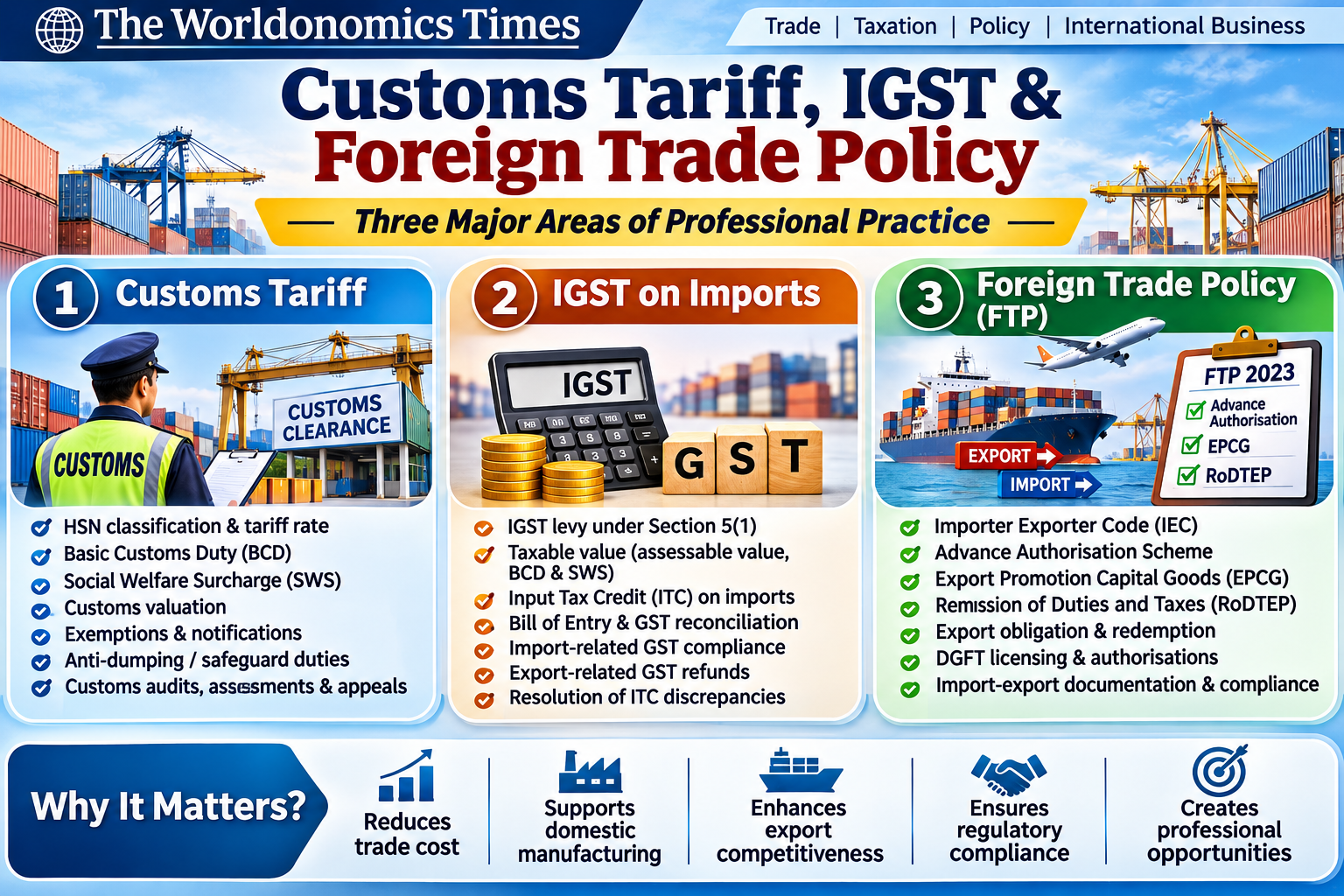
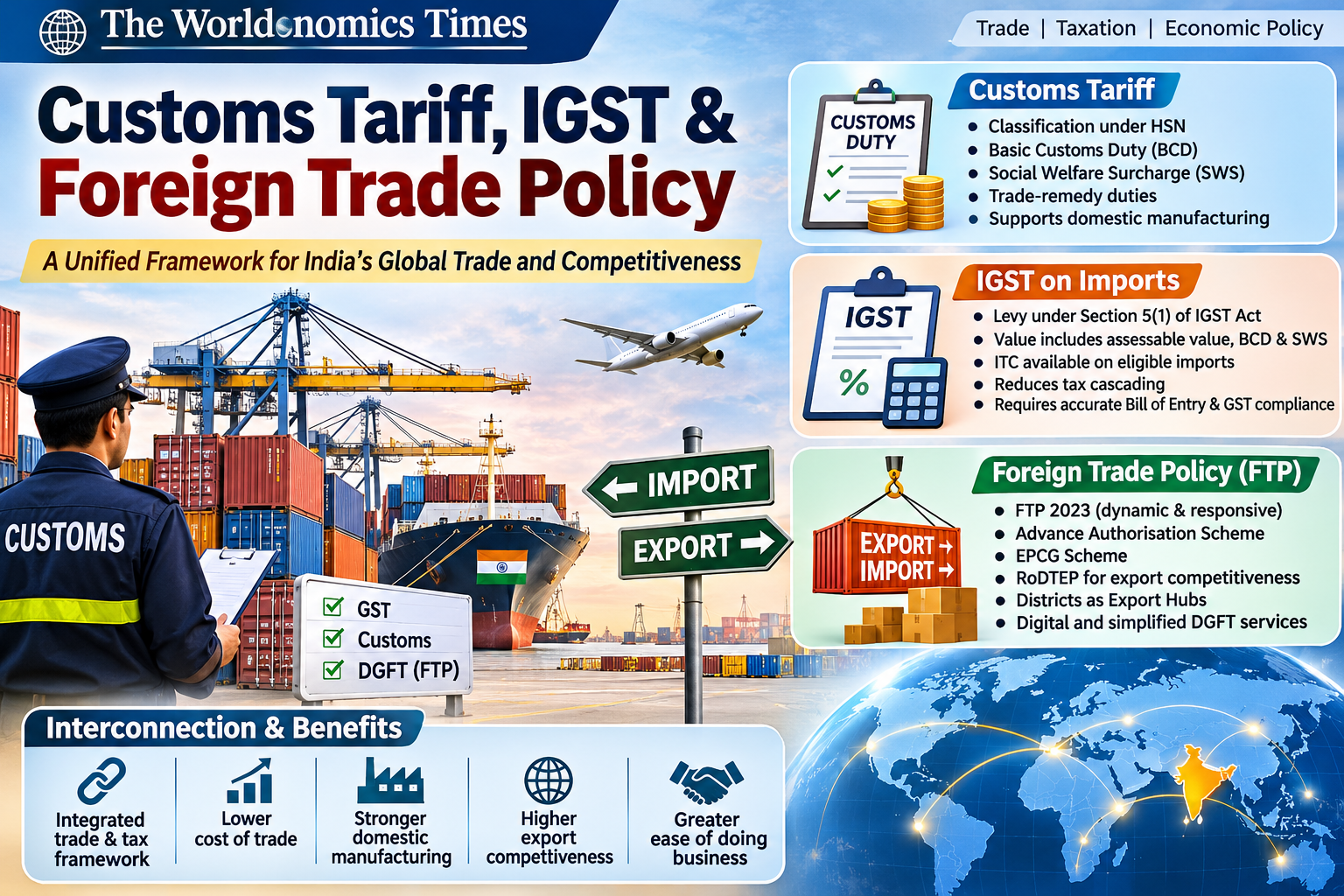
In general, the taxable value for import IGST includes the assessable value, BCD, SWS and other applicable duties or amounts required to be included under the Customs Tariff Act and GST law.
Using the above example, assuming IGST at 18% and no other applicable duties:
| Particulars | Amount |
|---|---|
| Assessable Value | ₹10,00,000 |
| BCD | ₹1,00,000 |
| SWS | ₹10,000 |
| Value for IGST | ₹11,10,000 |
| IGST @ 18% | ₹1,99,800 |
| Total Import Taxes | ₹3,09,800 |
This demonstrates how SWS increases the overall import tax liability and consequently affects the importer’s landed cost. Eligible import IGST may be claimed as Input Tax Credit, subject to applicable GST provisions.
5. Exemptions and Important Clarifications
The Government may grant full or partial exemptions from SWS through relevant customs notifications. Importers must examine the specific exemption conditions applicable to their goods.
An important clarification was issued by CBIC through Circular No. 3/2022-Customs dated 1 February 2022.
The circular clarified that where the aggregate customs duties forming the basis for SWS calculation become zero due to an exemption, SWS liability would also be zero. Customs authorities cannot calculate SWS on notional customs duty merely by applying the tariff rate where the actual aggregate duty payable is nil.
This clarification is particularly important for importers claiming customs duty exemptions under various government schemes.
Businesses should carefully examine:
- Applicable BCD exemption notifications.
- Specific SWS exemption provisions.
- Conditions attached to concessional duty rates.
- Applicability of preferential tariff benefits.
- Treatment of other duties included in the SWS calculation base.
6. Impact on Importers and Businesses
SWS directly influences the cost of imported goods and can affect procurement decisions, pricing strategies and working capital requirements.
For manufacturing companies importing machinery, raw materials and components, even a small percentage of additional customs duty can influence production costs.
Importers should therefore incorporate SWS into their landed cost calculations rather than considering only Basic Customs Duty and IGST.
Accurate calculation also helps businesses avoid short-payment of customs duty, interest liability, penalties and unnecessary disputes during customs assessments or audits.
7. Professional Opportunities in SWS Compliance
Social Welfare Surcharge creates important advisory opportunities for Cost Accountants, Chartered Accountants, customs consultants and indirect tax professionals.
Professional services may include:
- Verification of SWS calculation in Bills of Entry.
- Review of applicable customs duty notifications.
- Import cost and landed cost analysis.
- Examination of exemption eligibility.
- Customs duty reconciliation and audit.
- Identification of excess or incorrect duty payments.
- Advisory on customs assessment and refund matters.
- Integration of BCD, SWS and IGST calculations in import costing systems.
Professionals can also assist businesses in establishing standard operating procedures for customs duty verification and periodic compliance reviews.
8. Challenges and the Way Forward
Despite the relatively straightforward rate structure, businesses sometimes face difficulties in identifying the correct calculation base, interpreting exemption notifications and determining the treatment of different customs levies.
A systematic approach involving tariff classification, customs valuation, notification verification and duty reconciliation can substantially reduce these challenges.
Digital customs platforms such as ICEGATE have improved transparency and facilitate electronic assessment and payment of customs duties. Businesses should regularly monitor CBIC notifications and circulars to remain updated on changes affecting SWS.
Conclusion
Social Welfare Surcharge is an important component of India’s customs taxation framework, reflecting the Government’s commitment to financing social welfare objectives through import taxation.