The Worldonomis Times
Emerging markets are facing increasing financial uncertainty as currency fluctuations, changing global interest rates, geopolitical tensions, and shifting international investment patterns create new challenges for their economies. Countries that depend heavily on foreign investment and international trade are particularly vulnerable to changes in global financial conditions.
As developed economies adjust their monetary policies and investors reassess their portfolios, emerging markets are experiencing pressure on exchange rates, foreign exchange reserves, borrowing costs, and capital availability. These developments are creating challenges for governments, businesses, financial institutions, and investors seeking stability in an increasingly unpredictable global economy.
Emerging economies have become important contributors to global economic growth. However, their growing integration into international financial markets also exposes them to external economic shocks. Managing currency stability and maintaining investor confidence have therefore become essential priorities for policymakers.
Currency Volatility Creates Economic Pressure
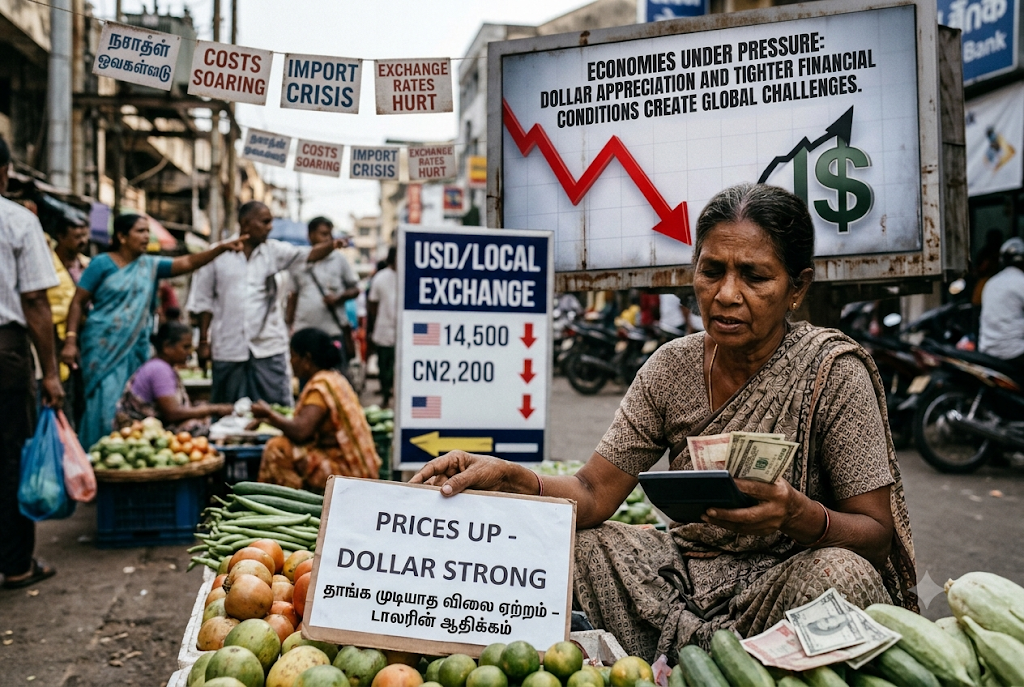
Currency fluctuations are among the most significant challenges facing emerging markets. When a country’s currency depreciates against major international currencies, particularly the US dollar, imported goods and raw materials become more expensive.
This can increase domestic inflation, especially in economies that depend on imported crude oil, natural gas, machinery, electronics, and industrial components.
Currency depreciation also increases the repayment burden on governments and companies that have borrowed in foreign currencies. Businesses with substantial dollar-denominated debt may face higher financial obligations when their domestic currency weakens.
On the other hand, a weaker currency can make exports more competitive in international markets by reducing their prices for foreign buyers. However, this advantage may be limited when exporters depend heavily on imported raw materials and components.
Consequently, exchange-rate movements can produce both opportunities and risks for emerging economies.
Global Interest Rates Influence Capital Flows
International interest rate movements play a major role in determining where global investors allocate their money.
When central banks in developed economies maintain relatively high interest rates, international investors may prefer the comparatively attractive returns available in those markets. This can encourage capital to move away from emerging economies, placing pressure on their currencies and financial markets.
Conversely, expectations of lower interest rates in major economies may encourage investors to explore higher-yielding opportunities in developing markets.
Such movements are not always predictable. Investor decisions are also influenced by economic growth prospects, political stability, fiscal conditions, inflation expectations, and the perceived risks associated with individual countries.
Sudden capital outflows can create significant difficulties for emerging economies by reducing foreign exchange liquidity, weakening currencies, and increasing the cost of borrowing.
Foreign Investment Faces Greater Uncertainty
Foreign direct investment (FDI) and foreign portfolio investment are important sources of capital for emerging economies.
FDI supports infrastructure development, manufacturing, technology transfer, employment generation, and industrial expansion. Portfolio investment, meanwhile, contributes liquidity to stock and bond markets.
However, international investors increasingly evaluate country-specific risks before making investment decisions. Uncertainty surrounding economic policies, currency movements, taxation, trade regulations, and geopolitical developments can influence investment strategies.
Countries with stable institutions, transparent regulations, strong infrastructure, and predictable economic policies are better positioned to attract long-term investment.
Emerging markets must therefore focus on improving their investment environments rather than relying exclusively on short-term international capital flows.
Impact on India and Other Developing Economies
India and several other emerging economies are navigating a complex international financial environment.
India’s position in global trade, its dependence on imported energy, and its exposure to international investment movements make currency management an important economic priority.
Changes in the value of the Indian rupee can influence crude oil import expenditure, foreign debt servicing, international trade costs, and inflation.
The Reserve Bank of India (RBI) monitors foreign exchange market developments and uses its monetary policy and foreign exchange management framework to maintain orderly market conditions.
India’s substantial foreign exchange reserves provide an important buffer against external financial pressures. Nevertheless, sustained global volatility can still affect investor sentiment, import costs, and financial market conditions.
Other emerging economies, particularly those with large external financing requirements or limited foreign exchange reserves, may face even greater difficulties during periods of international financial instability.
Governments and Central Banks Strengthen Financial Defences
To manage currency and capital flow challenges, policymakers in emerging markets are focusing on strengthening their financial systems.
Central banks may use foreign exchange reserves to address excessive market volatility, while monetary policy adjustments can help maintain confidence in domestic currencies.
Governments are also working to improve fiscal discipline, encourage domestic savings, strengthen banking institutions, and develop deeper local capital markets.
Diversifying export markets and reducing excessive dependence on foreign currency borrowing can further improve economic resilience.
Additionally, attracting long-term foreign direct investment instead of depending heavily on short-term portfolio flows can help reduce vulnerability to sudden international capital movements.
Businesses Must Adapt to Currency Risks
Currency volatility has direct implications for companies engaged in international trade.
Importers may face rising costs when domestic currencies weaken, while exporters must manage changing revenues and foreign exchange conversion risks.
Businesses with international borrowing obligations may also experience financial pressure when exchange rates move unfavourably.
To address these challenges, companies are increasingly adopting financial risk management strategies, including currency hedging, diversified sourcing, and careful management of foreign currency liabilities.
Small and medium-sized enterprises may require greater access to financial advisory services and affordable hedging instruments to protect their operations from sudden exchange-rate changes.
The Importance of Global Financial Cooperation
International financial cooperation remains important for maintaining stability in emerging markets.
Institutions such as the International Monetary Fund (IMF), World Bank, and other multilateral development organisations provide financial assistance, technical expertise, and policy support to countries facing external economic difficulties.
Greater transparency in international financial markets, responsible lending practices, and coordinated policy responses can help reduce the risks associated with sudden capital movements.
Developed economies must also recognise that their monetary policy decisions can have significant consequences for developing countries. Greater communication and cooperation can contribute to a more balanced international financial system.
The Worldonomis Times View
The Worldonomis Times believes that currency volatility and unpredictable capital flows represent major challenges for the long-term economic stability of emerging markets.
While international investment remains essential for development, excessive dependence on short-term foreign capital can expose economies to sudden financial disruptions.
Emerging countries must prioritise stronger domestic financial institutions, adequate foreign exchange reserves, diversified export industries, and transparent economic policies.
For India, strengthening manufacturing capabilities, expanding exports, encouraging domestic investment, and maintaining macroeconomic stability will be important in navigating changing international financial conditions.
Central banks must remain vigilant while avoiding unnecessary policy uncertainty, and governments should focus on creating an environment that encourages sustainable investment.
Ultimately, the resilience of emerging markets will depend on their ability to manage external financial risks while building stronger domestic economic foundations. In an increasingly interconnected global economy, currency stability, investor confidence, and responsible financial management will remain essential drivers of sustainable economic growth.