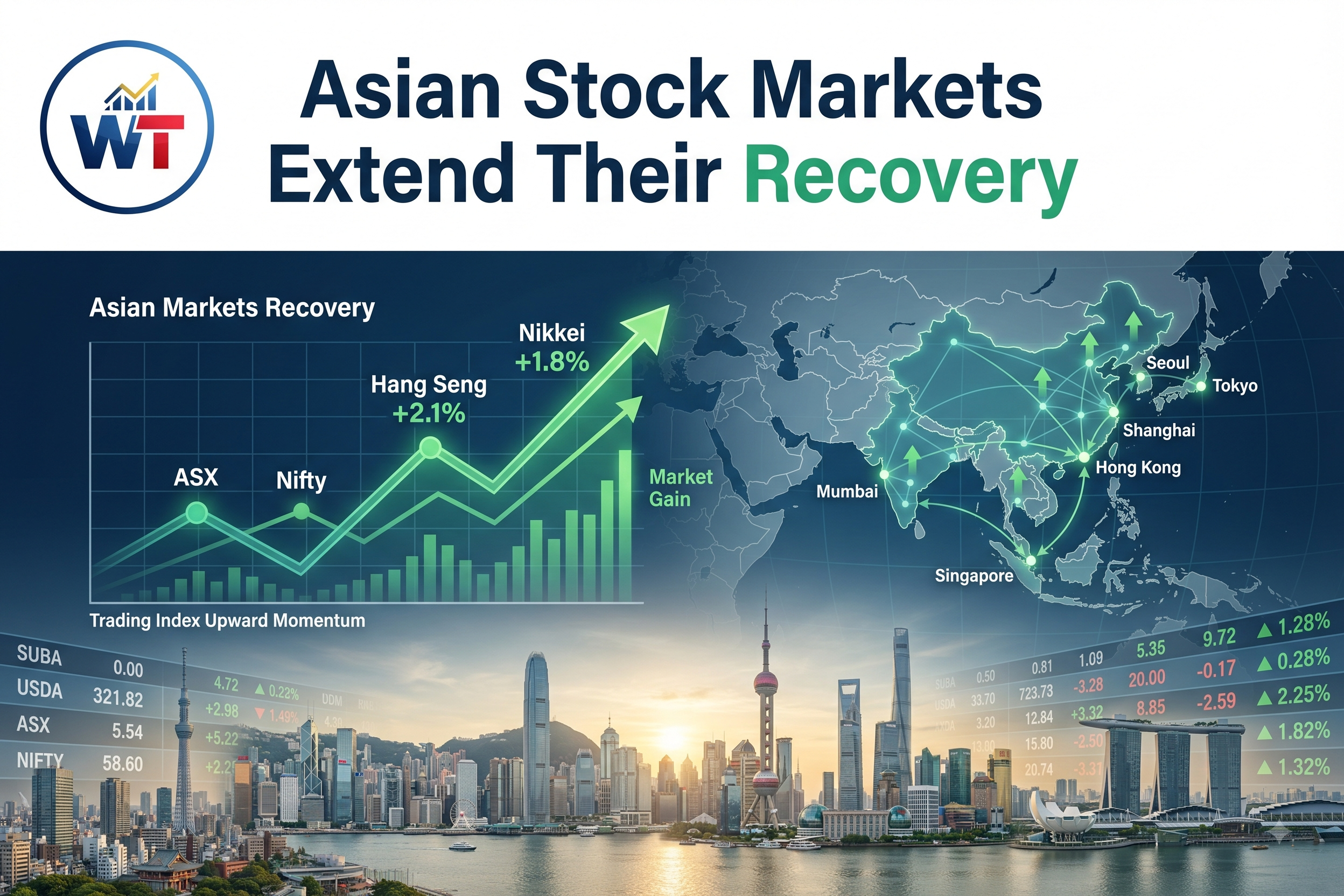
Asian stock markets extended their recovery on Friday, November 27, as technology shares attracted renewed buying interest following a turbulent week. Japan’s Nikkei 225, South Korea’s Kospi and Hong Kong’s Hang Seng all moved higher, reflecting improving investor confidence in the region’s technology sector.
According to early trading figures reported by the Associated Press, Japan’s Nikkei 225 gained 0.7% to 57,919.30, South Korea’s Kospi climbed 2.2% to 4,812.65, and Hong Kong’s Hang Seng advanced 0.4% to 22,310.11. Other market reports also recorded stronger gains during the session, highlighting the momentum behind the regional rebound.
The positive movement followed heavy selling earlier in the week, when concerns about artificial intelligence valuations, technology-sector profitability and future investment returns unsettled global investors. The latest advance suggests that some market participants are returning to technology stocks after the recent correction.
Technology Shares Lead the Recovery
Technology companies played a central role in supporting Asian markets. The region is home to major semiconductor manufacturers, electronics producers and technology businesses that are closely connected to global artificial intelligence and computing demand.
In Japan, companies associated with semiconductor equipment and advanced technology remained in focus. Shares of Tokyo Electron and Advantest experienced early fluctuations before recovering some losses, demonstrating continued investor interest in the sector.
South Korea also benefited from renewed attention toward its semiconductor industry, particularly companies involved in memory chips and advanced electronic components. These businesses are important suppliers to the global technology ecosystem, including data centres and artificial intelligence infrastructure.
The recovery reflects a broader belief that demand for advanced chips, computing power and digital infrastructure could remain strong over the longer term. However, investors are becoming more selective about valuations and the ability of technology companies to convert substantial investments into sustainable profits.
Investors Regain Confidence After Market Volatility
The latest gains followed a difficult period for technology stocks. Investors had become increasingly cautious about the scale of spending on artificial intelligence infrastructure and whether the expected financial returns would justify the investment.
Concerns about high valuations and the concentration of market gains in a relatively small group of technology companies also contributed to selling pressure. As a result, several Asian benchmarks experienced sharp movements during the week.
The rebound indicates that some investors are using lower share prices as an opportunity to rebuild positions in companies they believe have strong long-term prospects. Improved sentiment in US equity markets also helped support confidence across international markets.
Nevertheless, the recovery remains sensitive to new developments. Investors will continue monitoring corporate earnings, semiconductor demand, technology spending plans and changes in global interest-rate expectations.
Global Economic and Trade Concerns Remain
Despite the positive market performance, broader economic uncertainties have not disappeared. Trade policy remains an important concern for Asian exporters, particularly companies that depend on international supply chains and access to major consumer markets.
Proposed US tariff measures affecting several trading partners have attracted attention from investors. Any escalation in trade tensions could increase production costs, disrupt supply chains and create additional uncertainty for manufacturers across Asia.
Interest-rate expectations are another important factor. Changes in monetary policy influence borrowing costs, investment decisions and the valuation of growth-oriented companies. Technology stocks, whose market valuations often depend heavily on expectations of future earnings, can be particularly sensitive to shifts in interest rates.
Investors are also watching developments in the global economy, including consumer demand, business investment and geopolitical risks. These factors could determine whether the current recovery develops into a more sustained upward trend.
Holiday Trading Adds to Market Uncertainty
Trading conditions have also influenced recent market movements. US stock markets were closed on Thursday for the Thanksgiving holiday and scheduled to reopen for a shortened session on Friday.
Reduced participation during holiday periods can sometimes contribute to sharper price movements, as lower trading volumes make markets more sensitive to buying and selling activity. Consequently, investors may wait for clearer signals from global markets before making larger investment decisions.
The next few trading sessions could provide a better indication of whether institutional investors are returning to technology shares with greater confidence or simply taking advantage of a temporary price recovery.
Outlook for Asian Equity Markets
The outlook for Asian stock markets will depend heavily on the performance of technology companies and the broader global economic environment. Continued demand for semiconductors, artificial intelligence infrastructure and digital services could support corporate earnings and strengthen investor confidence.
Japan, South Korea and Hong Kong are particularly important to this outlook because their markets include businesses exposed to international technology demand, manufacturing activity and financial flows.
However, risks remain. Elevated valuations, trade uncertainty, interest-rate movements and concerns about the profitability of artificial intelligence investments could create further volatility.
For investors, the recent recovery offers encouraging signs but also highlights the importance of caution. A sustained improvement will require stronger evidence of earnings growth, healthy demand and stable economic conditions rather than short-term market enthusiasm alone.
The Worldonomics Times View
The recovery across Asian stock markets demonstrates the continued influence of technology companies on global investor sentiment. Gains in the Nikkei, Kospi and Hang Seng suggest that confidence is gradually returning after a period of uncertainty surrounding artificial intelligence and semiconductor stocks.
However, a few positive trading sessions should not be mistaken for a complete market turnaround. Investors must continue evaluating company fundamentals, earnings expectations and the sustainability of technology-sector investment.
Asia remains strategically positioned in the global technology supply chain, giving its equity markets significant long-term opportunities. The challenge will be balancing optimism about technological progress with realistic expectations about profitability and economic risks.
The coming weeks will be important in determining whether this recovery marks the beginning of a stronger market phase or represents only a temporary pause in an otherwise volatile environment.