New Delhi | 28 October 2026
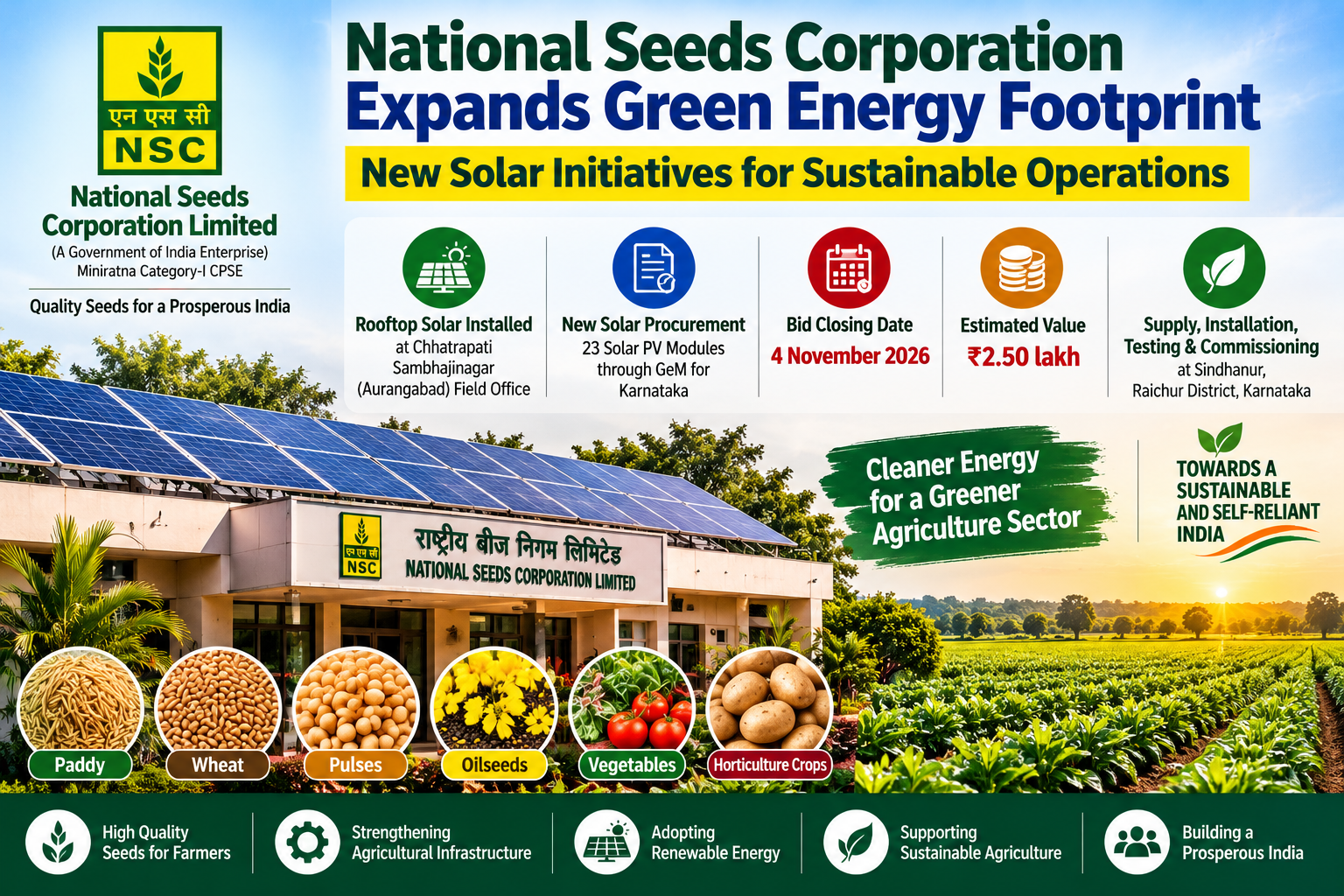
The National Seeds Corporation Limited (NSC) is strengthening its sustainability initiatives with increased adoption of solar power across its operations. The agriculture-sector Miniratna PSU has recently highlighted the installation of rooftop solar panels at its Chhatrapati Sambhajinagar (Aurangabad) field office, marking another step towards cleaner and more sustainable operations.
Fresh Solar Procurement in Karnataka
NSC is also currently procuring 23 crystalline-silicon terrestrial solar photovoltaic modules through the Government e-Marketplace (GeM) for its operations in Karnataka.
The GeM bid, GEM/2026/B/8182219, was published on 21 October 2026 and carries a disclosed estimated value of ₹2.50 lakh. The bid includes supply, installation, testing and commissioning, with the delivery location specified as Sindhanur, Raichur district, Karnataka. The bidding deadline is 4 November 2026.
The procurement indicates that NSC is integrating renewable-energy solutions into its field-level agricultural infrastructure while simultaneously supporting the broader government objective of reducing dependence on conventional energy.
Focus on Sustainable Agriculture Infrastructure
NSC’s move towards rooftop and solar installations is significant because the corporation operates seed farms, processing facilities, field offices and agricultural infrastructure across different parts of the country.
The corporation is a Schedule ‘B’ Miniratna Category-I CPSE wholly owned by the Government of India and operates under the Department of Agriculture & Farmers Welfare. NSC produces and markets seeds across a wide range of field and horticultural crops.
The organisation’s recent activities also demonstrate its continuing focus on supplying improved seed varieties to farmers. Its current product outreach includes improved varieties of potato, lentil, mustard and vegetables for the Rabi and horticulture seasons.
Building a More Sustainable PSU Ecosystem
The adoption of solar energy can potentially help agricultural PSUs reduce electricity costs over the long term while improving the environmental performance of their facilities.
For NSC, renewable-energy deployment complements its core role in strengthening India’s seed ecosystem and agricultural productivity. The combination of quality seeds, modern infrastructure and renewable energy could contribute to a more resilient agricultural supply chain.
The Worldonomics Times Insight
NSC’s solar initiatives represent a broader trend among Indian PSUs: decarbonising operational infrastructure while improving efficiency at the field level.
For an organisation operating across India’s agricultural landscape, decentralised solar installations can provide an opportunity to reduce conventional power consumption and create greener seed-production and distribution facilities.
The development also highlights how India’s agricultural PSUs are increasingly connecting food security with energy efficiency and sustainable infrastructure.