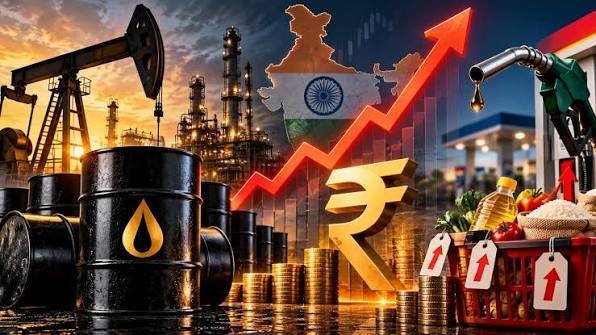
As rising food and energy costs strain household budgets, the International Monetary Fund urges governments to focus financial assistance on vulnerable families while protecting public finances and maintaining economic stability.
The Worldonomics Times | 28 October 2026
Rising Living Costs Remain a Global Concern
The International Monetary Fund (IMF) has called on governments to adopt targeted, temporary measures to ease cost-of-living pressures, particularly for low-income households struggling with higher prices for essential goods and services. In its October 2026 World Economic Outlook, the Fund highlights the importance of protecting vulnerable populations without placing excessive pressure on public finances or undermining efforts to control inflation. Source: IMF, October 2026.
The cost of everyday necessities—including food, electricity, fuel and transport—continues to affect household purchasing power in many economies. Geopolitical tensions, commodity-market disruptions and supply-side shocks have contributed to price volatility, making it harder for families to manage their budgets. Even when the pace of inflation slows, prices do not necessarily return to earlier levels, leaving many households facing persistently high living expenses.
The impact is especially severe for lower-income families, which typically spend a larger proportion of their income on basic necessities. When essential costs rise faster than wages, households may be forced to reduce spending on healthcare, education, nutritious food and other important needs.
Why the IMF Supports Targeted Assistance
The IMF’s central recommendation is that governments should direct support towards those who need it most rather than relying primarily on broad subsidies that lower prices for everyone.
Measures such as targeted cash transfers, temporary income assistance, and carefully designed benefits for eligible households can provide immediate relief to families facing financial hardship. Where possible, governments should use existing welfare programmes and social-protection systems to deliver assistance quickly and efficiently.
According to the IMF’s October analysis, providing comparable protection to vulnerable households through broad price-suppression measures can require between three and 22 times the fiscal resources needed for targeted transfers, depending on the type of intervention and economic circumstances. The findings underline how the design of assistance can determine whether public spending reaches those most affected by a crisis. Source: IMF World Economic Outlook, October 2026.
Targeted assistance can also help governments preserve resources for other priorities, including infrastructure, healthcare, education and long-term economic development. By focusing on households with the greatest needs, policymakers can offer meaningful relief without committing large amounts of public money to universal support.
The Limitations of Broad-Based Subsidies
Governments often respond to sudden increases in food and energy prices by reducing taxes, subsidising fuel or electricity, or introducing price controls. Such measures can provide visible and immediate relief, particularly when prices rise sharply and household finances are already under pressure.
However, universal subsidies can be expensive because they benefit higher-income households alongside poorer families. They may also discourage energy conservation, distort market signals and create substantial long-term fiscal obligations.
The IMF’s analysis of Europe’s 2022–23 energy crisis found that less than 20 cents of every euro spent suppressing electricity, natural gas and gasoline prices reached the poorest fifth of households. This illustrates how broad interventions can consume considerable public resources while delivering only a limited share of their benefits to those most in need.
The Fund does not rule out broader measures in every circumstance. Severe food-security threats, administrative limitations or risks of significant social disruption may justify temporary, wider assistance. However, it argues that such interventions should be carefully designed, limited in duration and consistent with countries’ fiscal capacity.
Balancing Household Relief with Fiscal Stability
The IMF’s recommendations come at a time when many governments face competing demands on their budgets. Public debt, higher borrowing costs and spending commitments can restrict their ability to respond to new economic shocks.
Expensive subsidies and untargeted tax reductions can widen budget deficits, increase borrowing requirements and leave governments with fewer resources to address future crises. If public spending adds excessive demand to an economy already experiencing inflation, it can also complicate the task of central banks seeking to restore price stability.
For this reason, the Fund advocates assistance that is temporary, targeted and tailored to national circumstances. Governments should establish clear eligibility rules, communicate how long programmes will remain in place and specify when exceptional measures will end.
Fiscal support must also complement monetary policy. While central banks work to contain inflation, governments can protect vulnerable households through focused transfers rather than measures that broadly stimulate demand or artificially suppress prices.
Strengthening Social Protection Systems
Delivering targeted assistance effectively requires reliable administrative systems. Governments need accurate household information, accessible application procedures and efficient payment mechanisms to identify eligible recipients and distribute funds without unnecessary delays.
Digital payment infrastructure, updated social registries and stronger coordination between public agencies can improve the speed and accuracy of assistance. Such investments are particularly important in emerging and developing economies, where informal employment and limited administrative capacity can make it difficult to identify households experiencing financial distress.
Policymakers must also ensure that support reaches people who may be overlooked by formal welfare systems, including informal workers, rural households and families whose incomes fluctuate considerably. Transparent eligibility criteria and accessible grievance procedures can help improve public trust and reduce the risk of benefits being misdirected.
Beyond immediate relief, governments can strengthen household resilience by improving employment opportunities, supporting productivity and investing in essential public services. These measures cannot eliminate sudden price shocks, but they can help families withstand future disruptions.
The Worldonomics Times View
The IMF’s call for targeted support reflects a fundamental economic challenge: governments must protect households from rising living costs while preserving the financial capacity to respond to future crises.
Broad subsidies may offer immediate relief, but their high fiscal costs and uneven distribution of benefits can limit their effectiveness. Targeted cash transfers and temporary income assistance provide a more focused approach when governments can identify eligible households and deliver support efficiently.
Nevertheless, successful implementation depends on the circumstances of each country. Where administrative systems are weak or a crisis threatens food security, governments may need additional measures while building the capacity to deliver more precise assistance.
Ultimately, addressing the cost-of-living challenge requires more than short-term financial relief. Governments must combine effective social protection with sound fiscal management, credible inflation-control policies and long-term investment in economic resilience. The objective should be clear: protect those most exposed to rising prices today without compromising the resources needed to support economic stability tomorrow.