India’s economy is expected to maintain relatively strong growth in the current financial year, but rising energy prices, persistent inflationary pressures and uncertainty surrounding employment are raising concerns about the sustainability of its expansion. Economists expect growth to moderate after a stronger-than-anticipated start to the year, highlighting the challenges facing one of the world’s largest emerging economies.
According to a Reuters poll conducted from October 19 to 26, India’s gross domestic product (GDP) is forecast to grow by 7.1% in the financial year ending March 2027, compared with 7.7% in the previous financial year. Growth is projected to ease further to 7.0% in 2027–28.
The projections indicate that India is likely to remain a major contributor to global economic growth. However, the anticipated slowdown underscores the growing influence of international energy markets, domestic inflation and investment conditions on the country’s economic outlook.
Rising Energy Prices Create Fresh Challenges
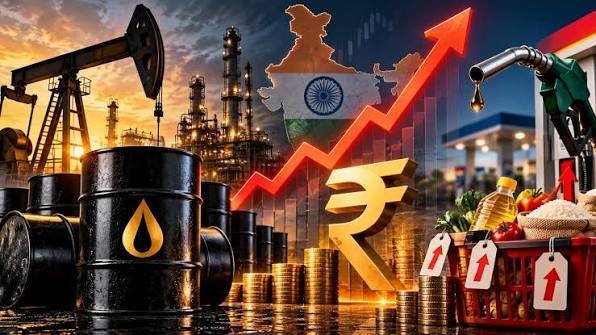
Higher energy costs have emerged as a significant risk to India’s economic performance. As a major importer of crude oil, India remains vulnerable to fluctuations in international petroleum prices. When oil prices rise, the effects can spread across transportation, manufacturing, agriculture and other energy-intensive sectors.
The latest increase in global energy costs, linked to the conflict involving Iran, has intensified concerns about inflation and production expenses. Crude oil prices were reported near $116 per barrel in the Reuters outlook, substantially above pre-conflict levels.
Higher fuel and freight costs can increase the prices of essential goods, placing additional pressure on household budgets. Businesses may also face higher operating expenses, potentially reducing profit margins or forcing them to increase prices.
For the government, expensive oil imports can widen the import bill and place pressure on the current account. If the rupee weakens at the same time, imported energy and other internationally traded goods may become even more expensive.
These developments could make it harder for India to sustain rapid growth while keeping inflation under control.
Inflation Threatens Household Purchasing Power
Inflation remains another important concern for the Indian economy. Rising energy costs can affect prices directly through fuel and electricity, as well as indirectly through transport, production and distribution expenses.
According to the Reuters poll, economists expected Indian inflation to average 6.1% in the October–December quarter of 2026 and remain above the Reserve Bank of India’s 4% medium-term target until at least the end of 2027.
Persistent inflation can weaken consumer purchasing power, particularly among lower- and middle-income households that spend a substantial proportion of their income on food, transport and other essentials.
When household expenses increase faster than incomes, families may reduce discretionary purchases, affecting retailers, restaurants, consumer-goods manufacturers and other businesses dependent on domestic demand.
This creates a wider economic challenge: even when headline GDP growth remains healthy, households may experience financial pressure that limits the benefits of economic expansion.
Private Investment Must Sustain Momentum
Private investment is essential to India’s long-term growth because it supports industrial expansion, infrastructure development, innovation and job creation.
Recent economic data have offered encouraging signs. India’s economy grew by 7.8% year-on-year in the April–June quarter of 2026, supported by investment and manufacturing activity. Reuters also reported that private investment had strengthened during the quarter.
However, sustaining that momentum may become more difficult if energy prices remain elevated and borrowing costs rise. Companies considering new factories, machinery or expansion projects must weigh expected demand against higher financing and operating expenses.
Uncertainty over international trade and global economic conditions could also influence corporate decisions. If businesses delay investment, the consequences may extend beyond immediate output, affecting productivity improvements and future employment opportunities.
India’s ability to maintain strong growth will therefore depend partly on whether private-sector investment continues to broaden beyond a limited number of industries.
Employment Remains a Critical Concern
Despite relatively strong economic growth, employment creation remains one of India’s most important challenges. A rapidly expanding economy must generate enough productive jobs to accommodate millions of young people entering the workforce.
Economists have warned that growth near 7% may not automatically translate into substantial improvements in employment prospects, particularly for young workers. The Reuters outlook also highlights concerns that artificial intelligence could reduce demand for some entry-level positions while changing recruitment patterns across the services sector.
India’s technology, manufacturing, construction and services industries offer opportunities to create new jobs, but the benefits depend on the availability of appropriate skills and the willingness of businesses to expand their workforces.
Greater investment in vocational education, digital skills and labour-intensive manufacturing could help bridge the gap between economic growth and employment. Supporting small and medium-sized enterprises would also be important, as these businesses contribute to local economic activity and job creation.
RBI Faces a Difficult Policy Balancing Act
The Reserve Bank of India faces the challenge of containing inflation without unnecessarily weakening economic activity. On October 7, 2026, the central bank raised its benchmark repo rate by 25 basis points to 5.5%, marking its first increase in nearly four years amid mounting inflationary pressures.
Higher interest rates can help moderate demand and contain inflation expectations, but they also increase borrowing costs for households and businesses. This can affect consumer loans, housing demand and corporate investment.
The central bank must therefore balance price stability with the need to sustain economic momentum. If inflation remains elevated, further tightening could become necessary, although the consequences for credit growth and investment would need careful consideration.
Fiscal policy will also play a role. Targeted support for vulnerable households, infrastructure investment and measures that improve productivity could help protect growth without placing excessive pressure on public finances.
The Worldonomics Times View
The Worldonomics Times believes that India’s anticipated economic slowdown should be viewed as a warning to strengthen the foundations of growth rather than as evidence of an economic crisis. Growth of around 7% remains substantial, but headline figures alone cannot capture the challenges associated with inflation, employment and household financial security.
India must reduce its vulnerability to imported energy shocks by diversifying energy sources, accelerating renewable energy investment and improving energy efficiency. At the same time, policies should encourage private investment, strengthen domestic manufacturing and help businesses create more productive jobs.
Equally important is ensuring that economic progress reaches households across income groups. Investment in education, workforce development, infrastructure and small businesses can help translate economic expansion into wider opportunities.
Ultimately, India’s long-term economic success will depend not only on maintaining a high growth rate but also on building resilience against external shocks and creating employment that improves living standards. With prudent policymaking, stronger investment and sustained structural reforms, India can navigate the current headwinds and preserve its position as a major engine of global growth.