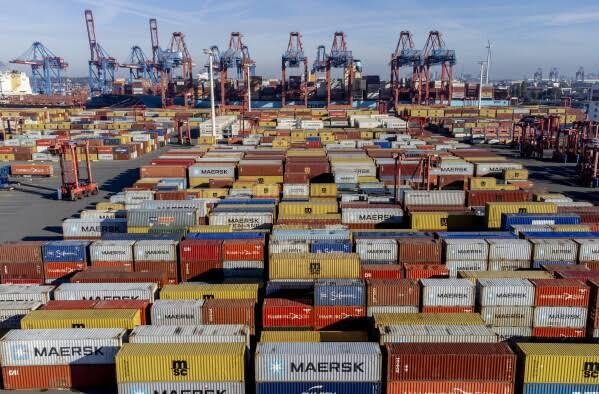
Improving demand, resilient supply chains and expanding trade in technology-related goods are supporting global commerce, although geopolitical tensions, higher transport costs and policy uncertainty continue to pose risks.
The Worldonomics Times | 28 October 2026
Global Trade Shows Signs of Renewed Strength
World trade volumes are showing stronger momentum, offering a positive signal for the global economy amid persistent uncertainty over inflation, interest rates and geopolitical developments. After facing disruptions from supply-chain bottlenecks, higher shipping costs and changing trade policies, international commerce is demonstrating renewed resilience as businesses adjust their sourcing strategies and consumers continue to demand goods and services from overseas markets.
Stronger trade activity can support economic growth by increasing production, encouraging investment and creating employment across manufacturing, logistics, retail and related industries. It can also help countries access essential raw materials, advanced technologies and intermediate goods that are not readily available in their domestic markets.
However, the improvement should not be interpreted as evidence that all trade-related challenges have disappeared. Growth remains uneven across regions and industries, while uncertainty over tariffs, shipping routes, energy prices and global demand continues to influence business decisions.
Demand and Industrial Activity Support Trade
One of the main drivers of stronger trade momentum is the gradual improvement in demand for manufactured goods, industrial inputs and technology-related products. International supply chains depend on the movement of components and materials across borders, meaning that an increase in production in one economy can generate additional exports and imports in several others.
Demand for electronics, machinery, electrical equipment and digital infrastructure products has become particularly important as businesses invest in automation, data infrastructure and new technologies. These sectors rely on complex international production networks, linking suppliers of raw materials, component manufacturers, assembly facilities and final markets.
At the same time, trade in consumer goods remains an important indicator of economic confidence. When households are willing to spend on clothing, appliances, vehicles and other products, import demand can strengthen. Businesses may then increase production and replenish inventories, supporting trade volumes across multiple markets.
Nevertheless, the durability of this momentum will depend on real purchasing power, employment conditions and the availability of affordable credit. If inflation remains persistent or borrowing costs stay elevated, consumers and businesses may reduce spending, slowing the pace of trade expansion.
Supply Chains Adapt to a Changing Global Environment
Businesses worldwide have been rethinking how they source, manufacture and transport goods. Recent disruptions have highlighted the risks of depending too heavily on a limited number of suppliers, production locations or shipping routes.
In response, many companies are diversifying suppliers, building additional inventory buffers and considering alternative manufacturing destinations. This process, often described as supply-chain diversification, can make businesses more resilient when individual markets experience political instability, natural disasters or logistical disruptions.
The reorganisation of supply chains can also create opportunities for emerging economies. Countries that offer competitive production costs, reliable infrastructure, skilled workers and predictable regulations may attract new manufacturing investment and become more closely integrated into international trade networks.
However, diversification is not always inexpensive. Establishing new factories, qualifying suppliers and developing transport connections can require substantial investment. In the short term, these changes may increase costs even as they reduce exposure to future disruptions.
For global trade to remain strong, businesses will need to balance resilience with efficiency, ensuring that efforts to reduce risk do not create unnecessary barriers or excessive costs.
Services Trade Adds Another Dimension
International commerce is no longer defined solely by physical goods. Services such as information technology, financial services, consulting, transport, tourism and digital business support are increasingly important to cross-border economic activity.
Digital platforms have made it easier for businesses to serve overseas customers without establishing a physical presence in every market. Software development, cloud-based services, professional consulting and online business support can connect firms across countries and create export opportunities for economies with strong skills and digital infrastructure.
Tourism and international transport also contribute to services trade. When travel demand improves, airlines, hotels, travel agencies and local businesses can benefit from increased spending by international visitors.
Yet services trade faces its own challenges, including differences in regulation, data-protection requirements, professional licensing and digital infrastructure. Countries that improve connectivity, workforce skills and regulatory cooperation will be better positioned to benefit from these expanding opportunities.
Trade Policy and Geopolitical Risks Remain Significant
Despite stronger momentum, international trade continues to face considerable uncertainty. Tariffs, export restrictions, sanctions and disputes over strategic industries can increase costs and complicate commercial relationships.
When governments introduce new trade barriers, businesses may face higher input prices, longer delivery times and uncertainty over future market access. Companies can respond by delaying investment, changing suppliers or passing some of the additional costs on to customers.
Geopolitical tensions can also disrupt shipping routes and raise insurance and freight expenses. Such increases are particularly challenging for smaller exporters, which may have less bargaining power with shipping companies and fewer alternatives when routes become unreliable.
Clearer trade rules and greater cooperation between governments could help reduce uncertainty. Predictable policies allow companies to make long-term decisions about production, employment and investment with greater confidence.
At the same time, countries must consider legitimate concerns involving national security, strategic supply chains and environmental standards. The challenge is to address these issues without unnecessarily fragmenting the global trading system.
Emerging Economies Could Benefit from the Upswing
Stronger world trade can create opportunities for emerging economies seeking to expand exports, attract foreign investment and develop manufacturing capacity. Participation in global value chains can help local firms access international customers, adopt new technologies and improve productivity.
Economies with established export industries may benefit from stronger demand for machinery, textiles, agricultural products, metals and manufactured components. Others may find opportunities in renewable-energy equipment, digital services and specialised industrial production.
However, these benefits are not automatic. Exporters need reliable electricity, efficient ports, modern transport networks, access to trade finance and a skilled workforce. Complicated customs procedures and unpredictable regulations can also prevent smaller businesses from entering foreign markets.
Governments can strengthen competitiveness by investing in infrastructure, simplifying trade procedures, improving vocational education and supporting small and medium-sized enterprises. Diversifying export markets and products can further reduce dependence on a narrow group of buyers or commodities.
The Worldonomics Times View
Stronger world trade volumes offer an encouraging sign that global commerce continues to adapt despite economic and geopolitical uncertainty. Expanding demand, technology-related investment and more flexible supply chains can provide fresh opportunities for businesses and countries seeking sustainable growth.
However, trade momentum alone cannot guarantee a stronger global economy. Persistent inflation, expensive financing, transport disruptions and unpredictable trade policies could quickly weaken confidence and reduce investment. Policymakers should therefore prioritise predictable regulations, efficient logistics and international cooperation while avoiding unnecessary barriers that increase costs for businesses and consumers.
Emerging economies, in particular, should use the opportunity to strengthen infrastructure, develop workforce skills and help domestic firms compete in international markets. Businesses must also invest in supply-chain resilience without losing sight of productivity and affordability.
Ultimately, a healthier global trading system depends not only on the volume of goods and services crossing borders, but also on whether trade generates productive investment, better employment and wider economic opportunity. Sustaining the current momentum will require cooperation, adaptability and policies that allow the benefits of international commerce to reach businesses and households across the world.