By The Worldonomics Times Editorial Desk
Category: Global Economy | November 2026
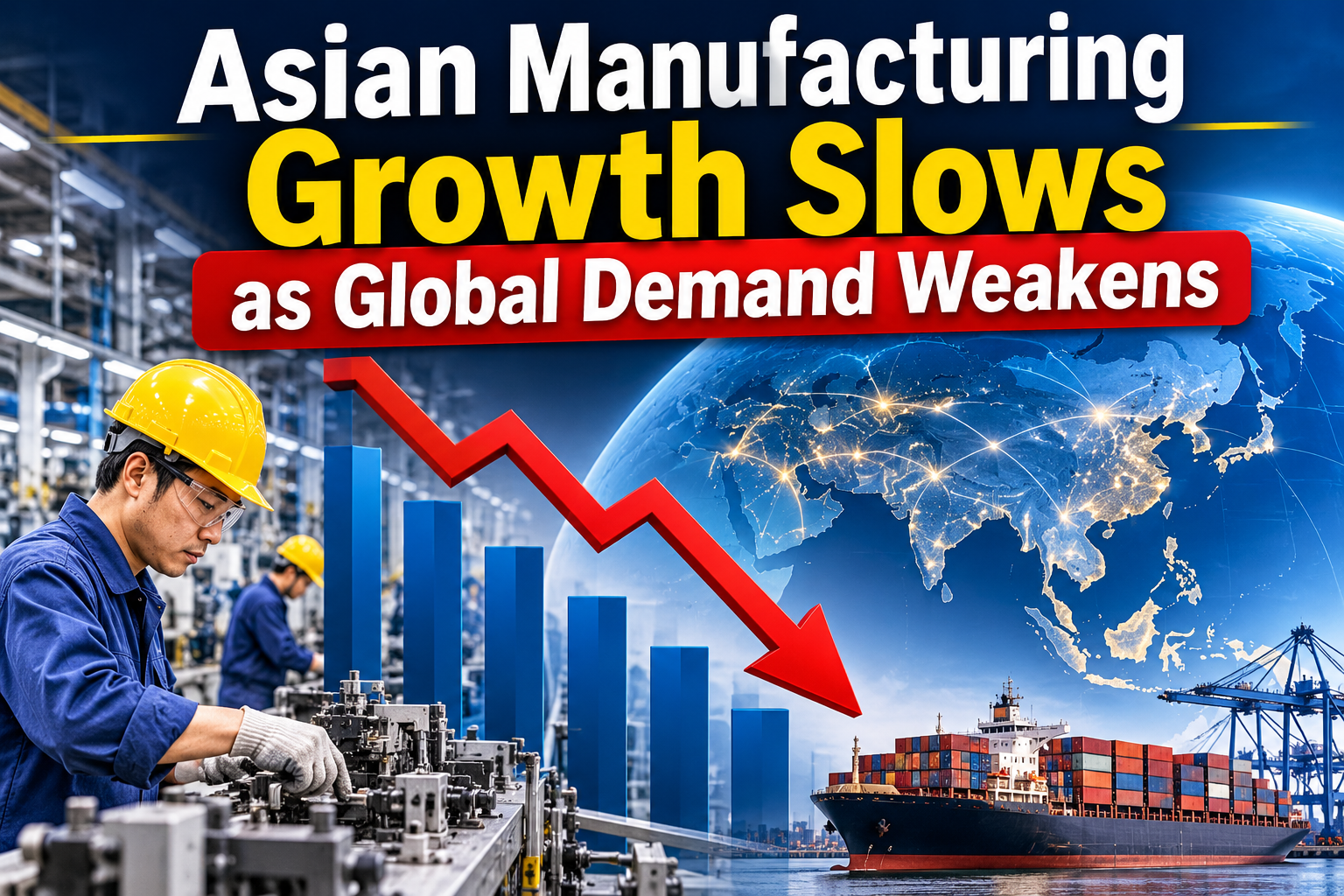
Asia’s manufacturing sector is facing fresh challenges as weakening global demand, rising production costs and international trade uncertainties put pressure on industrial activity across the region. Manufacturing, which remains one of the most important contributors to economic growth in Asia, is experiencing changing market conditions as businesses adjust production strategies and reassess their international supply chains.
Several Asian economies, including China, Japan, South Korea and India, play a significant role in global manufacturing and exports. However, slower demand from major international markets, changing consumer spending patterns and geopolitical developments are creating uncertainty for manufacturers. The situation is raising concerns about regional economic growth, employment and international trade prospects.
Global Demand Creates Pressure on Asian Manufacturers
One of the primary reasons behind the slowdown in manufacturing activity is the moderation of global demand. Businesses in Europe and other major markets are facing economic pressures, influencing their purchasing decisions and reducing demand for certain manufactured products.
Manufacturers across Asia depend heavily on international orders for electronics, machinery, automobiles, textiles and industrial equipment. When overseas demand weakens, companies may reduce production levels, delay expansion plans and reconsider new investments.
China, one of the world’s largest manufacturing centres, remains particularly important to global industrial supply chains. Changes in its domestic consumption and export demand can influence manufacturing activity throughout the region. Meanwhile, Japan and South Korea continue to face challenges associated with international competition, technology costs and fluctuating demand for industrial products.
Rising Production Costs Affect Industrial Performance
Increasing production expenses are another major concern for Asian manufacturers. Energy prices, transportation charges, raw material costs and labour expenses influence the overall cost of industrial operations.
Manufacturing companies operating on narrow profit margins are particularly vulnerable to these pressures. Smaller businesses and export-oriented enterprises may find it difficult to pass higher costs on to international customers, potentially affecting profitability.
Currency fluctuations are adding another layer of uncertainty. Changes in exchange rates can affect the cost of imported raw materials and influence the competitiveness of exported products. Businesses are therefore focusing more on cost management, operational efficiency and financial planning.
Trade Uncertainty and Supply Chain Challenges
International trade developments are also influencing the manufacturing outlook across Asia. Changing tariffs, trade restrictions and geopolitical tensions have encouraged businesses to reconsider their global sourcing and production arrangements.
Many manufacturers are adopting supply chain diversification strategies to reduce dependence on individual countries or suppliers. Several companies are exploring alternative production locations and strengthening regional partnerships to improve operational resilience.
Although these changes may create new opportunities for countries such as India, Vietnam, Indonesia and Thailand, establishing new manufacturing facilities requires significant investment, infrastructure development and skilled labour.
The changing trade environment is therefore creating both opportunities and challenges for Asian economies seeking to strengthen their positions in international markets.
India and Southeast Asia Explore New Opportunities
Despite the broader slowdown concerns, India and several Southeast Asian economies continue to attract attention as alternative manufacturing destinations.
India’s expanding industrial base, infrastructure development, domestic consumer market and government initiatives supporting manufacturing have created opportunities in electronics, automobiles, pharmaceuticals, engineering and renewable energy equipment.
Vietnam, Indonesia and Thailand are also strengthening their manufacturing capabilities and attracting international businesses seeking diversified supply chains.
However, attracting long-term manufacturing investment requires improvements in logistics, electricity infrastructure, workforce skills and regulatory efficiency. Countries that successfully address these areas may strengthen their participation in global production networks.
Technology and Automation Offer a Path Forward
Technological innovation is becoming increasingly important for manufacturers dealing with weaker demand and rising operational expenses. Automation, artificial intelligence, robotics and advanced manufacturing systems can help companies improve productivity, reduce waste and maintain product quality.
Smart factories and digital supply chain management systems are enabling businesses to monitor production more effectively and respond quickly to changing market conditions.
However, adopting advanced technologies requires considerable financial investment and skilled professionals. Smaller manufacturers may face difficulties in accessing these resources, creating a potential productivity gap between large industrial corporations and smaller enterprises.
Employment and Economic Implications
A prolonged slowdown in manufacturing could have wider economic consequences across Asia. The manufacturing industry supports millions of jobs directly and indirectly through transportation, logistics, retail, raw material supply and other related services.
If companies reduce production or postpone expansion, employment opportunities and wage growth may come under pressure. Export-dependent economies could also experience slower industrial output and reduced foreign exchange earnings.
Governments may therefore need to strengthen domestic demand, support small and medium-sized enterprises and encourage investment in new industrial sectors to maintain economic momentum.
The Worldonomics Times View
At The Worldonomics Times, we believe that the slowdown in Asian manufacturing highlights the importance of building stronger, more diversified and technologically advanced industrial economies.
While weakening international demand presents challenges, it also provides an opportunity for Asian countries to reassess their manufacturing strategies and reduce excessive dependence on a limited number of export markets.
Governments should prioritise infrastructure development, affordable access to technology, workforce training and policies that encourage long-term industrial investment. Greater regional cooperation can also help Asian economies strengthen supply chains and improve their collective competitiveness.
We believe that manufacturing growth should not depend solely on export demand. Strengthening domestic consumption, supporting smaller businesses and encouraging innovation will be equally important in creating a balanced industrial ecosystem.
The future of Asian manufacturing will depend on its ability to combine technological advancement, cost efficiency, skilled employment and sustainable industrial development.
Conclusion
The slowdown in Asian manufacturing reflects the broader uncertainties affecting the global economy. Weak international demand, rising production costs and changing trade conditions are creating challenges for businesses across the region.
Nevertheless, Asia continues to possess significant industrial capabilities, a large workforce and growing technological potential. Countries that invest in innovation, infrastructure and supply chain resilience can position themselves for future opportunities.
Although the near-term outlook remains uncertain, strategic reforms and stronger regional partnerships could help Asian manufacturing maintain its importance in the global economy.
The Worldonomics Times
Beyond Headlines, Understanding the World Economy.