Introduction
Micro, Small and Medium Enterprises (MSMEs) play a crucial role in India’s economic development by generating employment, promoting entrepreneurship, strengthening manufacturing and contributing to exports. However, delayed payments, contractual disagreements, unpaid invoices and commercial disputes continue to create serious financial challenges for small businesses.
For many MSMEs, recovering outstanding payments through traditional legal proceedings can be expensive, complicated and time-consuming. To address these challenges, Online Dispute Resolution (ODR) is emerging as an important mechanism for providing faster, affordable and technology-driven dispute settlement.
ODR aims to make dispute resolution more accessible by using digital platforms, online mediation, conciliation and other technology-enabled processes. It can particularly benefit small businesses that lack the financial resources to pursue lengthy legal proceedings.
What is Online Dispute Resolution (ODR)?
Online Dispute Resolution is a technology-enabled mechanism for resolving disputes without requiring all parties to be physically present in a courtroom or dispute resolution centre.
It uses digital communication tools, online documentation, virtual hearings and technology platforms to facilitate negotiations and settlements between disputing parties.
ODR generally involves three important methods:
- Online Negotiation: Buyers and suppliers communicate digitally to reach a mutually acceptable settlement.
- Online Mediation: An independent mediator facilitates discussions and helps both parties find a solution.
- Online Arbitration: An independent arbitrator examines the dispute and delivers an award in accordance with applicable arbitration law and the parties’ agreement.
These methods can reduce travel expenses, administrative burdens and the time required to resolve commercial disputes.
Why Do MSMEs Need Online Dispute Resolution?
Delayed payments are among the most significant challenges faced by MSMEs in India. Small businesses frequently supply goods and services to larger companies, government departments and other commercial organisations.
When buyers fail to make payments on time, MSMEs may experience working capital shortages, difficulty paying employees, disruption of production and problems meeting their own financial commitments.
Traditional dispute resolution mechanisms may involve legal expenses, documentation requirements and lengthy proceedings.
ODR can help address these difficulties through:
- Faster communication between buyers and suppliers.
- Reduced legal and administrative expenses.
- Convenient online submission of documents.
- Remote participation in dispute proceedings.
- Greater accessibility for businesses in smaller cities and rural areas.
- Improved possibilities of mutually agreed settlements.
For small entrepreneurs, these advantages can make dispute resolution more practical and financially manageable.
MSMED Act and Delayed Payment Protection
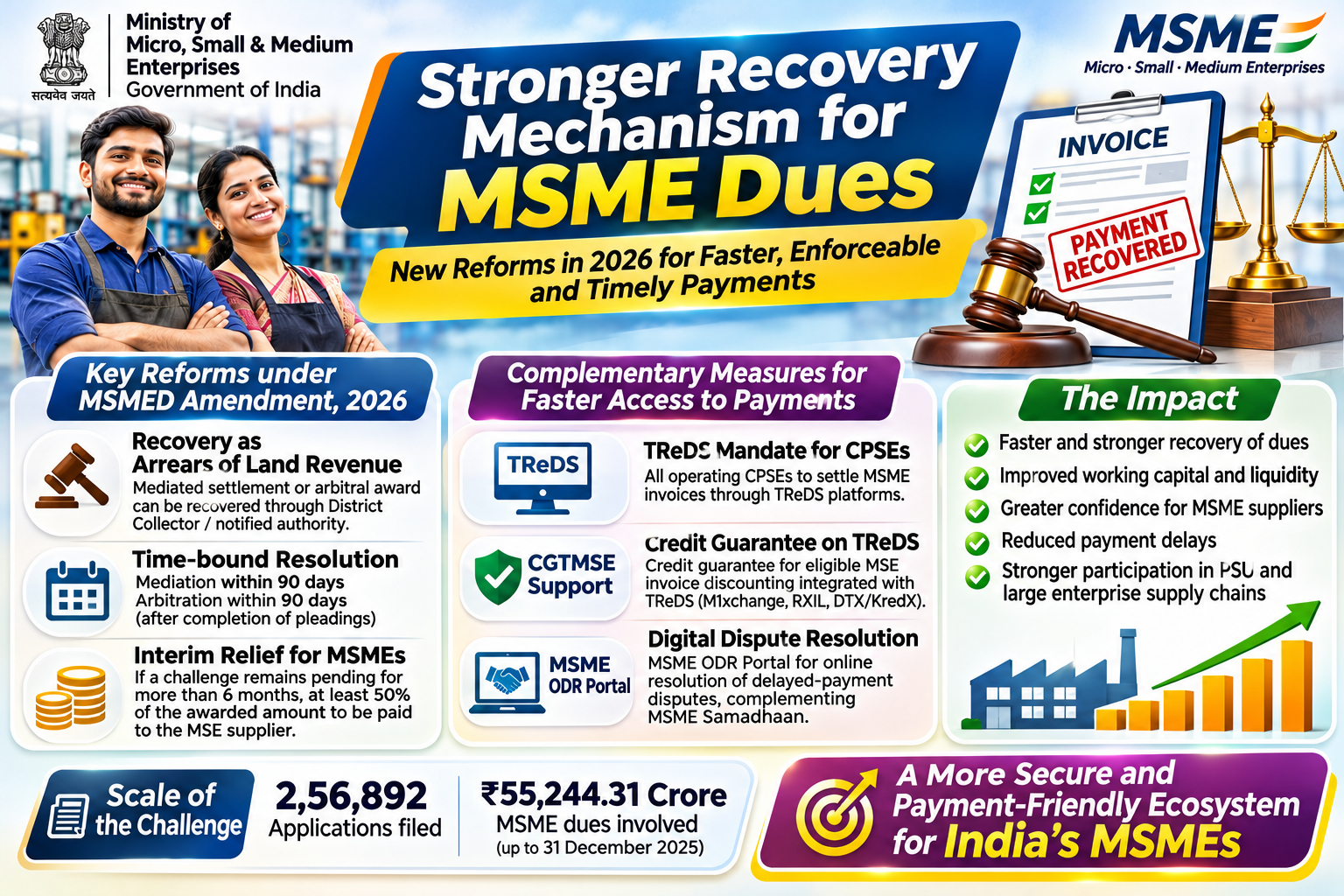
The Micro, Small and Medium Enterprises Development (MSMED) Act, 2006 provides important legal protection to eligible micro and small enterprises against delayed payments.
Under Section 15 of the Act, a buyer must make payment to a micro or small enterprise within the agreed period, which cannot exceed 45 days from acceptance or deemed acceptance of goods or services.
Section 16 provides for compound interest with monthly rests at three times the bank rate notified by the Reserve Bank of India in cases of delayed payment.
Section 18 provides for reference of disputes concerning amounts due to micro and small enterprises to the Micro and Small Enterprises Facilitation Council (MSEFC).
The Council may conduct conciliation itself or refer the matter to an alternative dispute resolution institution for arbitration if conciliation is unsuccessful.
This framework provides an important legal foundation for resolving payment-related disputes involving eligible MSMEs.
Role of ODR in MSME Samadhaan
The Government of India introduced the MSME Samadhaan portal to facilitate the filing and monitoring of delayed payment complaints by eligible micro and small enterprises.
The portal enables registered enterprises to submit applications concerning outstanding payments and track their cases through the relevant authorities.
ODR can complement this mechanism by introducing digital communication, online conciliation and technology-enabled dispute management.
The combination of digital filing, online proceedings and institutional dispute resolution can make the process more convenient for entrepreneurs.
However, submitting a complaint through the Samadhaan portal and participating in a formal ODR proceeding are not automatically the same process. The applicable statutory procedure and the relevant MSEFC’s directions must be followed.
Benefits of ODR for Small Businesses
The adoption of ODR can bring several benefits to India’s MSME ecosystem.
1. Reduction in dispute resolution costs
Small businesses often operate with limited financial resources. Online proceedings can reduce travel, accommodation, documentation and administrative expenses.
2. Faster dispute settlement
Digital communication and online hearings can improve coordination between parties and reduce delays associated with physical proceedings.
3. Improved working capital management
Timely resolution of payment disputes can help enterprises recover outstanding amounts and maintain business operations.
4. Accessibility for rural enterprises
Entrepreneurs located in remote areas can participate in digital proceedings without regularly travelling to district headquarters or major cities.
5. Better business relationships
Mediation and negotiation encourage cooperation and mutually acceptable solutions, helping preserve long-term commercial relationships.
6. Greater transparency
Digital records, electronic documentation and online case tracking can improve accountability and the monitoring of dispute proceedings.
Challenges in Implementing ODR
Despite its advantages, ODR faces certain implementation challenges in India.
Many micro-enterprises lack access to reliable internet connectivity, digital infrastructure and technical knowledge. Language barriers and limited awareness of legal procedures may also prevent entrepreneurs from effectively using online dispute resolution platforms.
Another important concern is data security and confidentiality. Commercial disputes may involve sensitive financial information, contracts, customer details and business records. Therefore, ODR platforms must maintain appropriate cybersecurity, privacy and document protection standards.
The effectiveness of ODR will also depend on the availability of trained mediators, arbitrators, legal professionals and institutional support.
The Road Ahead for India’s MSME Sector
The increasing adoption of digital governance and technology-driven public services creates significant opportunities for strengthening dispute resolution in the MSME sector.
ODR can become an important part of India’s broader business reform agenda by connecting digital platforms with existing legal institutions and statutory dispute resolution mechanisms.
Government agencies, industry associations, banks, financial institutions and MSME organisations can contribute by creating awareness programmes and providing digital assistance to small entrepreneurs.
Greater integration of online mediation, electronic documentation and case management systems can help build a more accessible commercial dispute resolution ecosystem.
Conclusion
Online Dispute Resolution represents an important opportunity to improve the business environment for India’s MSMEs. By reducing procedural difficulties, improving accessibility and encouraging faster settlements, ODR can help small businesses address commercial disputes more efficiently.
For an enterprise operating with limited working capital, timely recovery of outstanding payments can make a substantial difference to its survival and growth.
As India continues to strengthen its digital economy, ODR has the potential to become an important instrument for protecting MSME interests, improving payment discipline and promoting a more transparent and business-friendly environment.
A faster dispute resolution system is not merely a legal reform; it is an important foundation for building stronger, more competitive and financially sustainable MSMEs in India.