By The Worldonomics Times | Global Economy
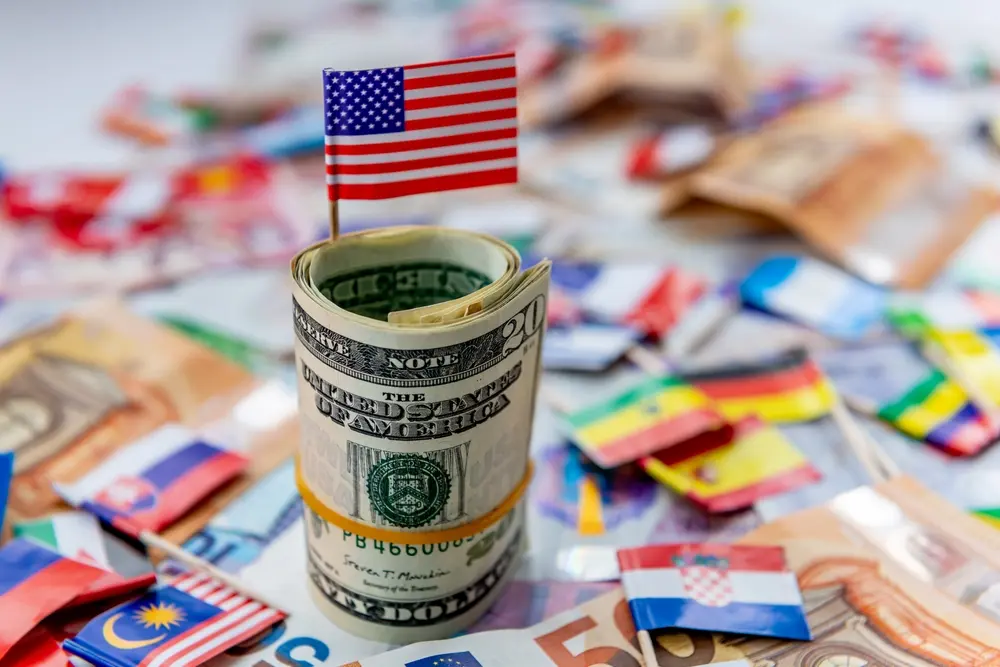
The US dollar continues to play a central role in the global financial system, influencing international trade, investment decisions and currency markets. As the world’s most widely used international currency, movements in the dollar can affect everything from the cost of imported goods and energy to the value of overseas investments and the financial obligations of governments and businesses.
Changes in the dollar’s value are closely monitored by investors, central banks, exporters and importers. A stronger dollar can increase purchasing power for American consumers while making imports more expensive for other countries. Conversely, a weaker dollar can support international competitiveness for US exporters but create challenges for investors holding dollar-denominated assets.
As global economic uncertainty continues, exchange-rate movements are becoming an increasingly important factor in determining international financial conditions.
The Dollar’s Importance in the Global Economy
The US dollar occupies a dominant position in international finance because of the size of the American economy, the depth of its financial markets and its widespread use in global transactions.
According to the Federal Reserve, the dollar remains the leading currency in foreign-exchange transactions, cross-border payments, international lending and official foreign-exchange reserves. Data from the Bank for International Settlements also indicate that the dollar was involved in approximately 89% of global foreign-exchange transactions in 2025.
Many essential commodities, including crude oil, natural gas and several industrial metals, are priced internationally in dollars. This means countries often need access to US currency to purchase energy, raw materials and other internationally traded products.
The dollar’s importance extends beyond trade. Governments and companies around the world issue and borrow debt in dollars, making its value and US interest-rate movements important influences on global financial stability.
What Drives Changes in the US Dollar?
Several economic and financial factors influence the dollar’s performance against other currencies.
Federal Reserve monetary policy: Interest-rate decisions by the US Federal Reserve are among the most important influences on currency markets. Higher US interest rates can attract international capital seeking stronger returns, increasing demand for the dollar. Expectations of interest-rate cuts can have the opposite effect.
Economic performance: Strong employment, consumer spending and business activity can improve confidence in the US economy. Positive economic data may strengthen the dollar, while concerns about slower growth can weaken investor demand.
Inflation and government finances: Persistent inflation can influence expectations about monetary policy. Meanwhile, concerns about government borrowing and fiscal sustainability can affect confidence in US financial assets and the currency.
Geopolitical developments: During periods of international conflict or financial uncertainty, investors may increase their holdings of dollar-denominated assets because of the currency’s established international role. However, political uncertainty within the United States can also influence investor sentiment.
These factors interact continuously, making currency markets sensitive to economic announcements, political developments and changes in global risk appetite.
Impact on International Trade
Dollar movements have a direct influence on international trade because many transactions are conducted using US currency.
When the dollar strengthens, imports into the United States generally become less expensive, potentially benefiting American consumers and businesses purchasing foreign products. However, US exporters may face challenges because their products become more expensive for overseas buyers.
For emerging economies, a stronger dollar can increase the cost of importing essential goods, particularly crude oil, machinery, industrial equipment and certain food commodities. Countries that depend heavily on imported energy may experience additional inflationary pressure.
A weaker dollar can make American exports more competitive internationally. However, it can also increase import costs for US businesses and consumers, depending on how exchange-rate changes are reflected in prices.
Consequently, currency movements can influence trade balances, production costs and the competitiveness of businesses across different economies.
Foreign Investment and Global Financial Markets
The dollar also plays an important role in international investment. Global investors regularly compare expected returns across countries, considering interest rates, economic growth, currency movements and political stability.
When the dollar strengthens, investments denominated in other currencies may become less attractive to some international investors. Capital may move towards US financial assets, placing pressure on emerging-market currencies and stock markets.
A weaker dollar can encourage investors to explore opportunities outside the United States, potentially supporting capital flows into emerging economies. However, the impact depends on wider market conditions and the economic outlook of individual countries.
Recent developments demonstrate how quickly currency sentiment can change. On November 4, 2026, the dollar fell to a one-month low following US midterm election results, as investors assessed the possible implications for economic policy and technology investment. The movement illustrated the influence of domestic political developments on international currency markets.
Implications for Emerging Economies, Including India
Emerging economies are particularly sensitive to movements in the US dollar because of their exposure to international trade, foreign investment and dollar-denominated borrowing.
For India, a stronger dollar can increase the rupee cost of crude oil imports, electronic components, machinery and other internationally traded products. This may contribute to inflation and increase pressure on the country’s import bill.
A weaker rupee can also affect Indian companies that have borrowed in foreign currencies, as repayment obligations become more expensive when measured in domestic currency.
At the same time, exporters may benefit when foreign-currency earnings translate into higher rupee revenues. Information technology services, pharmaceuticals, textiles and other export-oriented industries can experience changes in profitability depending on exchange-rate movements and their currency exposure.
The Reserve Bank of India monitors currency-market conditions and uses monetary and foreign-exchange policy tools to support orderly market functioning and broader economic stability.
The Worldonomics View
The US dollar’s influence on global currency markets reflects its importance within the international financial system. Its movements affect countries differently, creating opportunities for some businesses while increasing financial pressure on others.
For governments and companies, managing currency exposure has become an essential part of financial planning. Exporters and importers can use hedging instruments to reduce uncertainty, while businesses with foreign-currency debt must carefully assess repayment risks.
However, dependence on the dollar also highlights the importance of stronger domestic financial markets and diversified international trade relationships. Emerging economies can improve resilience by developing local-currency financing, maintaining adequate foreign-exchange reserves and strengthening their export competitiveness.
The dollar is likely to remain a major influence on global finance, but its future performance will depend on economic fundamentals, monetary policy and international confidence.
Conclusion
The US dollar remains one of the most influential forces in international currency markets. Its movements affect trade costs, commodity prices, foreign investment and the financial stability of economies worldwide.
As global economic and political conditions continue to evolve, businesses and governments must remain prepared for exchange-rate volatility. Effective currency-risk management, stable economic policies and diversified financial strategies will be essential for navigating changing international market conditions.
Ultimately, understanding the dollar’s movements is not only important for currency traders but also for businesses, investors and policymakers seeking to protect economic stability and support sustainable growth.