By The Worldonomics Times | Global Economy
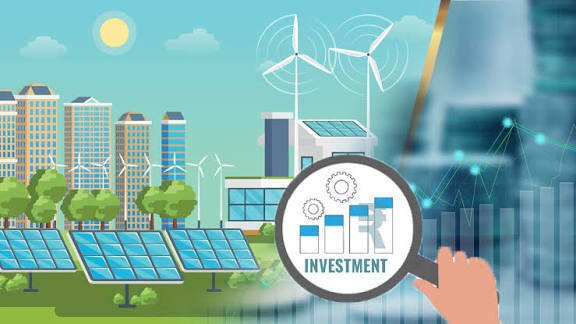
Renewable energy is becoming an increasingly important part of the global economic landscape as governments and businesses accelerate investment in clean energy projects. Growing electricity demand, concerns about energy security, technological innovation and the need to reduce carbon emissions are encouraging countries to diversify their energy sources.
Solar power, wind energy, hydropower and battery storage are attracting significant attention from investors. At the same time, companies are exploring opportunities in green hydrogen, electric transportation and modern electricity infrastructure.
The transition towards cleaner energy is no longer driven exclusively by environmental objectives. It is also becoming an economic and strategic priority, creating opportunities for employment, industrial development and international investment.
Global Investment Supports the Clean Energy Transition
Investment in renewable energy and other clean technologies has increased substantially over recent years. According to BloombergNEF’s Energy Transition Investment Trends 2026, global energy transition investment reached a record approximately $2.3 trillion in 2025, representing an 8% increase compared with 2024.
Renewable energy generation, electrified transportation and electricity-grid infrastructure accounted for significant portions of this investment.
However, the expansion has not been uniform. The Clean Investment Monitor’s first-half 2026 report found that global clean technology investment was 17% lower than during the corresponding period of 2025. Investment recovered modestly in the second quarter, but remained below the elevated levels recorded towards the end of the previous year.
This indicates that the long-term transition remains important, although project financing, changing government policies and market conditions continue to influence investment decisions.
Solar and Wind Energy Attract Growing Interest
Solar and wind power remain two of the most important technologies supporting renewable energy expansion.
Solar energy has become increasingly competitive because of improvements in photovoltaic technology, manufacturing efficiency and installation costs. Businesses, households and electricity providers are investing in solar installations to diversify their power supplies and reduce exposure to changing fossil-fuel prices.
Wind energy is also attracting investment, particularly in regions with favourable natural resources. Onshore wind projects continue to expand, while offshore wind developments offer opportunities for countries with suitable coastal locations.
According to the Clean Investment Monitor, solar and wind accounted for approximately 62% and 23% respectively of global clean electricity investment during the first half of 2026.
These technologies are expected to remain central to future energy development. However, their expansion requires additional investment in electricity transmission, distribution and storage to manage variations in power generation.
Governments Introduce Policies to Encourage Investment
Government support plays an important role in attracting private capital to renewable energy projects. Policies such as tax incentives, financial assistance, competitive auctions and long-term electricity purchase agreements can improve project viability and encourage investment.
Countries are increasingly treating renewable energy as part of their economic development and energy-security strategies.
The European Commission’s Clean Energy Investment Strategy, announced in March 2026, estimates that Europe will require approximately €660 billion in annual investment through 2030 to support its clean energy transition. The strategy aims to mobilise additional private capital alongside public financing.
In the United Kingdom, the government announced in June 2026 that more than £100 billion in private clean-energy investment had been secured through investment announcements since taking office.
These developments demonstrate how governments are using policy frameworks and financial partnerships to encourage businesses and institutional investors to participate in clean energy development.
India Strengthens Its Renewable Energy Ambitions
India is emerging as an important destination for renewable energy investment. Rising electricity demand, expanding industrial activity and growing interest in energy independence are encouraging investment in solar parks, wind farms, battery storage and green hydrogen.
The country has established ambitious renewable energy objectives and is encouraging domestic and international companies to participate in clean energy development.
At the Bharat Renewable Energy Summit and Expo 2026, the Indian government highlighted that the renewable energy sector had attracted more than ₹15 lakh crore in investment over the previous decade. It also identified substantial additional investment opportunities through the end of the decade.
Recent project developments demonstrate the scale of activity. In August 2026, the Andhra Pradesh government and Suzlon announced the beginning of 1,325 MW of wind projects in Ananthapuramu, involving an expected investment of approximately ₹10,500 crore.
India’s renewable energy expansion could support manufacturing, infrastructure development, employment and technology transfer while reducing dependence on imported fossil fuels.
Battery Storage and Grid Infrastructure Become Essential
Renewable energy investment involves more than installing solar panels and wind turbines. Electricity systems must also become capable of managing variable power generation and delivering electricity reliably.
Battery energy storage systems are therefore receiving increasing attention. They can store surplus electricity when renewable generation is high and release it when demand increases or production declines.
Modernising transmission networks is equally important. Renewable energy projects are often located far from major cities and industrial centres, requiring investment in transmission lines, substations and distribution systems.
Businesses are also exploring energy-management software, smart grids and digital monitoring systems to improve electricity efficiency.
These supporting technologies will play a critical role in ensuring that renewable energy becomes a dependable part of national electricity systems.
Challenges Facing Renewable Energy Investment
Despite strong long-term opportunities, the sector faces several challenges. Large renewable energy projects require substantial initial capital, land availability, regulatory approvals and reliable infrastructure.
Higher financing costs can make projects less attractive, particularly in developing economies where access to affordable long-term capital remains limited.
Supply-chain concentration is another concern. Dependence on a limited number of countries for solar components, batteries and critical minerals can expose projects to trade restrictions and international disruptions.
Grid congestion, delays in transmission development and uncertainty surrounding government incentives can also affect project timelines.
Addressing these challenges will require consistent policies, stronger international partnerships and improved access to financing.
The Worldonomics View
Renewable energy investment represents more than a transition from fossil fuels to cleaner electricity. It is an opportunity to reshape industrial development, strengthen energy security and create new sources of economic growth.
However, investment announcements alone cannot guarantee a successful transition. Projects must move from planning to construction and ultimately deliver reliable, affordable electricity.
Governments should focus on predictable regulations, efficient approval processes and modern infrastructure. Businesses must evaluate projects on their financial viability, technological performance and long-term contribution to energy systems.
Developing economies also need greater access to affordable finance and technology so that the benefits of clean energy are not concentrated in a small number of advanced markets.
The countries that successfully combine renewable generation with storage, grid development and domestic manufacturing will be better positioned to benefit from the next phase of the global energy transition.
Conclusion
Renewable energy investment continues to create significant opportunities for governments, businesses and international investors. Solar power, wind energy, battery storage and modern electricity infrastructure are becoming important priorities as countries respond to rising energy demand and changing economic conditions.
Although financing constraints, supply-chain risks and infrastructure limitations remain challenges, the long-term direction of the energy sector is increasingly focused on cleaner and more diversified power systems.
As investment expands, renewable energy could become a major driver of industrial innovation, employment and sustainable economic development worldwide.