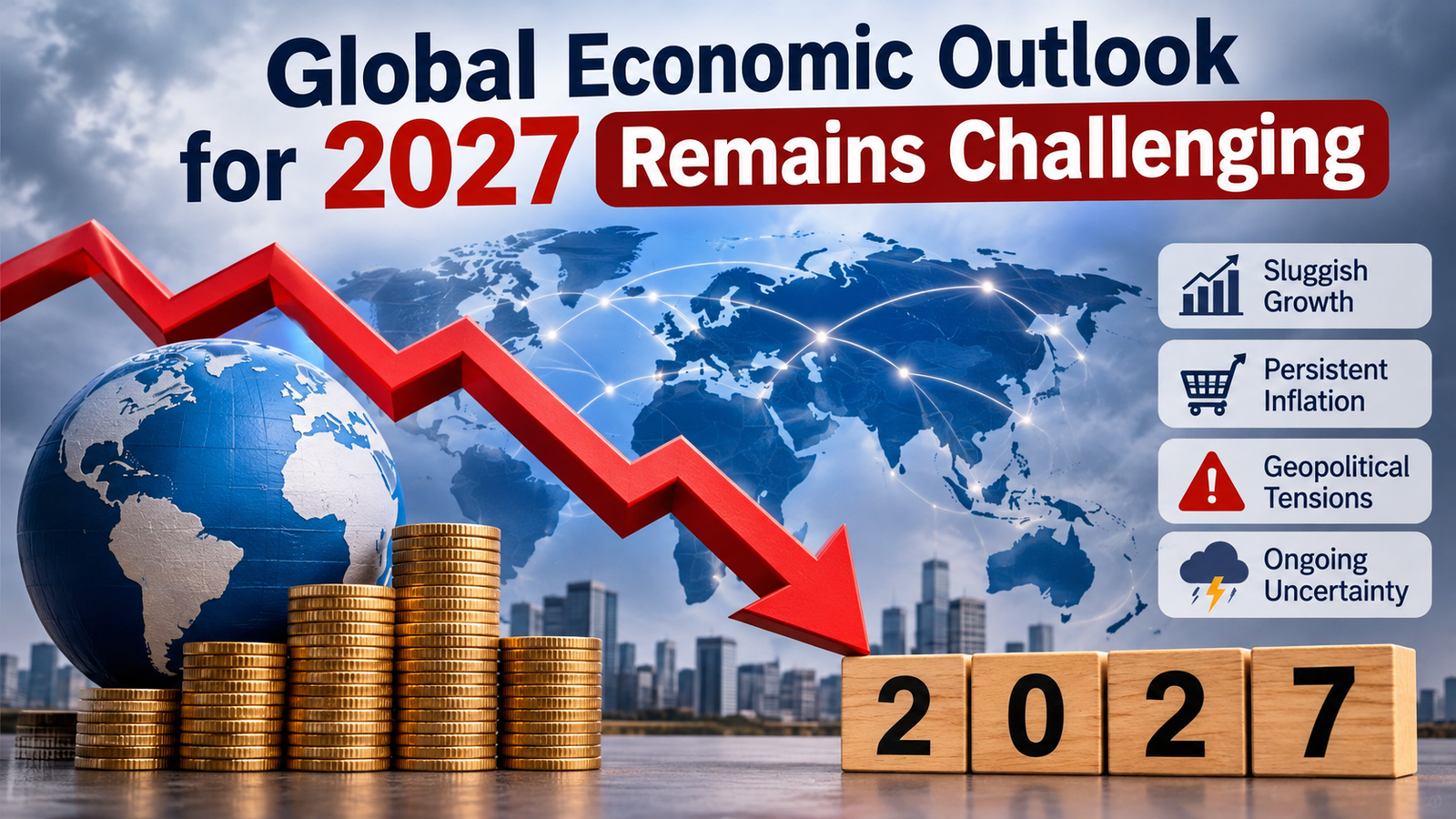
Economists expect energy costs, inflation, geopolitical risks, and financial market uncertainty to remain important challenges for the world economy.
By The Worldonomics Times | Global Economy
The global economy is approaching 2027 amid a combination of persistent economic pressures and uncertain growth prospects. Rising energy costs, inflationary risks, geopolitical tensions and financial market volatility are creating challenges for governments, businesses and investors worldwide. Although international economic activity has demonstrated resilience, economists warn that the outlook remains vulnerable to further disruptions.
The ongoing conflict in the Middle East, changing trade policies and concerns about government debt are influencing economic forecasts. At the same time, investment in artificial intelligence, technological innovation and expanding international trade are providing support to selected industries and economies.
The central challenge for 2027 will be maintaining economic growth while managing inflation, protecting financial stability and responding to geopolitical uncertainty.
Global Growth Expected to Remain Moderate
International institutions expect the global economy to continue expanding in 2027, although growth projections vary depending on assumptions about energy prices, geopolitical developments and financial conditions.
The International Monetary Fund’s October 2026 World Economic Outlook projects global economic growth of 3.4% in 2027, following an estimated 3.1% in 2026. However, the IMF emphasises that risks remain tilted towards weaker outcomes, particularly if geopolitical conflicts intensify or financial markets experience a significant correction.
The Organisation for Economic Co-operation and Development (OECD), in its September 2026 Economic Outlook, forecasts global growth of 3.0% in 2027. It identifies higher energy prices, weaker household purchasing power and elevated interest rates as important constraints on economic activity.
These differences highlight the uncertainty surrounding the outlook. Economic performance will depend significantly on whether energy markets stabilise, consumer spending improves and businesses continue investing despite financial pressures.
Energy Prices Remain a Major Economic Concern
Energy costs are expected to remain an important influence on the global economy in 2027. Geopolitical tensions in the Middle East have disrupted oil and gas supplies, increased shipping risks and created uncertainty for international energy markets.
Higher oil and natural gas prices can increase production expenses for manufacturers, transportation companies and energy-intensive industries. Businesses may pass these costs to consumers, contributing to inflation and reducing household purchasing power.
Energy-importing economies are particularly vulnerable because expensive fuel increases import bills and can weaken trade balances. Developing countries with limited foreign-exchange reserves may face additional pressure on their currencies and government finances.
The OECD expects energy prices to ease during 2027 under its baseline assumptions, helping inflation gradually moderate. However, a prolonged disruption to production and shipping could keep energy costs elevated and weaken economic growth.
Governments are therefore likely to continue focusing on energy security, diversified supply arrangements, strategic reserves and investment in renewable energy.
Inflation Continues to Influence Monetary Policy
Although inflation has moderated in several major economies compared with previous peaks, price pressures remain a concern. Higher energy and food costs, supply-chain disruptions and increased business expenses could prevent inflation from returning quickly to central bank targets.
The IMF projects global headline inflation to decline from 4.7% in 2026 to 4.1% in 2027. The OECD expects G20 headline inflation to ease from 4.1% to 3.6% over the same period.
These projections suggest gradual improvement rather than an immediate return to price stability.
Central banks will need to balance inflation control with the objective of supporting economic activity. If energy prices rise again or inflation expectations become less stable, monetary authorities may maintain restrictive interest rates for longer.
Higher borrowing costs could affect mortgage markets, consumer credit, business investment and government financing. This would create additional difficulties for economies already dealing with high public debt and weaker demand.
Geopolitical Tensions and Trade Uncertainty
Geopolitical developments are expected to remain an important source of economic uncertainty in 2027. Conflicts, international sanctions, trade restrictions and disruptions to shipping routes can affect commodity markets and global supply chains.
The Middle East remains particularly important because of its role in international energy production and transportation. Any prolonged disruption could increase oil and gas prices, raise freight costs and create further inflationary pressure.
Trade policy uncertainty is another challenge. Changes in tariffs, export restrictions and international trade agreements can influence business confidence and investment decisions. Companies may delay expansion plans or diversify suppliers to reduce exposure to unexpected policy changes.
Although supply-chain diversification can improve resilience over time, it may initially increase production and transportation expenses.
Financial Markets Face Debt and Investment Risks
Financial market uncertainty is likely to remain an important issue in 2027. Rising government debt, elevated sovereign bond yields and concerns about technology valuations are influencing investment decisions.
Governments with large financing requirements may face higher interest expenses as they refinance existing debt. This can reduce fiscal flexibility and limit spending on infrastructure, education and other development priorities.
The rapid expansion of artificial intelligence also presents both opportunities and risks. Investment in data centres, semiconductors and advanced computing infrastructure is supporting economic activity. However, if expected financial returns fail to match investment expectations, technology valuations could face corrections.
The IMF has highlighted fiscal vulnerabilities and a potential reassessment of AI investment expectations among the downside risks to financial stability.
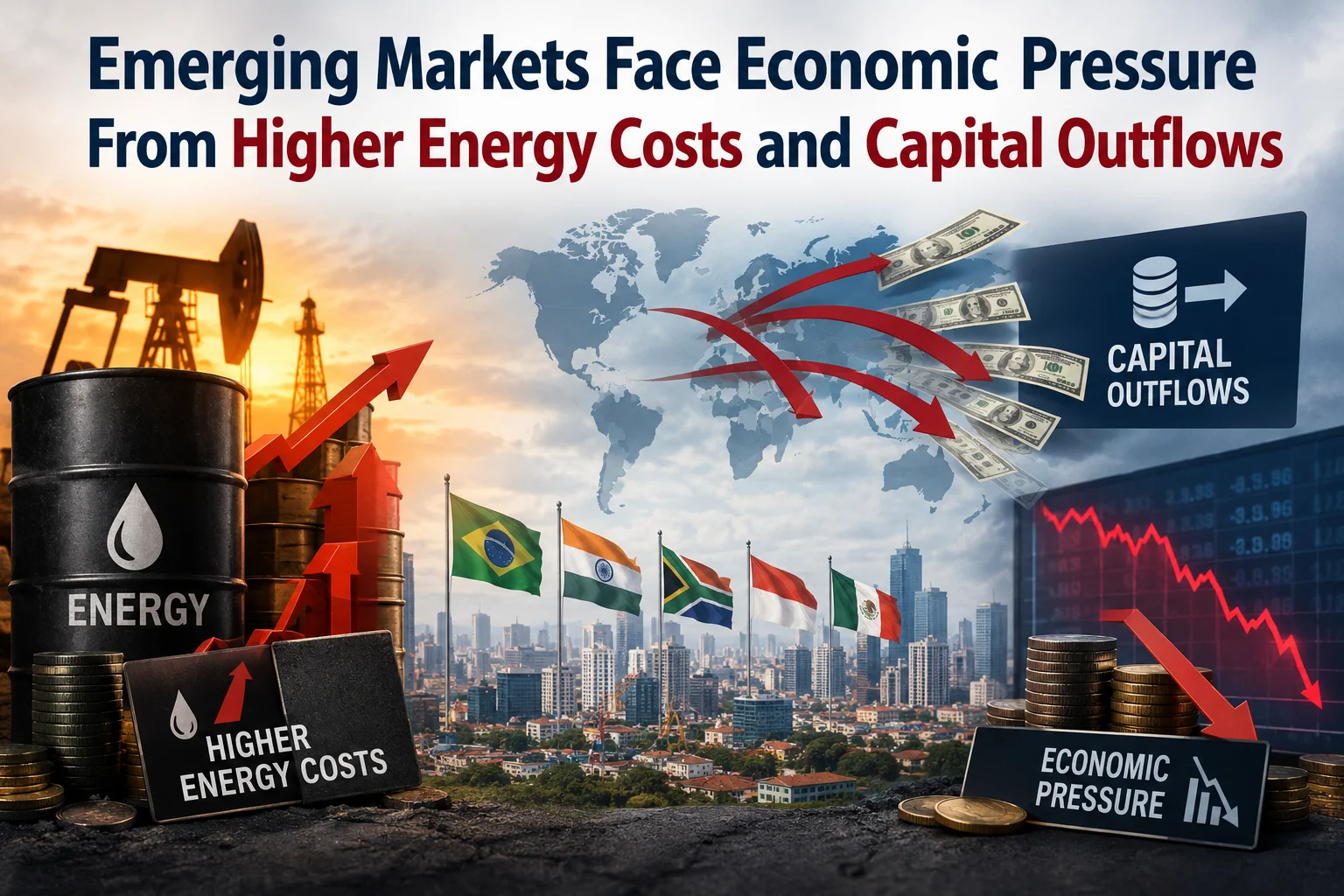
Emerging markets may face additional pressure from capital outflows, currency volatility and expensive external financing. Countries with stronger financial institutions, diversified exports and manageable debt levels are likely to be better positioned to withstand these developments.
Businesses and Governments Prepare for Uncertainty
Businesses are likely to prioritise financial discipline, operational efficiency and supply-chain resilience in 2027. Companies may review investment plans, diversify suppliers, adopt digital technologies and improve energy efficiency to manage rising costs.
Governments will also need to maintain a careful balance between supporting economic activity and protecting public finances. Targeted assistance for vulnerable households and businesses may help reduce the effects of higher living costs without creating excessive fiscal pressure.
Investment in infrastructure, education, renewable energy and digital capabilities will remain important for strengthening long-term economic competitiveness.
International cooperation will also be essential to improve trade stability, manage financial risks and support economies facing external debt difficulties.
The Worldonomics View
The global economic outlook for 2027 reflects an economy that remains resilient but increasingly exposed to interconnected risks. Energy disruptions can contribute to inflation, higher inflation can delay monetary easing, and elevated interest rates can increase government debt-servicing costs. These pressures can reinforce one another and weaken economic confidence.
However, the outlook should not be viewed entirely negatively. Technological investment, expanding digital services, infrastructure development and productivity improvements offer opportunities for growth. The IMF and OECD both expect continued global economic expansion in their baseline forecasts, although they differ on its pace.
The priority for policymakers should be to strengthen economic resilience rather than depend on temporary support measures. Stable energy supplies, responsible fiscal management, predictable trade policies and investment in productive industries will be essential.
Conclusion
The global economy is expected to face several challenges in 2027, including elevated energy costs, persistent inflation risks, geopolitical tensions and financial market uncertainty. Although international growth is projected to continue, the pace and distribution of economic progress will depend on how effectively countries manage these pressures.
Governments and businesses that strengthen financial stability, diversify supply chains and invest in long-term productivity will be better prepared for an uncertain economic environment. The ability to balance growth with stability will remain central to the global economic outlook in 2027.