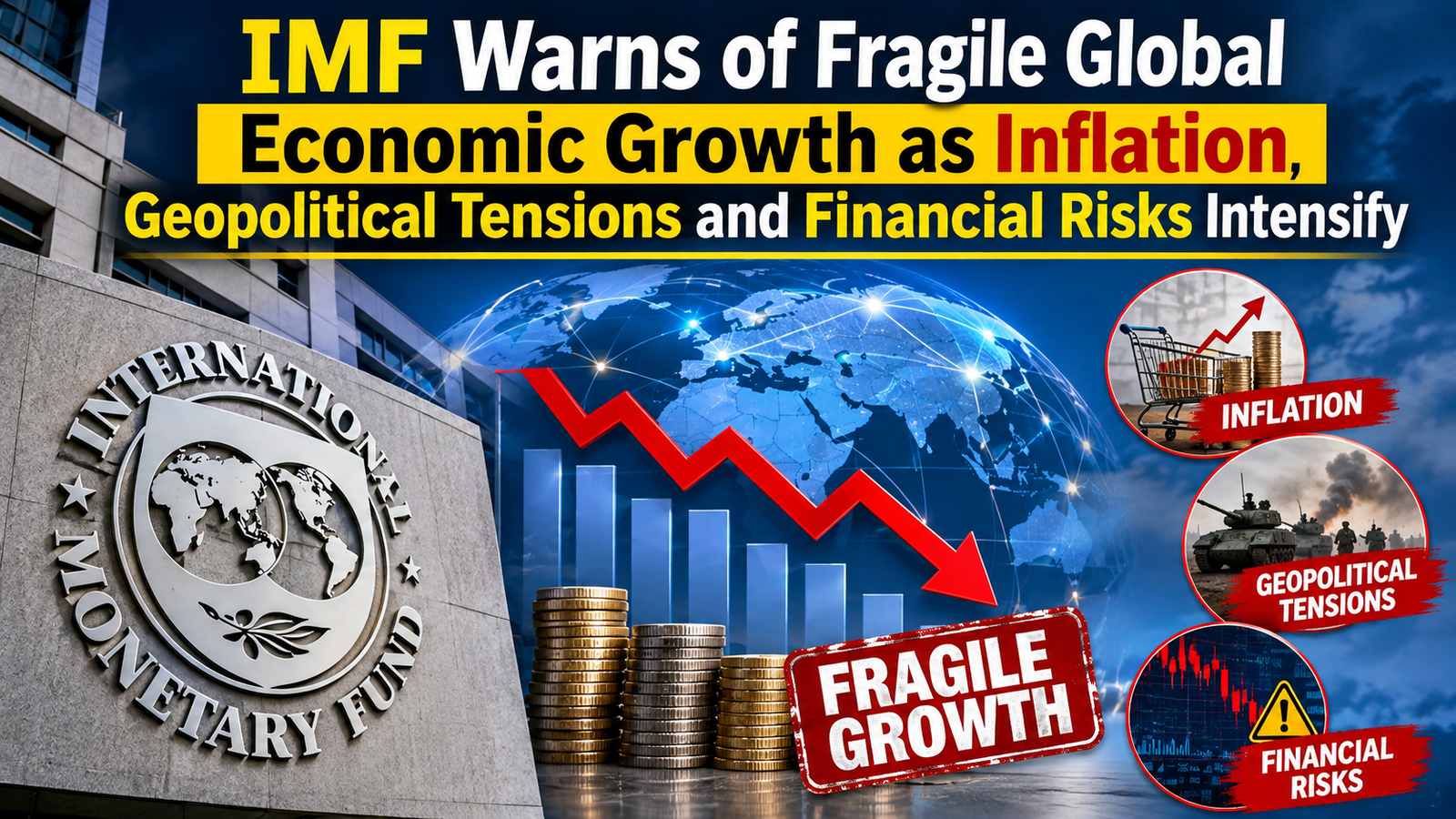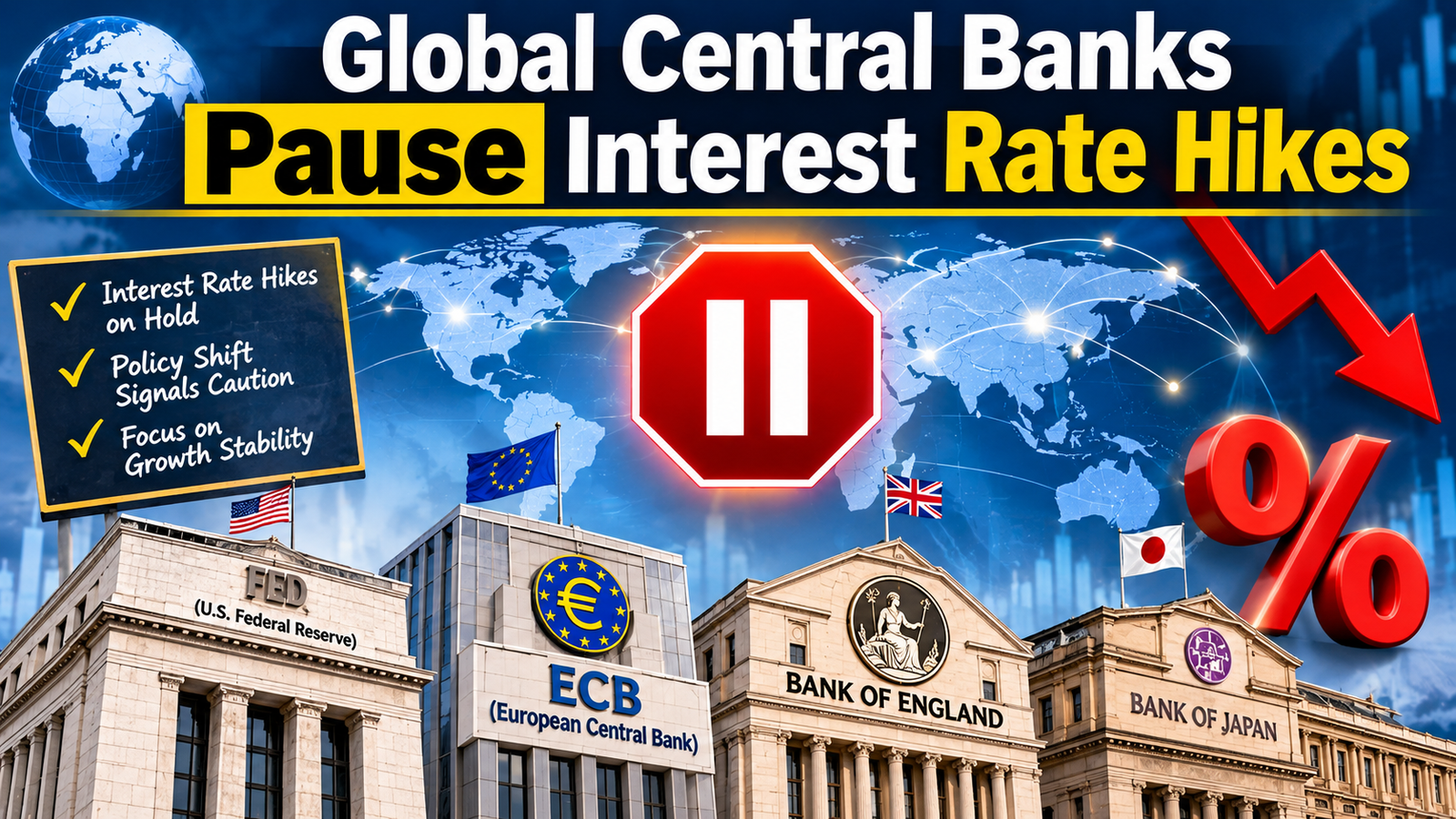
Major central banks maintain a cautious monetary policy stance as inflationary pressures, geopolitical uncertainty and higher energy costs complicate decisions on future interest rate movements.
The global financial landscape is entering a critical phase as central banks reassess their monetary policies amid persistent inflation and rising energy prices. After an aggressive round of interest rate increases in September 2026, several major central banks maintained their benchmark interest rates during October, signalling a cautious approach towards controlling inflation without placing additional pressure on economic growth.
The October pause, however, does not necessarily indicate the end of monetary tightening. According to a Reuters report published on November 4, central banks overseeing the world’s major traded currencies largely held rates steady during October, while policymakers continued to warn that inflationary risks could require further action.
The development reflects the difficult balancing act facing monetary authorities: controlling rising prices while protecting economic activity, employment and financial stability.
Major Central Banks Adopt a Wait-and-Watch Approach
The United States Federal Reserve, European Central Bank (ECB), Bank of Japan and Reserve Bank of New Zealand maintained their interest rates during their October policy decisions.
The European Central Bank, in its October 29 announcement, decided to keep its three key interest rates unchanged. It highlighted that rising energy prices were creating upside risks for inflation while simultaneously increasing downside risks to economic growth.
Similarly, the US Federal Reserve maintained its benchmark interest rate range of 3.75%–4.00% following its October 28 meeting, after increasing rates in September.
However, the global picture is not entirely uniform. Canada’s central bank raised interest rates during October, while the Bank of England increased its Bank Rate to 4% on November 5, marking its first increase in more than three years.
These differing decisions demonstrate that monetary policy is increasingly being shaped by domestic inflation trends, economic conditions and exposure to international energy markets.
Rising Energy Prices Complicate Inflation Management
One of the biggest challenges confronting central banks is the renewed increase in global energy prices.
Geopolitical tensions and disruptions to international energy supplies have pushed oil and gas prices higher, increasing production, transportation and electricity costs across several economies.
Higher energy costs can spread throughout the economy, affecting manufacturing, agriculture, logistics and household consumption. Businesses facing increased operating expenses may transfer these costs to consumers, creating additional inflationary pressure.
This situation presents a particular challenge for central banks because energy-driven inflation is often influenced by supply-side disruptions rather than excessive consumer demand.
Increasing interest rates can reduce borrowing and spending, helping contain broader inflationary pressures. However, monetary tightening cannot directly resolve oil supply disruptions or geopolitical conflicts.
Policymakers must therefore carefully assess whether higher energy prices are temporary or likely to become embedded in broader inflation expectations.
Borrowers, Businesses and Financial Markets Face Uncertainty
The interest rate outlook has significant implications for households, businesses and financial markets.
For consumers, elevated borrowing costs can increase mortgage payments, personal loan expenses and credit card obligations. Households may respond by reducing discretionary spending, which can weaken demand across retail, housing and consumer services.
Businesses, particularly small and medium-sized enterprises, may also experience increased financial pressure. Higher borrowing costs can discourage capital investment, expansion plans and employment generation.
Financial markets are equally sensitive to central bank decisions. Interest rate expectations influence government bond yields, currency valuations, equity markets and international investment flows.
If inflation remains persistent, investors may anticipate additional monetary tightening, potentially creating volatility across global financial markets.
Emerging economies could face additional challenges through exchange-rate fluctuations, capital outflows and higher external financing costs.
Emerging Economies Face a Difficult Balancing Act
Developing economies are particularly exposed to international monetary developments because of their dependence on global capital flows, energy imports and foreign investment.
Higher global interest rates can make investments in advanced economies more attractive, potentially placing pressure on emerging-market currencies.
Countries with substantial energy imports may also experience worsening trade balances when oil and gas prices increase.
India, for example, must carefully balance domestic economic growth, inflation management, currency stability and external-sector pressures. Although domestic demand and infrastructure investment provide important economic support, fluctuations in international crude oil prices remain a significant concern.
Central banks in emerging markets therefore need to consider both domestic economic indicators and international financial developments when determining their monetary policy direction.
What Lies Ahead for Global Monetary Policy?
The coming months will be crucial in determining whether the October pause develops into a prolonged period of stable interest rates or whether central banks resume tightening.
Future decisions will largely depend on inflation data, energy prices, employment conditions, wage growth and economic activity.
Central banks are expected to remain data-dependent, avoiding premature policy changes that could undermine their efforts to restore price stability.
If energy prices continue rising and inflation remains above target, additional rate increases could become necessary. Conversely, if economic activity weakens significantly and inflation moderates, policymakers may have greater flexibility to maintain or eventually reduce borrowing costs.
The challenge will be finding the right balance between controlling inflation and preventing unnecessary damage to economic growth.
The Worldonomics Times View
The decision by several major central banks to maintain interest rates reflects a period of caution rather than a clear victory over inflation. While monetary authorities appear willing to assess the impact of previous rate increases, persistent energy price pressures and geopolitical uncertainty continue to complicate the global economic outlook.
In our view, central banks must avoid treating interest rate adjustments as the only solution to inflation. When rising prices are driven primarily by energy supply disruptions, geopolitical tensions and international commodity markets, monetary tightening alone cannot address the underlying causes.
A balanced policy approach is essential. Governments should strengthen energy security, diversify supply chains, encourage domestic production and improve infrastructure to reduce exposure to external economic shocks.
For India and other emerging economies, maintaining macroeconomic stability while supporting investment and employment should remain a priority. Stable inflation, a resilient currency, responsible fiscal management and strong domestic demand will be critical to navigating international financial uncertainty.
We also believe that predictable monetary policy communication is increasingly important. Businesses and households need clarity to make long-term investment, borrowing and consumption decisions.
The global economy does not simply need lower inflation or cheaper borrowing; it needs a sustainable balance between price stability and economic growth.
The current pause in interest rate hikes should therefore be viewed as an opportunity for policymakers to evaluate economic conditions carefully, strengthen financial resilience and prepare for future uncertainties. Ultimately, the success of monetary policy will depend not on how aggressively rates are adjusted, but on how effectively economic stability and sustainable growth are achieved.