Global growth projected at 3.1% in 2026, while rising inflation, energy market disruptions and mounting economic uncertainties threaten the stability of the world economy.
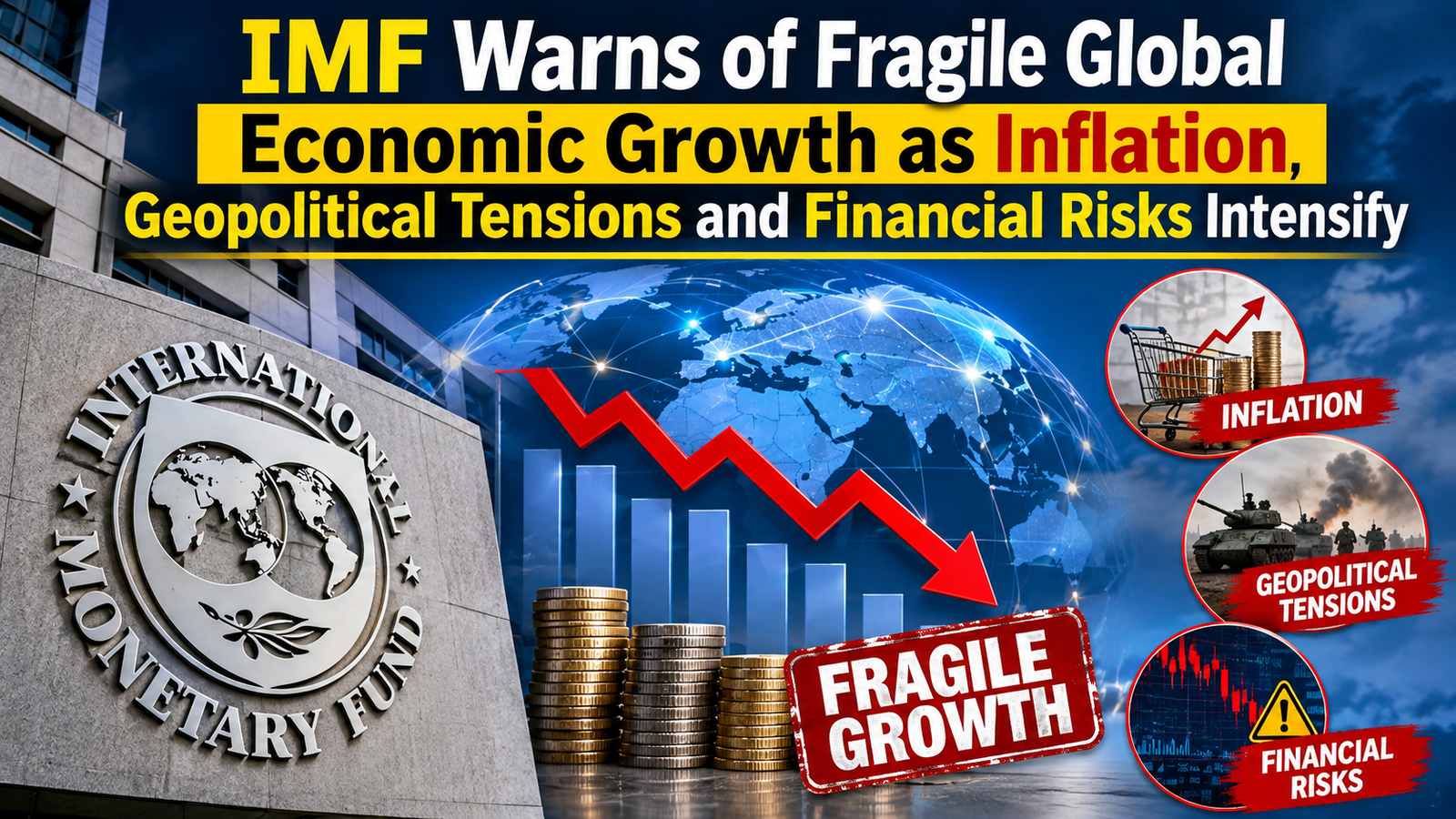
The global economy is heading into an increasingly uncertain phase, with the International Monetary Fund (IMF) warning that economic growth remains fragile amid persistent inflationary pressures, geopolitical conflicts and growing financial vulnerabilities. According to the IMF’s October 2026 World Economic Outlook (WEO), global economic growth is projected to reach 3.1% in 2026, before improving moderately to 3.4% in 2027.
Although the projection indicates that the global economy continues to demonstrate resilience, the IMF cautions that underlying economic conditions remain uneven, with significant downside risks threatening the recovery. The latest assessment highlights how geopolitical instability, rising commodity prices, fiscal pressures and uncertainty surrounding financial markets are increasingly influencing the global economic outlook.
Global Growth Faces Mounting Challenges
The IMF’s latest forecast reflects a global economy operating under considerable pressure. While economic activity continues across major markets, growth is losing momentum compared with the estimated 3.5% expansion recorded in 2025.
One of the major concerns is the uneven distribution of economic growth. Countries benefiting from strong technology investment, particularly artificial intelligence (AI), are experiencing relatively favourable economic conditions. In contrast, energy-importing economies and lower-income nations are facing greater challenges due to higher import costs, weaker financial positions and limited policy flexibility.
The IMF estimates that global headline inflation will rise to 4.7% in 2026 before moderating to 4.1% in 2027. Higher energy and food prices are among the important factors contributing to renewed inflationary pressure, creating additional difficulties for governments and central banks attempting to maintain price stability.
Persistent inflation could also affect household purchasing power, business investment and consumer demand, potentially slowing economic activity further.
Geopolitical Tensions Disrupt Global Economic Stability
Geopolitical uncertainty has emerged as one of the most significant threats to the global economic outlook. Ongoing conflicts, particularly disruptions affecting energy supplies and international trade routes, have increased uncertainty across commodity markets and global supply chains.
Rising energy prices have placed additional pressure on industries dependent on oil, gas and other essential commodities. Higher transportation, manufacturing and production costs can eventually translate into increased prices for consumers.
Developing economies are particularly vulnerable to these developments because many depend heavily on imported energy, food and industrial raw materials. Higher import bills can weaken foreign exchange reserves, increase fiscal pressure and create difficulties in managing external debt.
The IMF has warned that further escalation of geopolitical conflicts could intensify these challenges, potentially resulting in weaker global demand and more persistent inflation.
Financial Risks and Government Debt Under Scrutiny
Apart from inflation and geopolitical developments, growing financial vulnerabilities represent another major concern.
Several governments are dealing with elevated public debt and increasing borrowing costs, limiting their ability to respond effectively to economic shocks. Higher interest rates can increase debt-servicing expenses, reduce public investment capacity and place additional pressure on national budgets.
Financial markets also remain exposed to sudden changes in investor sentiment. A reassessment of expectations surrounding artificial intelligence investment, unexpected movements in bond yields or renewed geopolitical instability could trigger market corrections and tighter financial conditions.
The IMF has also highlighted fiscal vulnerabilities as a significant downside risk. Governments must therefore balance the need to support economic activity with the importance of maintaining sustainable public finances.
Artificial Intelligence Offers Growth Opportunities
Despite the challenging environment, technological investment is providing an important source of support for global economic activity.
Artificial intelligence, digital infrastructure and technological innovation are attracting substantial investments, creating opportunities for productivity improvements and new business models.
The expansion of AI-related industries is supporting investment, trade and demand in economies integrated into global technology supply chains. However, the IMF cautions that a reassessment of expectations surrounding AI could create financial market volatility.
The long-term economic benefits of artificial intelligence will depend on whether technological investment translates into sustainable productivity gains, stronger employment opportunities and broader economic development.
Policy Priorities for a More Resilient Global Economy
The IMF emphasises the importance of coordinated and credible economic policies to strengthen global resilience.
Central banks must remain focused on maintaining price stability while responding carefully to changing economic conditions. Governments, meanwhile, need to rebuild fiscal buffers, improve public spending efficiency and establish sustainable debt-management strategies.
International cooperation will also remain essential. Greater coordination on trade, investment, financial regulation and energy security can help reduce economic fragmentation and strengthen the global recovery.
For emerging and developing economies, improving infrastructure, diversifying energy sources, strengthening domestic industries and attracting productive investment will be particularly important.
The Worldonomics Times View
The IMF’s warning about fragile global economic growth should be viewed as more than a routine economic forecast. It is a reminder that global economic resilience remains vulnerable when geopolitical instability, inflation and financial uncertainty develop simultaneously.
A projected growth rate of 3.1% indicates that the world economy is still expanding, but the quality and distribution of that growth deserve closer attention. Economic progress cannot be measured solely through headline GDP figures when households continue to face rising living costs and businesses struggle with unpredictable operating conditions.
For developing economies such as India, the evolving global situation presents both opportunities and challenges. Strong domestic consumption, infrastructure investment, manufacturing expansion and digital transformation can help support economic momentum. However, exposure to international energy prices, trade disruptions and volatile capital flows remains an important concern.
We believe policymakers must prioritise long-term economic stability over short-term growth incentives. Strengthening domestic production, encouraging innovation, maintaining fiscal discipline and building resilient supply chains should become central elements of national economic strategies.
The global economy does not necessarily face an inevitable downturn, but its ability to sustain growth will depend on how effectively governments and financial institutions respond to emerging risks.
The message is clear: resilience must be supported by responsible policymaking, international cooperation and sustainable economic development. Growth alone is not enough; stability, inclusiveness and preparedness will ultimately determine the strength of the global economy.