Introduction
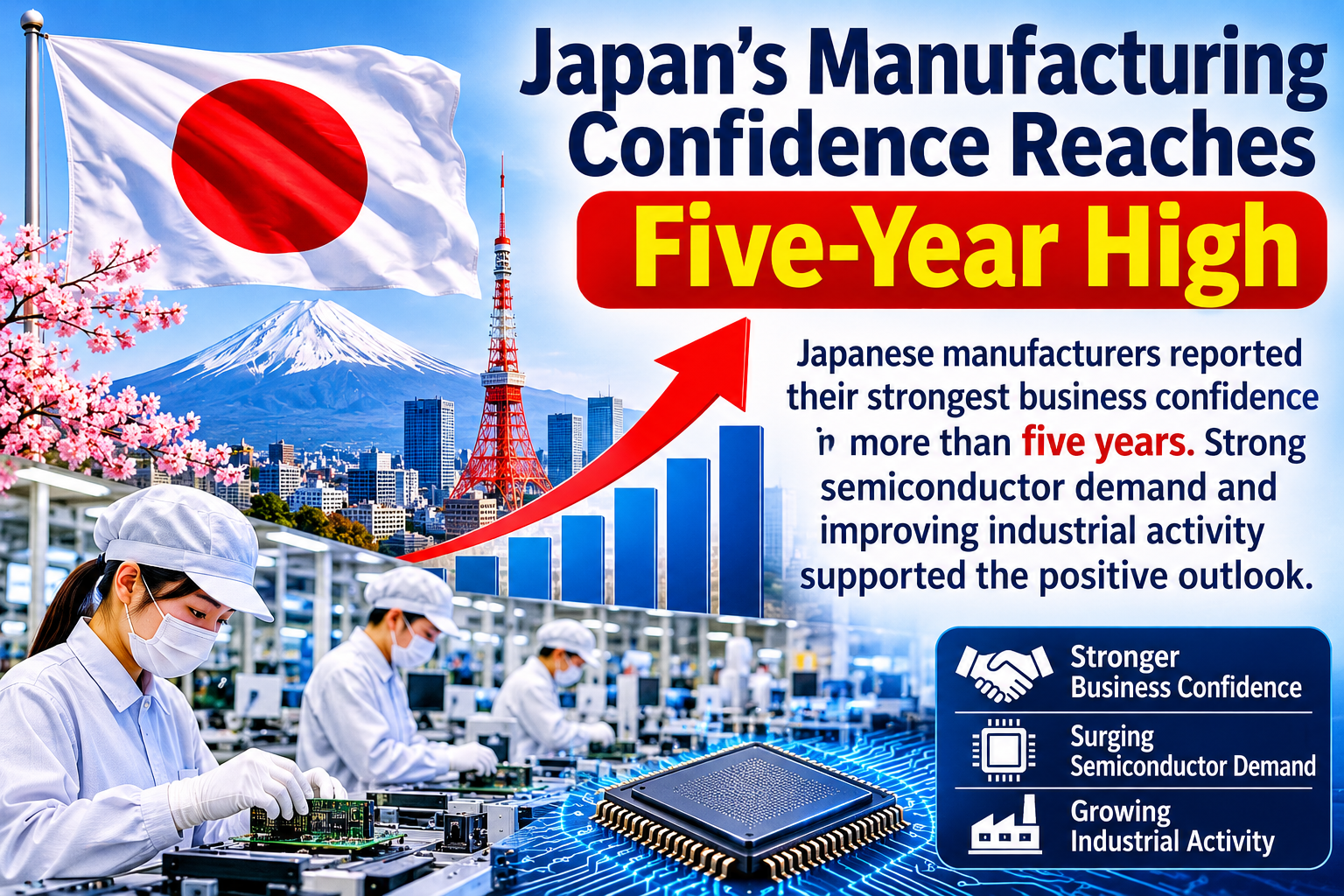
Japan’s manufacturing sector is showing renewed strength as business confidence reaches its highest level in more than five years, supported by growing semiconductor demand and improving industrial activity. The positive development reflects the country’s expanding role in global technology supply chains and increasing demand for advanced electronic components, machinery and semiconductor-related equipment.
According to the latest Reuters Tankan survey released in November 2026, Japanese manufacturers are becoming increasingly optimistic about business conditions. The improvement comes at a time when global demand for artificial intelligence (AI), data centres and advanced computing technologies is creating fresh opportunities for Japan’s industrial sector.
The development is particularly important for Japan, which has been working to strengthen its manufacturing competitiveness, encourage technological innovation and support sustainable economic growth.
Manufacturing Confidence Reaches Its Strongest Level Since 2021
The latest Reuters Tankan survey revealed that the manufacturing sentiment index increased to +27 in November 2026, compared with +22 in October. This represents its highest reading since August 2021.
The index measures the difference between companies reporting favourable business conditions and those expressing pessimism. A positive reading indicates that optimistic businesses outnumber pessimistic ones.
The improvement suggests that Japanese manufacturers are experiencing stronger demand, better business expectations and increasing confidence in future industrial activity.
Several manufacturing industries contributed to the positive performance. Electronics companies reported particularly strong improvements, while precision machinery, chemicals, oil refining and ceramics also recorded better business sentiment.
The findings indicate that the recovery is not limited to a single industry but reflects broader improvements across important segments of Japan’s industrial economy.
Semiconductor Demand Becomes a Major Growth Driver
One of the most significant factors behind the improvement is the growing international demand for semiconductors.
The rapid expansion of artificial intelligence, cloud computing, electric vehicles and data-centre infrastructure has increased the need for advanced chips and electronic components.
Japan has an important position in the global semiconductor supply chain, particularly in semiconductor manufacturing equipment, specialised materials, precision machinery and electronic components.
According to the survey, sentiment in the electronics industry increased sharply to +39 in November from +25 in October. Precision machinery confidence also improved to +42 from +38.
These figures demonstrate the growing importance of technology-related manufacturing in Japan’s economic recovery.
Strong demand for memory chips and semiconductor production equipment is supporting industrial orders and encouraging companies to increase production capacity.
Japan’s established technological expertise and industrial infrastructure could help the country benefit further from the global expansion of semiconductor manufacturing.
Artificial Intelligence Creates New Industrial Opportunities
The global AI revolution is creating significant opportunities for Japanese manufacturers.
Companies worldwide are investing heavily in data centres, advanced computing infrastructure and digital technologies. These developments require sophisticated semiconductor components, high-performance electronic systems and specialised manufacturing equipment.
Japanese companies supplying materials, machinery and precision components are positioned to benefit from this expanding market.
The increasing importance of AI-related industries could also encourage additional investment in research, technological development and industrial automation.
Furthermore, rising international demand may create opportunities for Japanese manufacturers to expand their presence in overseas markets and strengthen partnerships with global technology companies.
However, maintaining competitiveness will require continuous investment in innovation, skilled workers and advanced production facilities.
Broader Industrial Activity Shows Improvement
The improvement in manufacturing confidence has been accompanied by stronger sentiment in several other industries.
The Reuters Tankan survey showed that confidence in the non-manufacturing sector increased to +35 in November from +23 in October, reaching its highest level since June 2018.
The information and communications sector benefited from stronger orders, while services-related businesses reported improved demand.
This broader improvement suggests that Japan’s economic momentum is not entirely dependent on semiconductor exports.
Nevertheless, businesses continue to face challenges associated with rising operating expenses, higher interest rates and difficulties transferring increased costs to customers.
These pressures could affect corporate profitability if companies are unable to maintain sufficient pricing power.
Implications for Japan’s Economy and Global Trade
Stronger manufacturing confidence is an encouraging signal for Japan’s economic outlook.
Improved industrial sentiment can support business investment, production expansion, employment opportunities and technological development.
Japan’s growing semiconductor-related exports may also strengthen its contribution to international supply chains, particularly as countries seek to diversify their sources of advanced technology and manufacturing equipment.
For global markets, stronger Japanese industrial activity could support the supply of essential components used in electronics, automobiles, telecommunications and advanced machinery.
However, the sustainability of this growth will depend on global demand, international trade conditions and the ability of Japanese businesses to manage rising production costs.
What It Means for India
Japan’s manufacturing recovery also creates opportunities for India.
India and Japan have developed economic partnerships across automobiles, electronics, infrastructure, industrial machinery and advanced technology.
Stronger Japanese industrial activity could encourage additional investment and collaboration with Indian manufacturers.
India may benefit from Japanese expertise in precision engineering, semiconductor materials, manufacturing automation and industrial technology.
The expansion of semiconductor-related industries also creates opportunities for cooperation in supply-chain development, research and technical training.
For India, strengthening these partnerships could support domestic manufacturing ambitions, improve technological capabilities and reduce excessive dependence on concentrated international supply chains.
The Road Ahead: Can Japan Maintain Its Manufacturing Momentum?
The outlook for Japan’s manufacturing sector remains encouraging, although several challenges require attention.
The continued expansion of AI infrastructure and semiconductor demand could support industrial growth over the coming months. Manufacturers are also expecting confidence to improve slightly further by February 2027, according to the Reuters Tankan survey.
However, higher borrowing costs, rising input prices, labour shortages and international economic uncertainty could create difficulties.
Japan will need to maintain investment in research, workforce development and advanced manufacturing technologies to preserve its competitive position.
The government and private sector must also work together to strengthen domestic production capabilities and improve the resilience of critical supply chains.
The Worldonomics Times Views
Japan’s achievement of its strongest manufacturing confidence level in more than five years represents an encouraging development for its industrial economy. The growing semiconductor industry, increasing AI-related investment and stronger international demand are creating new opportunities for Japanese manufacturers.
However, confidence alone cannot guarantee long-term economic success. Japan must convert positive business sentiment into higher productivity, sustainable investment, technological innovation and stronger industrial output.
Policymakers should continue supporting research and development, encourage private-sector investment and address labour-market challenges. Japanese companies should also focus on expanding international partnerships and maintaining their competitive advantage in advanced manufacturing.
For emerging economies such as India, Japan’s industrial progress offers valuable opportunities for cooperation and technology development.
Ultimately, Japan’s manufacturing revival demonstrates how technological innovation and global demand can reshape an established industrial economy. If the current momentum continues, Japan could strengthen its position as a major player in the next generation of global manufacturing and semiconductor technology.