By The Worldonomics Times | Global Economy
Global economic growth is facing renewed uncertainty as geopolitical conflicts, energy disruptions and changing international trade conditions create fresh challenges for businesses, governments and financial markets. Although the global economy has demonstrated resilience in recent years, rising tensions and disruptions to critical supply routes are putting pressure on growth prospects and increasing concerns about inflation.
International markets are closely monitoring developments in the Middle East, fluctuations in energy prices and the possibility of further trade restrictions. These developments are influencing investor confidence, business investment decisions and expectations surrounding monetary policy. For many economies, particularly those dependent on imported energy and essential commodities, the consequences could extend beyond higher costs to slower industrial activity and weaker consumer demand.
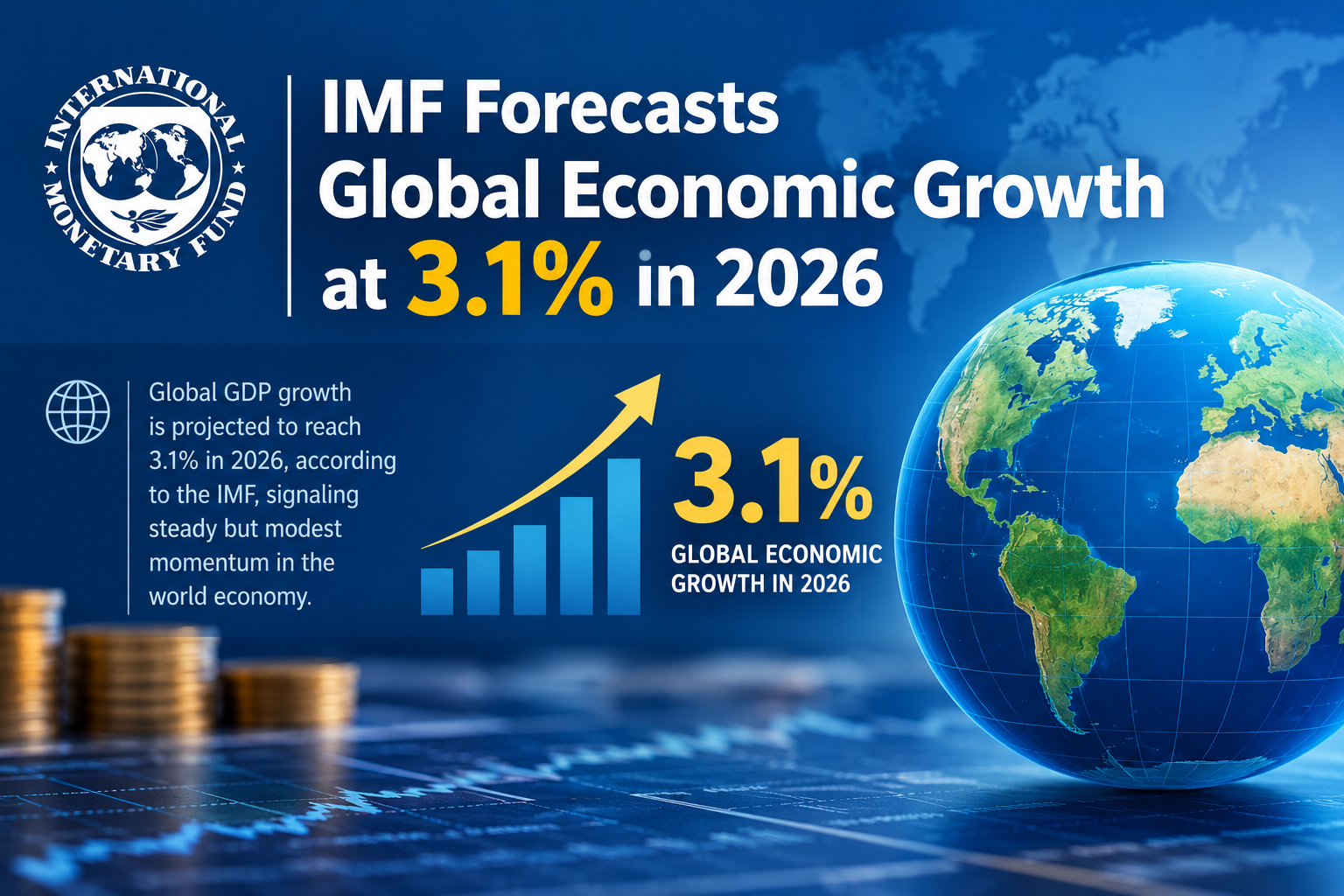
The latest economic assessments from major international institutions indicate that the global outlook remains vulnerable. The International Monetary Fund’s October 2026 World Economic Outlook projects global growth of 3.1% in 2026, followed by a recovery to 3.4% in 2027. However, the organisation warns that escalating conflicts, renewed trade tensions and financial vulnerabilities could weaken economic performance further.
Geopolitical Conflicts Increase Economic Uncertainty
Geopolitical tensions have become a major factor influencing the direction of the global economy. Conflicts and political instability can disrupt international trade, affect investment flows and create uncertainty for companies operating across borders.
The Middle East remains particularly important because of its role in global energy production and transportation. Disruptions to oil and gas production or shipping routes can affect international energy supplies, increasing costs for businesses and consumers worldwide.
Geopolitical uncertainty also influences financial markets. Investors may become more cautious when assessing risks associated with international conflicts, leading to fluctuations in equity markets, currency movements and changes in demand for traditional safe-haven assets.
Businesses are also reconsidering expansion plans and investment commitments in regions exposed to political instability. Uncertainty surrounding future trade restrictions, sanctions and international relations makes long-term planning more difficult.
Energy Disruptions Put Pressure on Global Markets
Energy prices remain one of the most important channels through which geopolitical developments influence economic growth. Oil and natural gas are essential inputs for transportation, manufacturing, electricity generation and several industrial processes.
When energy supplies are disrupted, higher prices increase production and transportation costs. Companies may respond by raising prices, reducing operating expenses or postponing expansion plans. These adjustments can weaken industrial activity and affect consumer purchasing power.
The impact is particularly significant for energy-importing economies. Countries that rely heavily on imported oil and gas may face higher import bills, pressure on their currencies and increased inflation. Governments may also find it more difficult to balance public spending with the need to protect households and businesses from rising energy costs.
The World Bank’s June 2026 Global Economic Prospects report projects global growth of 2.5% in 2026, highlighting the economic consequences of the Middle East conflict and higher energy prices. It also identifies further escalation and commodity-market disruptions as important downside risks.
Inflation and Interest Rates Remain Key Concerns
Rising energy and commodity prices can make inflation more difficult to control. Higher fuel and electricity costs often affect transportation, food production, manufacturing and household expenses.
Central banks must therefore manage a difficult economic situation. If inflation remains elevated, monetary authorities may maintain higher interest rates for longer or delay interest-rate reductions. Although tighter monetary policy can help control price pressures, it may also increase borrowing costs for businesses and households.
Higher interest rates can discourage investment, reduce demand for credit and place additional pressure on governments with substantial debt obligations. Developing economies with limited fiscal flexibility may face particularly difficult policy choices.
The IMF’s October 2026 outlook projects global headline inflation at 4.7% in 2026 before easing to 4.1% in 2027. These projections underline the continuing challenge of balancing price stability with economic growth.
Global Trade and Supply Chains Face New Challenges
International trade is also experiencing pressure from geopolitical uncertainty and changing government policies. Tariffs, export restrictions and disruptions to shipping routes can increase costs and create delays across global supply chains.
Manufacturers are increasingly reviewing their sourcing strategies to reduce dependence on individual suppliers and transportation corridors. Supplier diversification, regional production networks and alternative logistics routes are becoming important parts of corporate risk management.
However, restructuring supply chains requires investment and time. Businesses may face higher procurement costs, additional inventory expenses and difficulties identifying reliable suppliers in new markets.
For export-oriented economies, weaker international demand and increased trade barriers can affect manufacturing output, employment and foreign-exchange earnings. Smaller economies with limited export diversification may be particularly vulnerable to changes in global market conditions.
Emerging Markets Face Uneven Growth Prospects
Emerging markets are experiencing different economic outcomes depending on their energy requirements, financial stability and exposure to international trade.
Energy-exporting countries may benefit from higher commodity prices, while energy-importing economies can face rising costs and greater pressure on external balances. Countries with strong domestic demand, diversified industries and stable financial systems may be better positioned to withstand global disruptions.
India and other Asian economies continue to offer important growth opportunities through domestic consumption, infrastructure investment, manufacturing and digital services. Nevertheless, higher energy import costs and international financial volatility remain potential challenges.
International institutions have also highlighted the importance of fiscal discipline, infrastructure development and investment in productive capacity. Strengthening domestic industries and improving energy security can help developing economies reduce their vulnerability to external shocks.
The Worldonomics View
The current economic environment demonstrates that global growth is increasingly influenced by developments beyond individual countries’ control. Geopolitical conflicts, energy-market disruptions and trade uncertainty can quickly affect inflation, investment and international financial conditions.
However, uncertainty should not automatically be interpreted as a sign of an inevitable global recession. The global economy continues to benefit from technological investment, business adaptation and expanding opportunities in emerging industries. The challenge is to ensure that these growth drivers remain strong enough to offset external pressures.
Governments should prioritise energy security, sustainable public finances and reliable trade relationships. Businesses should strengthen supply-chain resilience, manage financial risks and maintain flexibility in their investment strategies. International cooperation is equally important because disruptions in one region can create economic consequences across the world.
Conclusion
Global economic growth faces fresh uncertainty as geopolitical tensions, energy disruptions and changing trade conditions influence international markets. Higher commodity prices, persistent inflation and financial volatility are creating challenges for governments, businesses and consumers.
Although the global economy has shown resilience, its future performance will depend on how effectively countries respond to these interconnected risks. Strong economic policies, diversified energy supplies, resilient supply chains and international cooperation will remain essential to maintaining stability.
As markets continue to monitor geopolitical developments and economic indicators, businesses and investors are likely to remain cautious. The ability of governments and institutions to manage uncertainty will play a significant role in determining the direction of global economic growth in the months ahead.