Introduction
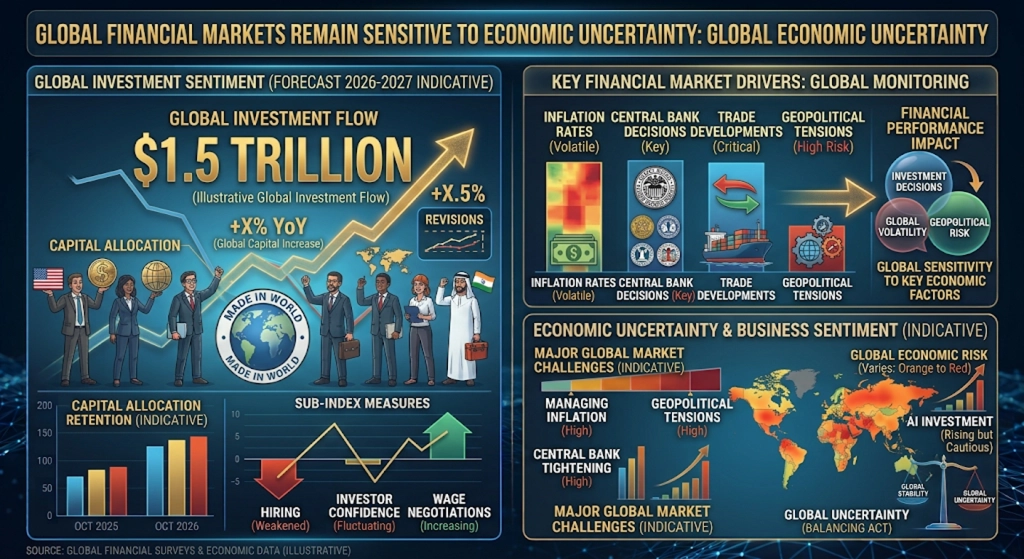
Global financial markets continue to operate in an environment of heightened economic uncertainty as investors assess inflation trends, central bank decisions, international trade developments and geopolitical tensions. These factors are influencing stock market valuations, government bond yields, currency movements and investment strategies across major economies.
Although global markets have demonstrated considerable resilience, recent developments suggest that investors remain cautious about the outlook for the coming months. Persistent energy-related inflation, changing interest-rate expectations and uncertainty surrounding international conflicts are creating challenges for financial institutions, businesses and policymakers.
The International Monetary Fund’s October 2026 Global Financial Stability Report noted that financial markets have remained resilient, supported by economic growth and strong corporate earnings. However, it warned that financial stability risks remain elevated, particularly because of high asset valuations, sovereign borrowing costs and potential disruptions in financial markets.
Inflation Remains a Major Concern for Investors
Inflation continues to be one of the most important factors influencing global investment decisions. Higher energy prices, transportation expenses and supply-chain disruptions have increased concerns that inflation could remain elevated across several major economies.
Recent movements in international oil and natural gas markets have added to these concerns. Geopolitical tensions in the Middle East have created uncertainty around energy supplies, while disruptions to important shipping routes have increased the risks associated with international trade.
Higher energy prices can affect financial markets through several channels. They increase production and transportation expenses, reduce household purchasing power and potentially weaken corporate profitability.
Investors are therefore closely monitoring inflation reports to determine whether central banks will be able to reduce interest rates or maintain restrictive monetary policies for longer.
Central Bank Decisions Influence Global Investment Strategies
Monetary policy remains a central driver of financial market movements. Decisions by the US Federal Reserve, European Central Bank and other major central banks influence borrowing costs, currency valuations and international capital flows.
The US Federal Reserve faces a particularly difficult policy environment. A strong American labour market and persistent inflationary pressures have increased expectations of another interest-rate increase. A Reuters survey of economists conducted between November 6 and 10 found that most respondents expected the Federal Reserve to raise rates by 25 basis points in December.
Higher interest rates generally increase the attractiveness of interest-bearing investments while making borrowing more expensive for companies and households. They can also reduce the present value of future corporate earnings, placing pressure on stock market valuations.
For investors, uncertainty about the timing and direction of monetary policy makes portfolio decisions more complicated. Markets can react sharply when inflation or employment figures differ from expectations.
Bond Markets Experience Increased Volatility
Government bond markets are another important area of concern. Rising inflation expectations and higher government borrowing requirements have pushed bond yields upward in several major economies.
US Treasury securities, German government bonds and other sovereign debt instruments are particularly important because their yields influence borrowing costs throughout the global financial system.
When bond yields rise, governments may face higher debt-servicing expenses, while businesses can experience more expensive financing conditions. Higher yields can also make government bonds more attractive relative to equities, encouraging some investors to shift their portfolios towards fixed-income assets.
The IMF’s October financial stability assessment highlighted the possibility that renewed inflationary pressure and fiscal imbalances could trigger further increases in sovereign bond yields.
It also warned that excessive leverage and liquidity mismatches in parts of the non-bank financial sector could amplify market stress during periods of volatility.
Geopolitical Tensions and Trade Uncertainty Affect Market Confidence
International political developments continue to influence investment decisions. Conflicts, trade restrictions, sanctions and diplomatic tensions can disrupt supply chains and create uncertainty around future economic activity.
The continuing tensions in the Middle East have been particularly important for energy markets. Any disruption to major oil and natural gas supply routes can affect fuel prices, inflation expectations and the profitability of energy-dependent industries.
Trade policy uncertainty is another major concern. Changes in tariffs, import restrictions and international trade agreements can influence manufacturing costs and corporate investment decisions.
Businesses operating across several countries must consider the possibility of higher customs expenses, delayed shipments and changing regulatory requirements. These developments can affect investor confidence, especially in industries with extensive international supply chains.
The Reserve Bank of Australia’s October 2026 Financial Stability Review also identified geopolitical tensions, trade policy uncertainty and commodity supply disruptions as important risks to the international financial environment.
Technology Stocks and Artificial Intelligence Investment Risks
Technology companies, particularly businesses involved in artificial intelligence, semiconductors and cloud computing, continue to attract significant investor attention.
AI-related investment has supported corporate earnings expectations and contributed to market optimism. However, concerns are increasing about whether the financial returns from large technology investments will justify the substantial capital expenditure involved.
The IMF has identified a potential correction in AI-related asset valuations as one of the risks to global financial stability. If expected investment returns or future profits fail to meet market expectations, technology stocks could experience significant declines.
Such a correction could affect more than technology companies. Because major technology firms have substantial influence over global stock market indices, a sharp fall in their valuations could weaken broader investor sentiment and affect investment portfolios worldwide.
Investors are therefore paying greater attention to corporate earnings, cash flows, debt levels and the ability of companies to convert technological investment into sustainable profits.
Emerging Markets Face Opportunities and Risks
Emerging economies remain closely connected to developments in international financial markets. Changes in US interest rates, movements in the dollar and shifts in investor risk appetite can influence capital flows into developing countries.
When interest rates in advanced economies increase, international investors may prefer relatively safer assets offering higher returns. This can create pressure on emerging-market currencies and increase the cost of external borrowing.
However, emerging markets with stable economic fundamentals, credible monetary policies and manageable debt levels may remain attractive investment destinations.
Countries such as India, Indonesia and Brazil continue to offer opportunities through domestic consumption, infrastructure development, manufacturing and technology investment.
Nevertheless, policymakers in emerging economies must remain alert to currency volatility, capital outflows and changes in international financing conditions.
Implications for India and Domestic Financial Markets
Global financial uncertainty has direct implications for India because of its growing integration with international trade and investment markets.
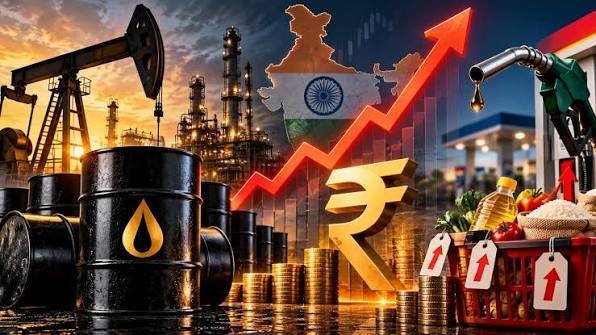
Higher US interest rates can influence foreign portfolio investment flows and create pressure on the Indian rupee. A stronger dollar may also increase the cost of importing crude oil, natural gas and other essential commodities.
Changes in international bond yields can affect Indian government borrowing costs and corporate financing conditions. Meanwhile, geopolitical disruptions and trade restrictions may influence export demand, supply chains and business investment.
However, India’s large domestic market, infrastructure investment and expanding services sector provide important sources of economic resilience.
For Indian investors, global uncertainty reinforces the importance of diversification, careful assessment of financial risks and a long-term investment perspective. Businesses must also consider currency exposure, international financing costs and the possibility of weaker demand in overseas markets.
The Worldonomics Times Views
Global financial markets are entering a period in which economic fundamentals and geopolitical developments are becoming increasingly interconnected. Inflation, central bank decisions, government borrowing and international trade uncertainty are influencing investor behaviour across asset classes.
Although markets have demonstrated resilience, the risks identified by the IMF indicate that financial stability should not be taken for granted. A sudden increase in bond yields, an unexpected inflation shock or a sharp correction in technology valuations could create wider financial market disruptions.
Policymakers should prioritise price stability, responsible fiscal management and transparent monetary communication. Financial regulators must also monitor excessive leverage and liquidity risks across banks and non-bank financial institutions.
For investors, the coming months will require greater attention to economic data, corporate profitability and geopolitical developments. For India, maintaining macroeconomic stability, attracting long-term investment and strengthening domestic economic fundamentals will be essential for navigating international uncertainty.
Ultimately, global financial markets are likely to remain sensitive to changes in economic conditions. The ability of governments, central banks and businesses to respond effectively to emerging risks will play an important role in determining investment confidence and financial stability in the months ahead.