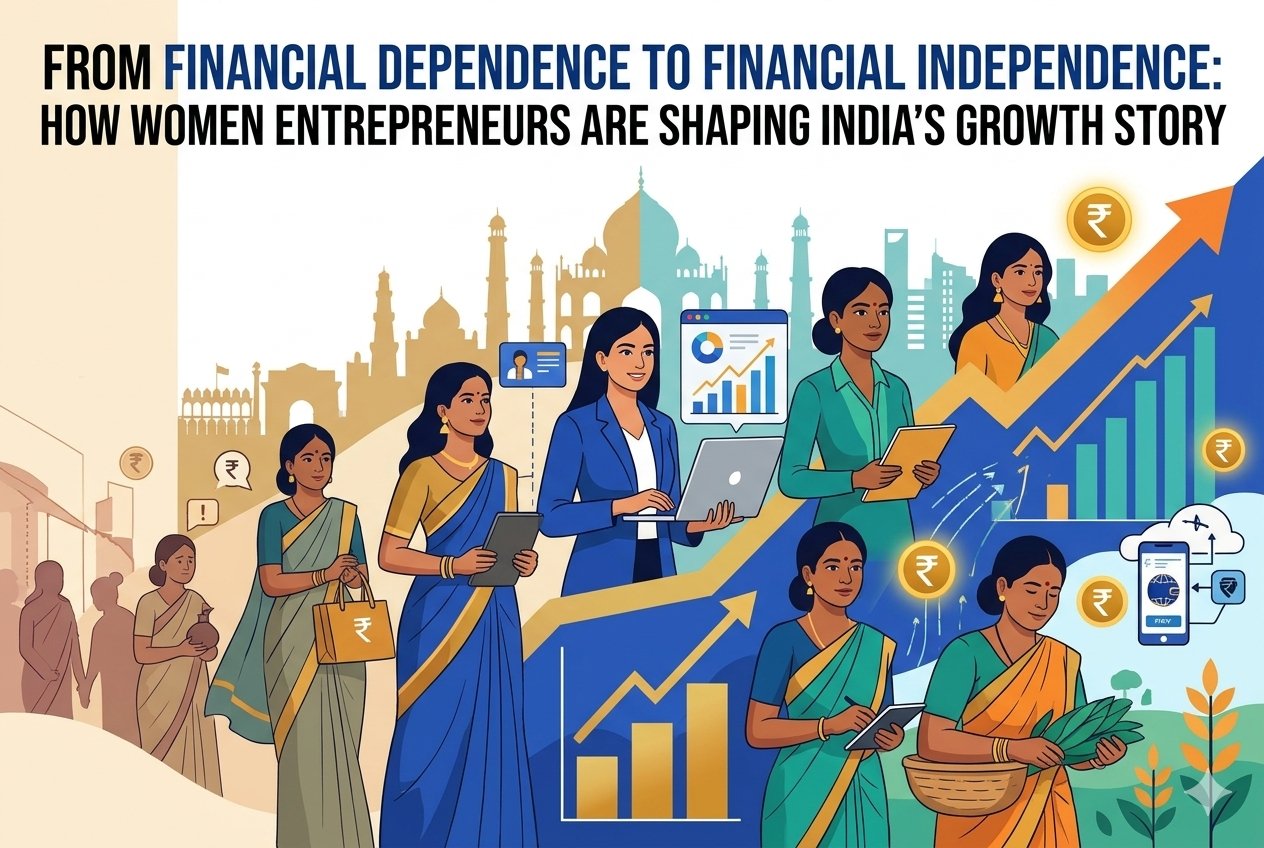
The continuation of the Stand-Up India Scheme highlights an important question: Can access to finance turn women’s entrepreneurial ambitions into sustainable businesses?
Women’s empowerment is often discussed in terms of education, equality, safety and representation. But one dimension deserves equal attention: economic independence.
A woman who has access to financial resources, owns a business, makes investment decisions and controls her earnings is not just participating in the economy; she is helping shape it.
India’s women-led entrepreneurship ecosystem is gradually expanding, supported by financial inclusion initiatives, government schemes, digital platforms and improved access to markets.
Recent policy developments have once again brought this subject into focus.
1. Stand-Up India: A Fresh Push for Women Entrepreneurs
On 11 November 2026, the Union Cabinet approved the continuation of the Stand-Up India Scheme until 31 March 2031.
The scheme aims to support an additional 2.5 lakh entrepreneurs over the next five years.
Its key features include:
- Loans ranging from above ₹10 lakh to ₹1 crore.
- Support for greenfield enterprises.
- Coverage across manufacturing, services, trading and allied agricultural activities.
- Credit guarantee coverage of 85% of the loan amount.
The scheme is designed to promote entrepreneurship among women and entrepreneurs belonging to Scheduled Castes and Scheduled Tribes.
This continuation is significant because access to affordable finance remains one of the important challenges faced by aspiring women business owners.
2. Women Are Becoming Important Contributors to India’s Business Ecosystem
Women’s participation in entrepreneurship is no longer limited to small household-based activities.
According to the Ministry of Finance’s October 2026 update:
- Approximately 3.69 crore registered MSMEs were women-owned, representing around 38% of registered MSMEs.
- More than 1.07 lakh recognised startups had at least one woman director or partner as of March 2026.
These figures indicate the growing presence of women across India’s entrepreneurial landscape.
However, the next challenge is ensuring that more women-owned enterprises can expand, generate employment, access technology and compete in larger markets.
3. Beyond Loans: What Women Entrepreneurs Really Need
Access to finance is essential, but a successful business requires much more than capital.
A. Financial literacy
Understanding cash flows, profitability, taxation, working capital and financial planning helps entrepreneurs make informed decisions.
B. Market access
Women-owned businesses need access to customers, institutional buyers, digital marketplaces and export opportunities.
C. Business mentorship
Guidance on business planning, pricing, compliance, marketing and operational management can improve the chances of long-term success.
D. Technology and digital skills
Digital payments, e-commerce platforms, accounting software and online marketing can help small businesses expand beyond geographical limitations.
E. Formalisation
Business registration, proper accounting records and regulatory compliance can improve access to institutional finance and business opportunities.
4. Government Initiatives Supporting Women’s Economic Empowerment
Several initiatives are contributing to women’s financial participation.
Pradhan Mantri MUDRA Yojana: Provides financial support to eligible micro and small non-corporate enterprises. Women account for approximately two-thirds of loans sanctioned under the scheme since its launch.
Lakhpati Didi Initiative: Supports women associated with Self-Help Groups in developing sustainable livelihood activities and achieving annual household income of at least ₹1 lakh.
Womaniya Initiative: Helps women-owned micro and small enterprises and Self-Help Groups access government procurement opportunities through the Government e-Marketplace.
Swavalambini Scheme: Supports aspiring women entrepreneurs through entrepreneurship training, mentorship, financial guidance and business development assistance.
Together, these initiatives address different stages of the entrepreneurial journey, from developing an idea to accessing finance and reaching customers.
5. The Role of Financial Independence in Women’s Empowerment
Financial independence creates benefits that extend beyond individual earnings.
It can contribute to:
- Greater participation in household financial decisions.
- Improved access to education and professional opportunities.
- Better ability to build savings and assets.
- Greater confidence in taking business and investment decisions.
- Employment generation and local economic development.
When women own and operate businesses, the benefits can extend to families, employees, suppliers and communities.
Economic empowerment therefore becomes an important contributor to inclusive development.
6. The Challenges That Still Need Attention
Despite progress, women entrepreneurs continue to face structural challenges.
Limited access to collateral, difficulties in obtaining formal credit, unequal household responsibilities, restricted market networks and gaps in digital skills can affect business growth.
Another important concern is the difference between starting a business and sustaining one.
A business may receive initial financial assistance, but long-term success depends on profitability, cash-flow management, market demand, operational efficiency and access to repeat customers.
Policy support must therefore focus not only on creating more women-owned businesses but also on helping existing enterprises become financially sustainable.
7. What Lies Ahead?
India’s women-led business ecosystem has the potential to become a major contributor to employment, innovation and economic growth.
The next phase should focus on helping women move from micro-enterprises to scalable businesses, from local markets to national and international customers, and from financial inclusion to financial leadership.
Banks, government institutions, industry associations and professional bodies can contribute by providing accessible finance, mentoring, financial education and stronger market connections.
Conclusion
Women’s empowerment cannot be measured only by the number of schemes launched or businesses registered. It must also be measured by the opportunities women receive, the financial decisions they control and the sustainable enterprises they build.
The continuation of the Stand-Up India Scheme is another opportunity to strengthen this journey.
When women gain control over capital, skills and business decisions, empowerment becomes more than a social objective—it becomes an economic growth strategy.
By Ankita Nag