In a world where startups chase funding rounds and billion-dollar valuations, Zoho demonstrates that customer revenue, innovation and financial discipline can build a global technology company.
When we talk about successful startups, we often hear stories of founders raising millions of dollars, attracting global investors and expanding aggressively.
But what if a company chooses a completely different path?
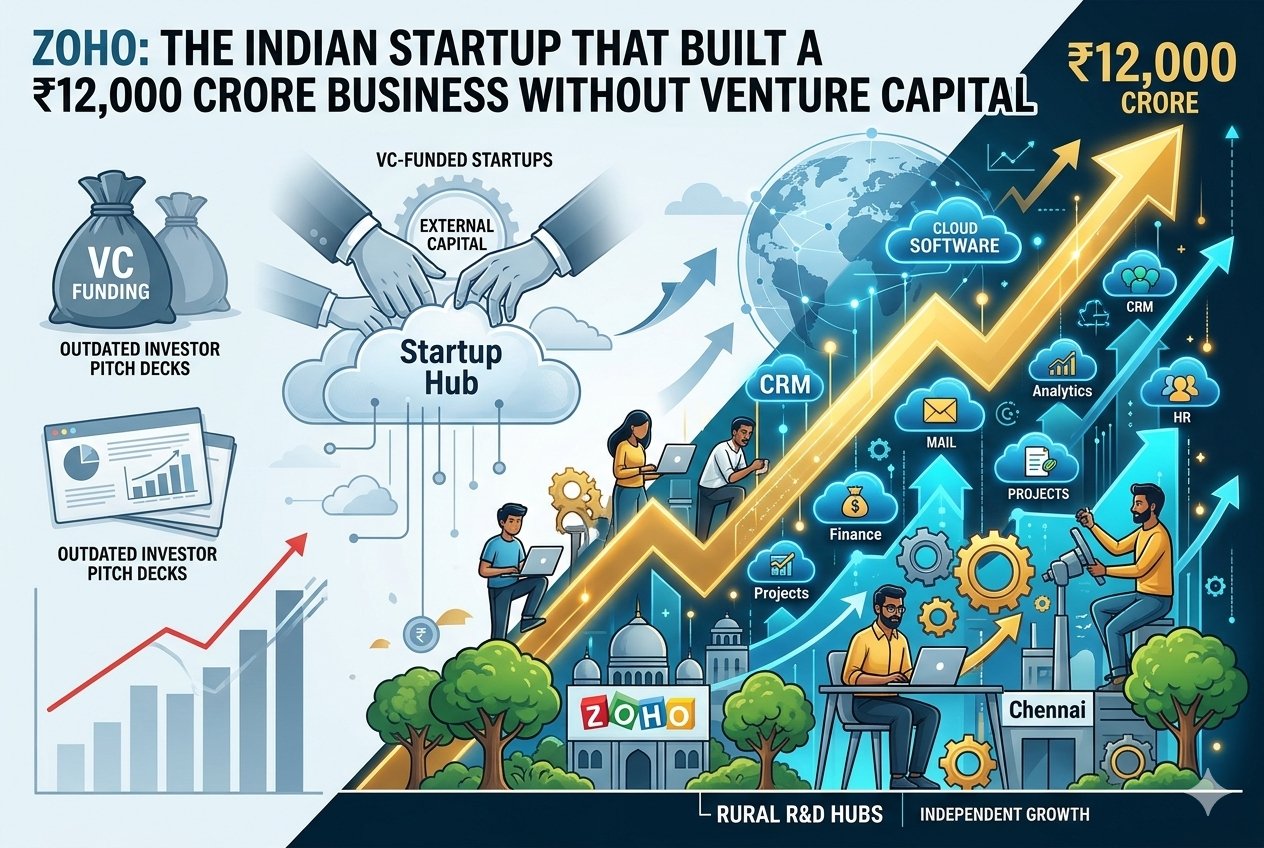
Meet Zoho Corporation, an Indian technology company that built a global software business without relying on external venture capital.
Its journey challenges one of the most common assumptions in entrepreneurship: that raising substantial funding is essential for building a successful startup.
From a small beginning to a global technology company
Zoho’s journey began in 1996 as AdventNet, founded by Sridhar Vembu and his co-founders.
The company initially focused on network management software. Rather than immediately chasing a large market, it concentrated on finding customers, developing products and generating revenue.
In 1997, the business generated approximately US$350,000 in sales. Instead of distributing the earnings among the founders, the company reinvested the money into research and development.
This decision helped lay the foundation for its future products.
Following the dot-com bust in 2001, the company recognised that its existing market was under pressure. It responded by diversifying into new software opportunities, eventually developing ManageEngine and launching the Zoho brand.
What began as a small software venture gradually evolved into a global business software provider.
The numbers behind the success
Zoho’s FY2024–25 financial performance offers a remarkable example of what long-term business building can achieve.
According to reported consolidated financial statements:
- Revenue: ₹12,313 crore
- Net profit: ₹3,191 crore
- Revenue growth: approximately 17.8% over FY2023–24
- Cash and cash equivalents: ₹1,878 crore
These numbers are particularly interesting because Zoho achieved this scale while maintaining its bootstrapped ownership model.
What makes Zoho’s business model different?
1. Customer-funded growth
Instead of depending on continuous fundraising, Zoho built its business around revenue generated from customers. This encouraged the company to focus on delivering products that customers were willing to pay for.
2. Reinvestment in research and development
The company prioritised product development and technological innovation. Its extensive software portfolio serves businesses across customer relationship management, finance, productivity, collaboration and enterprise management.
3. Long-term thinking
Without the pressure of external equity investors demanding a particular exit timeline, Zoho has been able to pursue its own business priorities and growth strategy.
4. Investing in people
Zoho also established Zoho Schools of Learning, creating an alternative pathway for young people to develop practical technology skills and build careers.
Five business lessons every entrepreneur can learn
Zoho’s journey offers important lessons for emerging businesses:
- Revenue matters: A paying customer is a stronger validation of a business model than a high valuation alone.
- Profitability creates resilience: Financial discipline can help a company survive uncertain economic conditions.
- Innovation requires patience: Sustainable products are built through continuous investment and improvement.
- Funding is a choice, not a definition of success: External capital can accelerate growth, but it is not the only route to building a large business.
- People are long-term assets: Investing in talent and skills can strengthen an organisation’s competitive advantage.
Is bootstrapping the right model for every startup?
Not necessarily.
Businesses in capital-intensive sectors such as biotechnology, electric vehicles, semiconductor manufacturing and infrastructure may require substantial external investment.
Venture capital can provide the resources needed to develop technology, enter new markets and scale operations.
However, Zoho demonstrates that founders should understand the cost of capital, investor expectations and the level of control they are willing to share before raising funds.
The objective should not be to avoid funding at all costs. It should be to raise capital for the right reasons and use it productively.
The bigger message: Build a business, not just a valuation
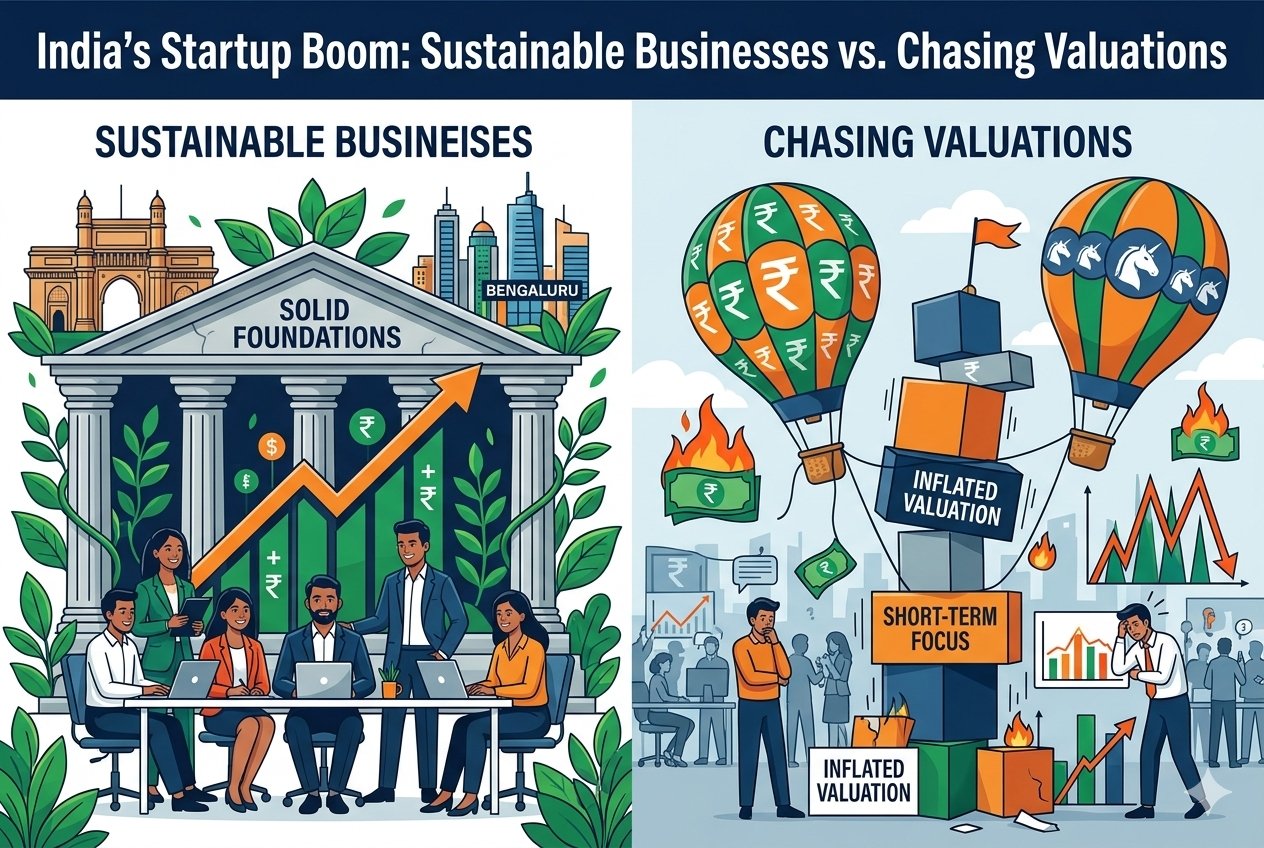
India’s startup ecosystem needs both venture-backed innovators and financially disciplined bootstrapped businesses.
Zoho’s story reminds us that entrepreneurship is not simply about raising money, becoming a unicorn or attracting media attention.
It is about solving real problems, creating customer value, building a capable team and generating sustainable financial results.
A startup does not become successful when it raises its biggest funding round. It becomes successful when it builds a business capable of standing on its own.
Perhaps the most valuable startup lesson from Zoho is simple: Build something customers value, manage money wisely and give innovation the time it deserves.
Ankita Nag