By The Worldonomics Times
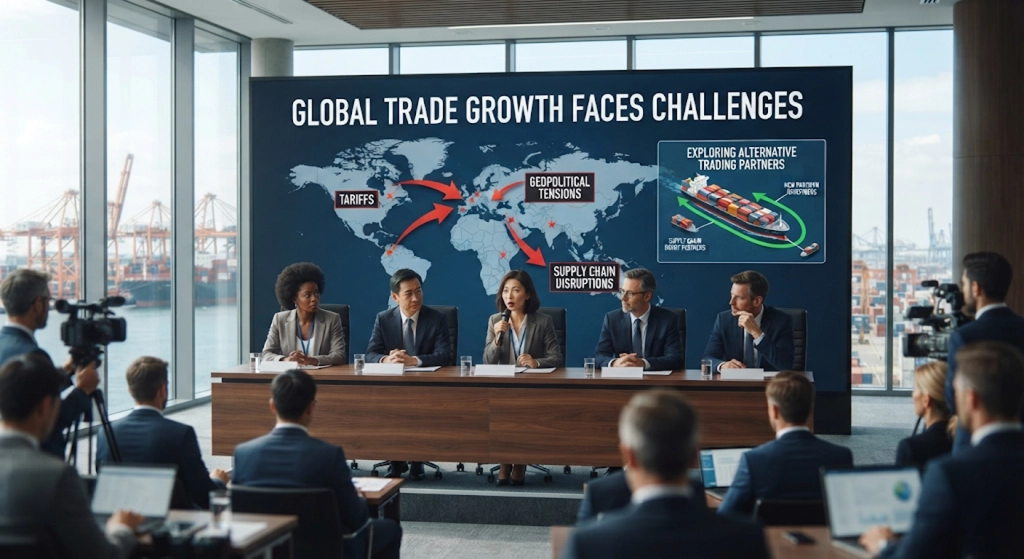
International trade continues to face uncertainty as tariffs, geopolitical tensions and changing supply chains reshape the global economic landscape. Businesses that once depended heavily on established trading partners are increasingly exploring alternative markets, suppliers and manufacturing locations to reduce risks and maintain reliable access to international customers.
Although global trade continues to expand, its growth is becoming increasingly uneven. Governments are reassessing trade relationships, companies are diversifying sourcing strategies, and regional partnerships are gaining importance. These developments are transforming how goods and services move across borders and creating both challenges and opportunities for economies worldwide.
Tariffs and Trade Restrictions Create Uncertainty
Tariffs have become a major concern for international businesses. Higher import duties increase the cost of goods entering foreign markets, making products more expensive for manufacturers, distributors and consumers.
Companies that depend on imported components may experience rising production costs, while exporters can face reduced competitiveness when their products become more expensive in destination markets. Frequent changes in trade policies also make it difficult for businesses to plan investments, negotiate long-term contracts and estimate future costs.
Trade restrictions are not limited to tariffs. Governments increasingly use export controls, local-content requirements, subsidies and regulatory measures to protect strategic industries and strengthen domestic production.
According to UN Trade and Development (UNCTAD), trade policy has become more interventionist, with national security, industrial policy and supply-chain resilience playing a greater role in government decisions.
Geopolitical Tensions Reshape Trading Relationships
Geopolitical developments are influencing the direction of international trade. Conflicts, diplomatic disagreements and economic competition between major powers can disrupt shipping routes, restrict access to essential materials and create uncertainty for international investors.
The relationship between the United States and China remains particularly important. Both economies play major roles in global manufacturing, technology and international supply chains. Changes in their trade relationship can affect businesses across Asia, Europe and other regions.
However, global trade is not simply separating into completely disconnected economic blocs. Some countries are strengthening commercial relationships with multiple major economies, allowing businesses to maintain access to different markets.
The World Bank has described the emergence of such economies as “connector economies”, which help sustain trade flows amid changing international relationships. This development suggests that global trade is being reorganised rather than disappearing.
Businesses Diversify Their Supply Chains
Companies are increasingly reconsidering where they source raw materials, components and finished products. Heavy dependence on a single supplier or country can create serious operational risks when political tensions, natural disasters, transport disruptions or regulatory changes interrupt production.
Businesses are therefore adopting strategies such as:
- China-plus-one: Maintaining operations in China while developing additional manufacturing or sourcing locations.
- Nearshoring: Moving production closer to important consumer markets to reduce transportation time and logistical uncertainty.
- Friend-shoring: Building stronger supply relationships with countries considered reliable strategic partners.
- Supplier diversification: Working with multiple suppliers across different regions to reduce dependence on individual markets.
These approaches can improve resilience, but they may also increase operating costs. Establishing new production facilities requires investment in infrastructure, workforce training, technology and regulatory compliance.
A September 2026 report by the United Kingdom’s Government Office for Science highlights the interconnected nature of supply-chain risks and the importance of improving visibility across international supplier networks. <Cite refs={[“turn267609news7”]}/>
Global Trade Continues to Show Growth
Despite these challenges, international trade has demonstrated considerable resilience. The World Trade Organization’s October 2026 outlook revised its forecast for global merchandise trade volume growth in 2026 upwards to 3.9%, compared with its earlier baseline forecast of 1.9%.
The increase has been supported partly by strong demand for artificial-intelligence-related products, including semiconductors and data-centre equipment. The WTO reported that AI-enabling goods accounted for 47% of global merchandise trade growth in value terms during the first half of 2026.
However, the outlook remains exposed to geopolitical conflict, higher energy prices and possible disruptions to international transport. The WTO expects global merchandise trade volume growth of 4.1% in 2027, subject to improvements in the international economic environment.
This performance demonstrates that trade growth is increasingly influenced by technology, investment patterns and the ability of countries to adapt to changing market conditions.
Opportunities and Challenges for Developing Economies
Developing economies are experiencing both opportunities and difficulties as international supply chains evolve.
Countries with competitive manufacturing industries, skilled labour, reliable infrastructure and favourable trade agreements may attract investment from companies seeking alternative production locations.
At the same time, smaller economies can face difficulties meeting international quality standards, financing infrastructure improvements and competing with established manufacturing centres.
UNCTAD has highlighted the growing role of developing economies in global trade while warning that geopolitical tensions and shipping disruptions can increase costs and create additional vulnerabilities.
For these economies, improving transport infrastructure, digital trade systems and customs efficiency will be essential to attracting investment and increasing participation in global value chains.
Implications for India
India has an opportunity to strengthen its position as an important manufacturing, sourcing and export destination. Its industrial capabilities, large domestic market, skilled workforce and expanding trade partnerships can help attract businesses seeking to diversify their supply chains.
The Indian government has also expanded its network of trade agreements to improve market access. Recent agreements and initiatives include partnerships with the United Kingdom, Oman, New Zealand and the European Free Trade Association. India is also pursuing additional trade negotiations with several economies and regional groups.
According to India’s Ministry of Commerce and Industry, total exports reached approximately US$568.84 billion during April–October of the 2026–27 financial year, representing growth of 16.66% compared with the corresponding period a year earlier. This performance reflects the contribution of merchandise and services exports, although continued growth will depend on international demand and market conditions.
Indian exporters in engineering, pharmaceuticals, textiles, electronics, agricultural products and information technology services may benefit from wider access to international markets.
Nevertheless, challenges remain. Higher freight costs, changing tariffs, foreign exchange fluctuations and complex compliance requirements can affect export competitiveness, particularly for small and medium-sized enterprises.
The Worldonomics Times View
Global trade is entering a period of structural change. Tariffs, geopolitical competition and supply-chain disruptions are encouraging businesses to reconsider traditional trading relationships and build more diversified international networks.
While these developments create uncertainty, they also offer opportunities for countries capable of providing competitive production, dependable infrastructure and stable trade policies.
For India, the changing global environment presents an opportunity to attract investment, expand exports and strengthen its role in international supply chains. Achieving this potential will require continued improvements in logistics, manufacturing capabilities, product quality and trade facilitation.
The future of international trade will depend not only on the volume of goods exchanged but also on the reliability and resilience of the networks connecting businesses and economies. Countries and companies that adapt effectively to these changes will be better positioned to participate in the next phase of global economic development.