Introduction
Micro, Small and Medium Enterprises (MSMEs) are one of the most important pillars of the Indian economy. They contribute significantly to employment generation, industrial development, exports, innovation and inclusive economic growth. Recognising their importance, the Government of India introduced the Udyam Registration system on 1 July 2020 to simplify the registration process and encourage businesses to become part of the formal economy.
The rapid growth in Udyam Registration reflects the increasing awareness among entrepreneurs about the benefits of formalisation, access to institutional finance and government support. According to the reported figures, approximately 9.78 crore registrations under Udyam Registration and the Udyam Assist Platform had been recorded as of 6 October 2026. This growth represents an important milestone in India’s journey towards building a stronger and more competitive MSME sector.
What Is Udyam Registration?
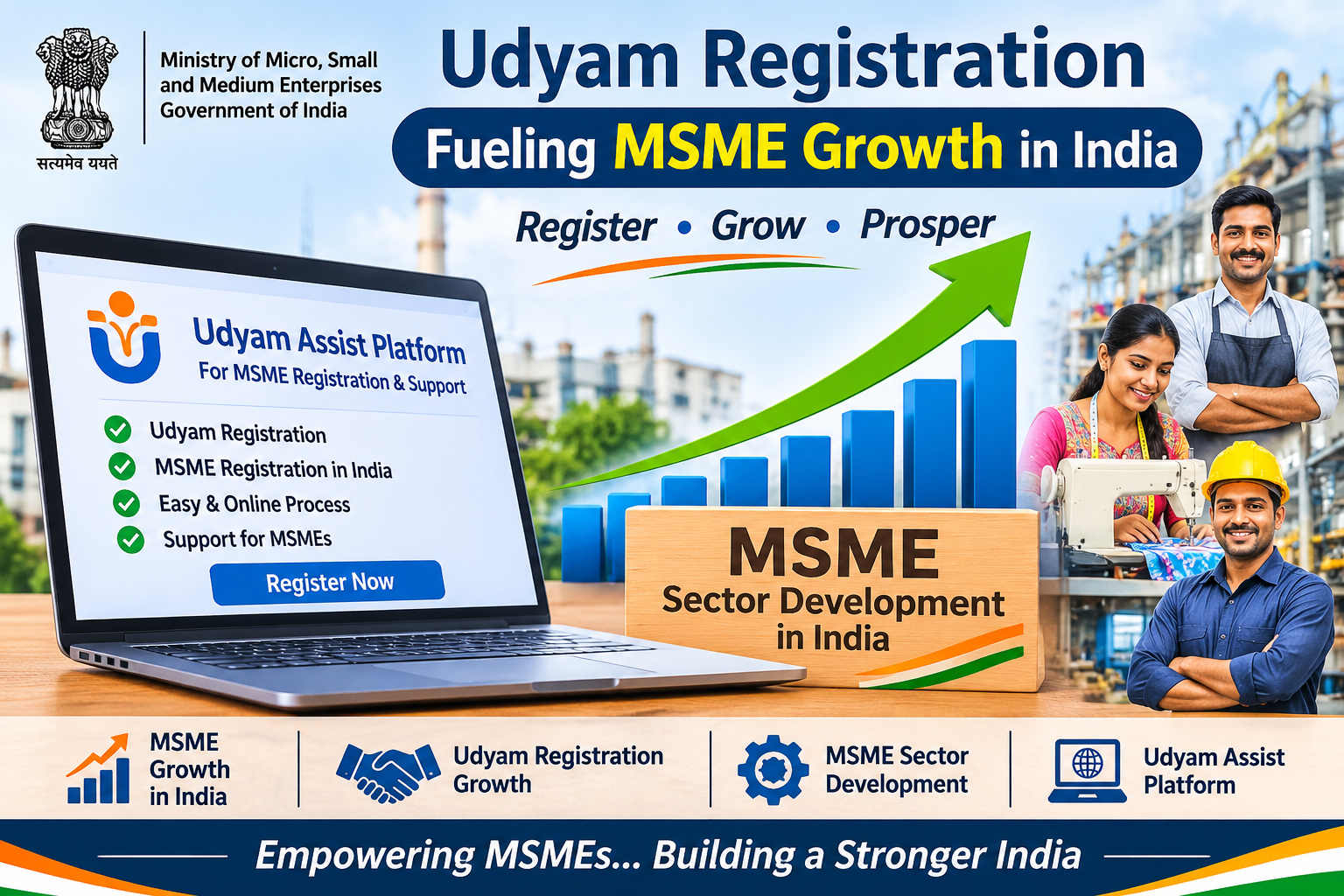
Udyam Registration is an online registration system introduced by the Ministry of Micro, Small and Medium Enterprises. It provides formal recognition to eligible micro, small and medium enterprises.
The registration process is designed to be simple, paperless and based on self-declaration, with information verified through government databases. Entrepreneurs can apply through the official Udyam Registration portal without paying any government registration fee.
The system integrates information relating to PAN, GST and other relevant government records, helping reduce paperwork and improve transparency.
Significant Growth in Udyam Registration
The expansion of Udyam Registration demonstrates the growing participation of businesses in India’s formal economic framework. The inclusion of the Udyam Assist Platform has further strengthened this process by bringing informal micro-enterprises into the formal ecosystem.
A significant reason behind this growth is increased awareness among small business owners about the advantages of obtaining official MSME recognition. Government initiatives, financial institutions, industry associations and digital platforms have also contributed to encouraging entrepreneurs to register their businesses.
The Udyam Assist Platform is particularly important because it enables informal micro-enterprises, including small establishments and businesses operating at the grassroots level, to gain formal recognition and access appropriate institutional support.
Key Benefits of Udyam Registration
Udyam Registration offers several advantages to eligible enterprises:
1. Easier Access to Finance: Registered MSMEs can benefit from various government-supported credit schemes and institutional lending facilities. Depending on eligibility, they may access collateral-free credit support through the Credit Guarantee Fund Trust for Micro and Small Enterprises (CGTMSE).
2. Government Subsidies and Incentives: Udyam-registered enterprises may qualify for different central and state government schemes relating to technology upgradation, quality certification, skill development, marketing assistance and business expansion.
3. Protection Against Delayed Payments: The MSME Development Act, 2006 provides protection to eligible micro and small enterprises against delayed payments. Registered enterprises can use the MSME Samadhaan mechanism to raise complaints regarding outstanding payments, subject to applicable eligibility requirements.
4. Participation in Government Procurement: MSME recognition can help businesses access opportunities under the Public Procurement Policy for Micro and Small Enterprises. Eligible enterprises can participate in government tenders and benefit from applicable procurement preferences.
5. Improved Business Credibility: Udyam Registration provides formal recognition and strengthens an enterprise’s credibility when dealing with banks, financial institutions, corporate buyers and government departments.
Role of Government Initiatives in Registration Growth
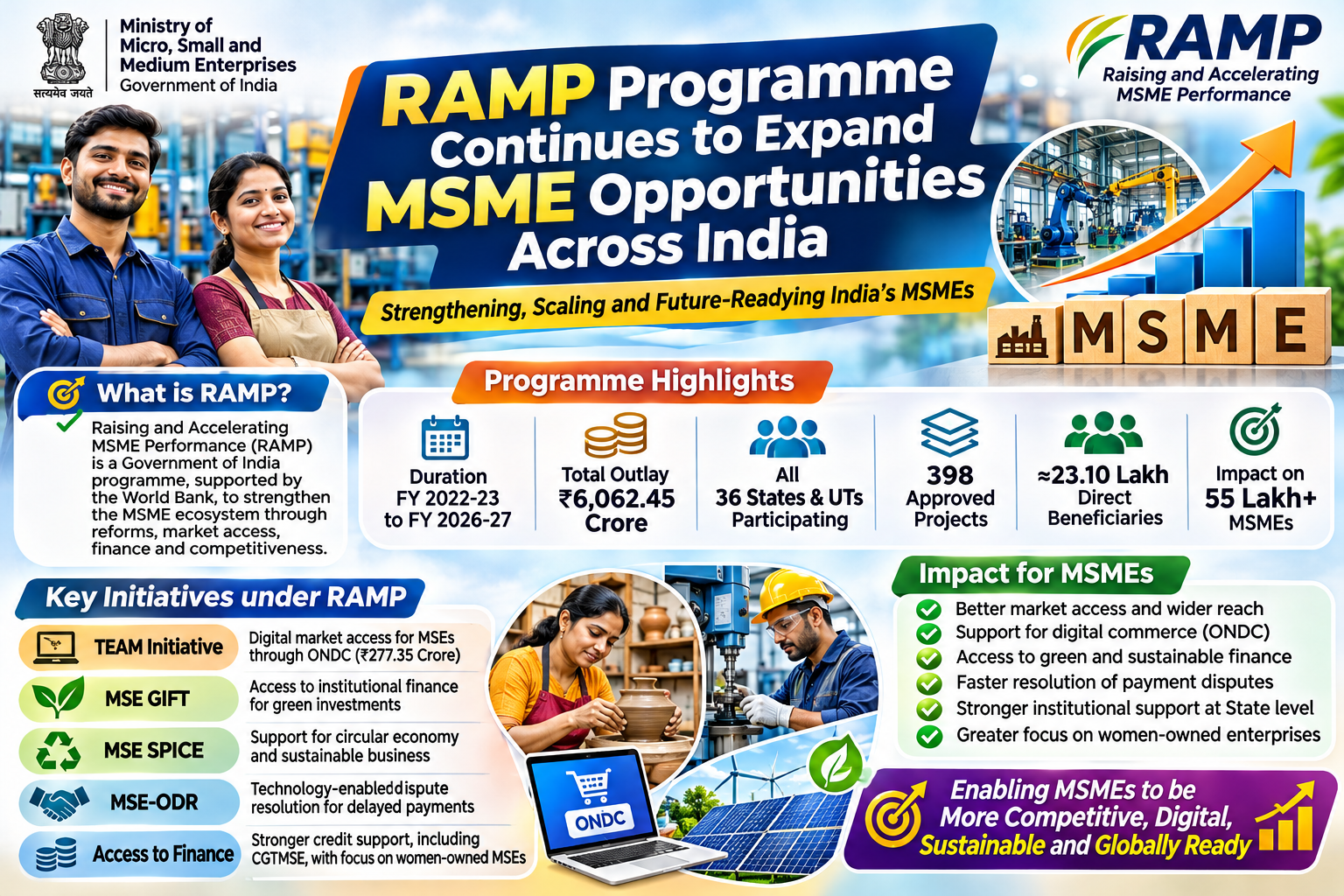
The Government of India has introduced several initiatives to strengthen the MSME ecosystem. Schemes such as PMEGP, CGTMSE, RAMP, PM Vishwakarma and various technology and skill-development programmes support entrepreneurship and business expansion.
Digital transformation has also played an important role. The availability of online registration facilities has reduced administrative difficulties and made formalisation more accessible to entrepreneurs across urban and rural India.
Furthermore, the integration of Udyam Registration with other government databases has improved verification, reduced duplication and strengthened the delivery of benefits.
Challenges Faced by MSMEs
Despite considerable progress, several challenges remain. Many micro-enterprises are still unaware of the registration process and the benefits available to them. Businesses in rural and semi-urban areas may face difficulties due to limited digital literacy, inadequate documentation and lack of access to professional guidance.
Another challenge is ensuring that registration translates into actual economic benefits. Formal recognition alone does not guarantee access to finance, government contracts or subsidies. Enterprises must also meet the relevant eligibility conditions and comply with scheme-specific requirements.
Therefore, greater awareness, financial literacy, digital assistance and coordination between government departments and financial institutions are essential.
The Way Forward
To further increase Udyam Registration, the government should focus on reaching unregistered micro-enterprises, particularly those operating in rural areas, small towns and traditional sectors.
Banks, industry associations, Common Service Centres and local business organisations can play an important role in spreading awareness and assisting entrepreneurs with registration.
There is also a need to strengthen the connection between Udyam Registration and practical business benefits, including affordable credit, timely payments, technology adoption, market access and export opportunities.
Better awareness programmes and simplified compliance procedures will encourage more businesses to join the formal economy.
Conclusion
The growth of Udyam Registration marks a significant development in India’s MSME sector. The reported figure of approximately 9.78 crore registrations, including Udyam Assist registrations, highlights the increasing reach of formalisation initiatives.
Udyam Registration is more than an administrative exercise; it is an important instrument for improving business recognition, financial inclusion and access to government support.
Going forward, the focus should not only be on increasing the number of registrations but also on ensuring that registered enterprises receive meaningful support to grow, innovate, generate employment and compete in domestic and international markets. A stronger and more formalised MSME sector will play a vital role in achieving India’s vision of a developed and self-reliant economy.
Primary Keywords:
- Udyam Registration
- MSME Registration in India
- MSME Growth in India
- Udyam Registration Growth
- MSME Sector Development
- Udyam Assist Platform