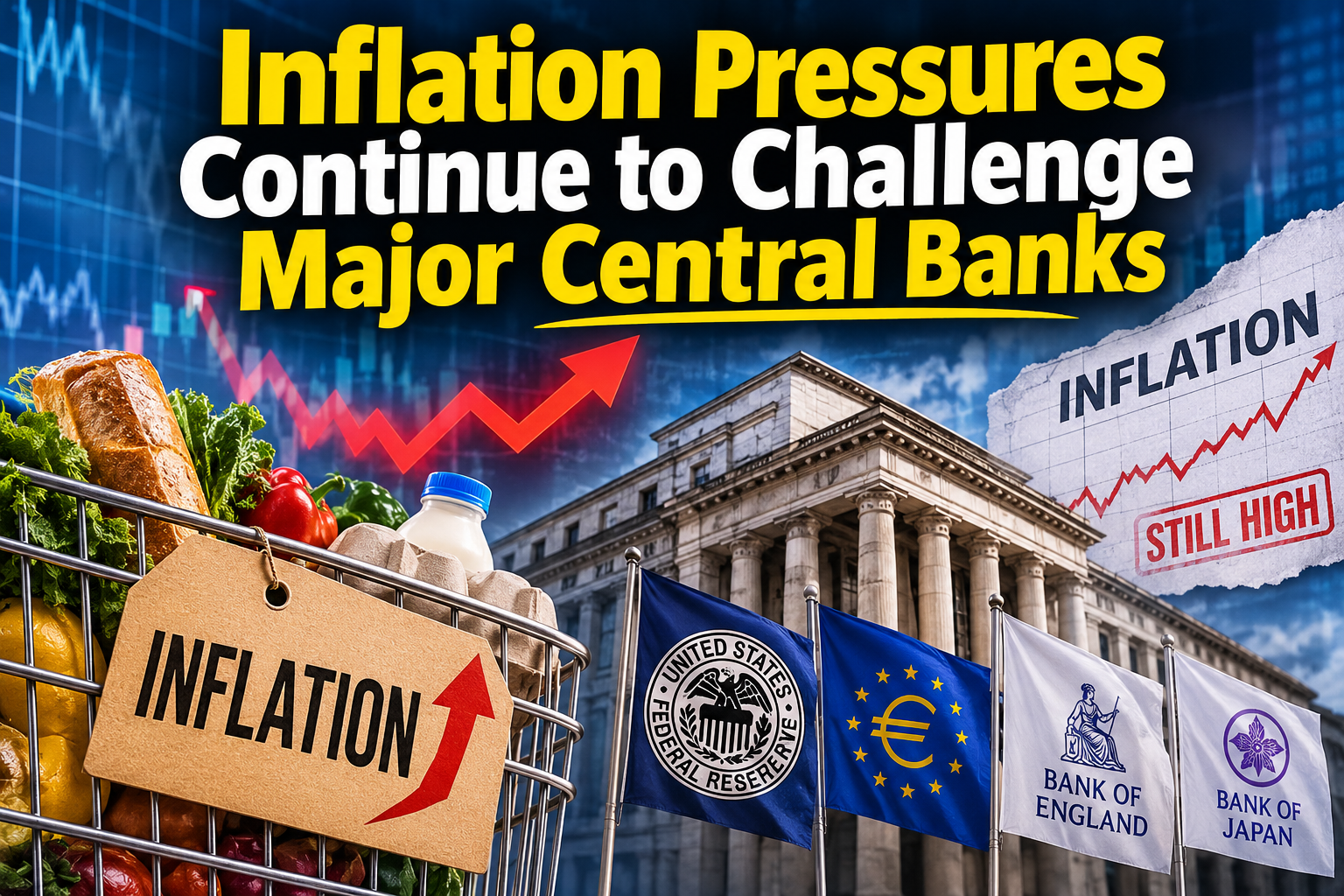
Persistent price pressures, volatile commodity markets and evolving economic conditions are complicating monetary policy decisions, leaving central banks balancing inflation control with the need to sustain growth.
Inflation continues to remain a major concern for economies across the globe, presenting a complex challenge for central banks as they navigate an uncertain economic environment. While inflation rates in several economies have moderated from previous peaks, persistent price pressures in key sectors, fluctuating energy costs, rising service prices and geopolitical disruptions continue to complicate the outlook. Central banks are increasingly required to balance their primary objective of maintaining price stability with the broader need to support economic activity and financial stability.
The global monetary policy landscape remains sensitive to inflationary developments. Decisions regarding interest rates, liquidity management and financial conditions are influencing businesses, consumers, investors and governments. With economic growth varying across regions, policymakers face the difficult task of determining how restrictive monetary policy should remain and for how long.
Persistent Inflation and Economic Uncertainty
Inflation has become more complex than a simple demand-driven phenomenon. Supply-chain disruptions, geopolitical tensions, trade restrictions, changing labour market conditions and commodity price fluctuations continue to influence price movements across economies.
Food and energy prices remain particularly sensitive to external shocks. Disruptions in transportation routes, regional conflicts and supply uncertainties can trigger sudden price increases, affecting household budgets and business operating costs. In countries where food and energy constitute a significant share of consumer expenditure, such price movements can have a considerable impact on overall inflation.
Service-sector inflation has also emerged as a persistent challenge in several economies. Rising wages, housing costs, insurance premiums and healthcare expenses may keep underlying inflation elevated even when commodity prices stabilise. This creates difficulties for central banks attempting to bring inflation sustainably towards their targets.
Central Banks Face Difficult Policy Decisions
Major central banks, including the Federal Reserve, the European Central Bank and the Bank of England, continue to navigate an environment in which inflation dynamics and growth prospects remain uneven.
Interest-rate decisions have become increasingly dependent on incoming economic data. Policymakers must assess inflation trends, employment conditions, consumer spending, wage growth and financial-market developments before making adjustments to monetary policy.
Keeping interest rates elevated for longer may help contain inflation by reducing borrowing, spending and investment. However, prolonged restrictive monetary conditions can also increase financing costs for businesses, discourage capital expenditure, weaken housing activity and put pressure on households with outstanding loans.
Conversely, easing monetary policy prematurely could reignite inflationary pressures, potentially undermining the credibility of central banks. This balancing act has made monetary policy decisions increasingly cautious and data-dependent.
Impact on Businesses, Consumers and Financial Markets
Inflation and interest-rate uncertainty continue to influence business strategies and consumer behaviour. Higher borrowing costs can limit expansion plans, particularly for small and medium-sized enterprises that depend on credit for working capital and investment.
Businesses may also face pressure from rising input costs, wages, logistics expenses and financing obligations. Companies with limited pricing power may experience reduced profit margins, while those able to pass costs on to consumers may risk weakening demand.
Consumers are similarly affected. Higher prices for essential goods and services reduce purchasing power, particularly among lower- and middle-income households. Elevated interest rates can also increase the cost of mortgages, personal loans and credit, encouraging households to reduce discretionary spending.
Financial markets remain closely attentive to central-bank communication. Changes in expectations regarding interest rates can influence bond yields, stock valuations, currency movements and capital flows. Uncertainty over the timing and pace of monetary easing or tightening may contribute to market volatility.
Emerging Economies Under Additional Pressure
Emerging economies often face additional challenges in managing inflation. Currency depreciation can increase the cost of imported commodities, fuel, machinery and other essential goods. This may intensify domestic inflation and complicate monetary policy decisions.
Higher global interest rates can also influence capital flows, borrowing costs and exchange-rate stability. Countries with substantial external debt obligations may face increased financial pressure, particularly when global investors become more cautious.
Nevertheless, emerging markets with strong fundamentals, credible monetary frameworks, diversified economies and disciplined fiscal policies may be better positioned to withstand external shocks. Strengthening domestic supply chains, improving infrastructure and maintaining policy consistency can support long-term economic resilience.
The Worldonomis Times View
The fight against inflation requires patience, credibility and a careful balance between stability and growth.
The Worldonomis Times believes that inflation management has entered a more challenging phase, where traditional monetary policy tools must operate alongside broader economic reforms and strategic policymaking. Central banks cannot address every inflationary pressure independently, particularly when price increases originate from geopolitical disruptions, supply constraints, climate-related events or structural changes in global markets.
Maintaining monetary credibility remains essential. Central banks must communicate clearly, remain transparent in their decisions and avoid abrupt policy shifts that could destabilise financial markets or weaken public confidence. At the same time, governments must complement monetary efforts through responsible fiscal policies, infrastructure investment, supply-side reforms and measures that improve productivity.
A sustainable reduction in inflation should not come at the cost of unnecessarily prolonged economic weakness. Policymakers must carefully evaluate the consequences of their decisions for employment, investment, financial stability and household welfare.
The coming period will demand flexibility, discipline and coordination between monetary and fiscal authorities. Inflation may gradually ease, but its underlying drivers remain interconnected with global economic and political developments.