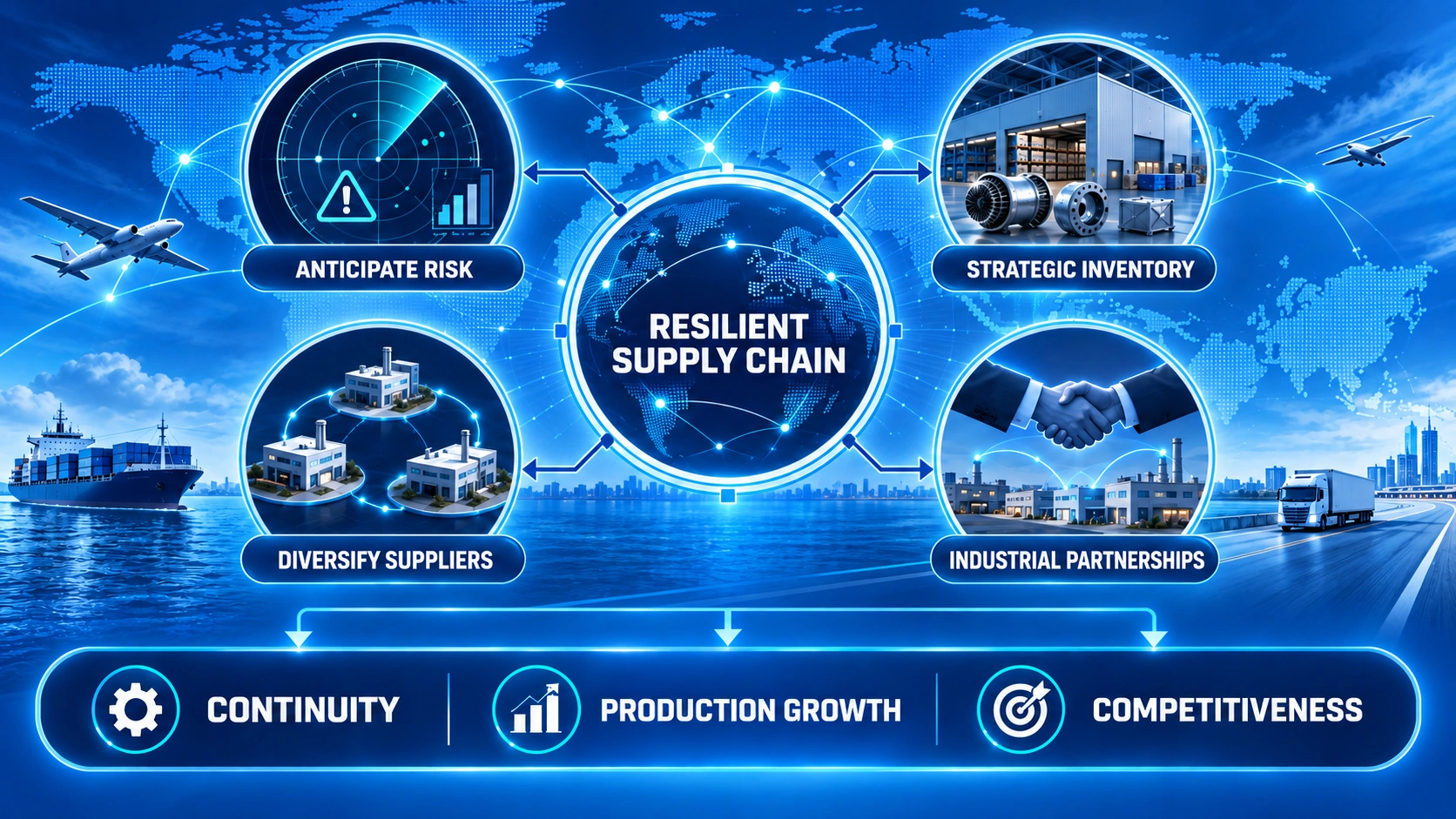
Companies worldwide are rethinking sourcing, manufacturing and distribution strategies as they seek greater resilience, flexibility and stability in an increasingly uncertain global economy.
Global supply chains are undergoing a significant transformation as businesses adapt to changing economic conditions, geopolitical tensions, technological developments and shifting consumer demands. For decades, companies relied heavily on global manufacturing networks designed primarily to reduce costs and maximise efficiency. However, recent disruptions have highlighted the risks of depending too heavily on a limited number of suppliers, countries or transportation routes.
Today, businesses are increasingly diversifying their sourcing and production locations to build more resilient supply chains. This shift is changing the way goods are manufactured, transported and delivered across international markets.
Moving Beyond Traditional Supply Chain Models
Traditional supply chains often depended on centralised production facilities and established international trade routes. While this approach helped companies achieve economies of scale, it also created vulnerabilities when unexpected disruptions occurred.
Pandemic-related shutdowns, geopolitical conflicts, shipping delays and trade restrictions demonstrated how disruptions in one region could affect industries across the world. Shortages of raw materials, electronic components and essential goods forced businesses to reconsider their supply chain strategies.
As a result, companies are moving away from relying exclusively on the lowest-cost suppliers. Instead, they are placing greater emphasis on reliability, flexibility and the ability to respond quickly to changing circumstances.
Diversification Becomes a Business Priority
One of the most important developments in global supply chains is the diversification of sourcing and manufacturing locations. Companies are increasingly exploring alternative suppliers and production centres to reduce their dependence on individual countries or regions.
Strategies such as China Plus One have gained attention, with businesses maintaining established operations in China while expanding production into other markets. Countries such as India, Vietnam, Indonesia and Mexico are attracting interest as potential manufacturing and sourcing destinations.
This diversification helps businesses distribute operational risks and maintain production continuity when disruptions affect a particular location.
However, establishing new manufacturing facilities and supplier relationships requires investment, time and careful planning. Companies must evaluate infrastructure, workforce availability, logistics, regulatory requirements and production quality before making long-term decisions.
Nearshoring and Friendshoring Gain Momentum
Another important trend is the growing interest in nearshoring and friendshoring.
Nearshoring involves shifting production or sourcing activities closer to the company’s main consumer markets. This can reduce transportation time, simplify logistics and improve coordination between manufacturers and customers.
Friendshoring, meanwhile, refers to building supply chain relationships with countries considered reliable trading or strategic partners. It reflects the growing influence of geopolitical considerations on international business decisions.
These approaches do not necessarily replace globalisation. Instead, they represent an adjustment in how businesses organise international operations, balancing cost efficiency with security and reliability.
Technology Reshapes Supply Chain Management
Digital technology is becoming an essential part of modern supply chain management. Artificial intelligence, automation, cloud-based platforms and data analytics are helping companies improve visibility across their operations.
Businesses can use advanced forecasting systems to estimate demand, monitor inventory and identify possible disruptions before they significantly affect production. Real-time tracking technologies also help companies monitor shipments and manage transportation more efficiently.
Automation and robotics are improving manufacturing productivity, while digital supply chain platforms enable suppliers, manufacturers and distributors to exchange information more effectively.
These technologies can help companies make faster decisions and respond to unexpected changes. However, implementing them requires investment in infrastructure, cybersecurity and skilled employees.
Challenges Facing Global Businesses
Despite the benefits of diversification, transforming supply chains is not without challenges. Establishing operations in new countries can increase costs, particularly when businesses need to build factories, train employees and develop transportation networks.
Different regulatory systems, customs procedures and trade policies can also complicate international operations. Companies may face difficulties maintaining consistent product quality when working with multiple suppliers.
Furthermore, smaller businesses often have fewer financial resources to diversify their sourcing networks or invest in advanced technologies. They may remain more exposed to supply disruptions than larger multinational corporations.
Balancing resilience with affordability will therefore remain a major challenge for businesses across industries.
Opportunities for Emerging Economies
The transformation of global supply chains is creating new opportunities for emerging economies. Countries with improving infrastructure, competitive manufacturing capabilities, skilled labour and supportive investment policies may attract greater international business interest.
India, in particular, has opportunities to strengthen its position in global manufacturing and supply networks. Growth in electronics, pharmaceuticals, automotive components, textiles and industrial production could help expand its participation in international trade.
However, attracting long-term investment will depend on improvements in logistics, infrastructure, regulatory efficiency, workforce development and technological capabilities.
For emerging economies, the opportunity is not limited to becoming alternative manufacturing destinations. It also includes developing domestic supplier ecosystems, increasing value addition and building stronger export capabilities.
The Worldonomics Times View
The transformation of global supply chains represents a fundamental change in how international businesses approach growth and risk management. The focus is gradually moving beyond low-cost production towards a more balanced model that combines efficiency, flexibility and resilience.
Diversifying suppliers and manufacturing locations can help companies reduce exposure to disruptions, but diversification alone cannot guarantee stability. Businesses must also invest in technology, workforce skills, infrastructure and stronger relationships with suppliers.
For governments, creating a predictable business environment and improving trade connectivity will be essential to attracting investment. For companies, long-term success will depend on their ability to anticipate risks and adapt to changing market conditions.
Emerging economies have an important opportunity to become stronger participants in global production networks. Those that combine competitive manufacturing with reliable infrastructure and consistent policies could benefit significantly from this transition.
The future of global supply chains will not be determined by where companies can produce goods most cheaply, but by where they can produce them reliably, efficiently and sustainably.