Weather Conditions, Logistics and Trade Policies Influence Food Security and Prices
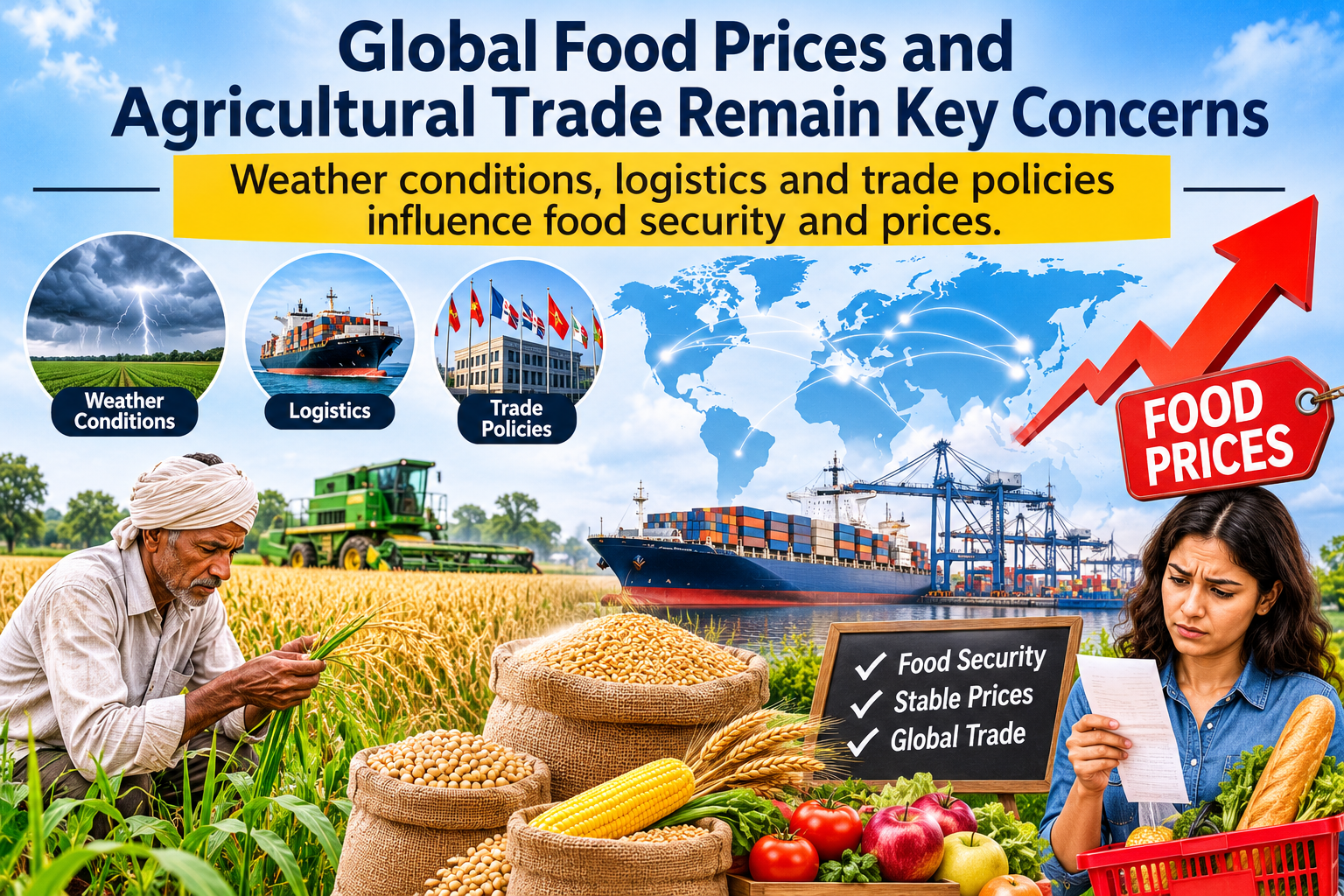
Global food markets are facing increasing uncertainty as changing weather patterns, supply chain disruptions, rising transportation costs and evolving international trade policies influence agricultural production and food prices. Food security has become a major economic and political priority for governments worldwide, particularly as millions of households continue to face challenges related to food affordability and access to essential commodities.
Agriculture remains one of the most important foundations of the global economy, supporting livelihoods, international trade, industrial activity and rural development. However, the growing frequency of extreme weather events, geopolitical tensions and fluctuations in agricultural input costs are creating additional pressure on food production and distribution systems.
From wheat and rice to edible oils, sugar and other essential commodities, international agricultural markets are increasingly influenced by developments that extend beyond national borders. Consequently, maintaining stable food supplies and affordable prices has become an important challenge for policymakers, farmers, traders and businesses.
Weather Conditions Influence Agricultural Production
Weather remains one of the most significant factors affecting global agricultural output. Agricultural production depends heavily on predictable rainfall, suitable temperatures, adequate water availability and favourable seasonal conditions.
However, climate variability and extreme weather events are creating uncertainty for farmers across several regions. Droughts, floods, heatwaves and irregular monsoon patterns can damage crops, reduce agricultural productivity and disrupt harvesting schedules.
Major agricultural-producing countries play an important role in determining global food availability. When adverse weather conditions affect production in these regions, international commodity markets can experience supply shortages and price fluctuations.
For example, disruptions in wheat production can influence flour and bread prices, while lower rice output can increase pressure on food markets in countries where rice is a dietary staple.
Climate-related agricultural risks are also encouraging greater investment in irrigation systems, climate-resilient seeds, agricultural research and modern farming technologies.
Rising Food Prices and Household Affordability
Food price inflation remains an important concern for households, particularly in developing economies where a significant proportion of income is spent on essential food products.
When the prices of cereals, vegetables, cooking oils, dairy products and other necessities increase, household purchasing power declines. Lower-income families are often affected most severely because they have limited financial flexibility to absorb higher living expenses.
Food price increases can also influence broader inflation trends. Higher agricultural commodity prices may increase the production costs of food processing companies, restaurants, retailers and other businesses.
Governments frequently respond through measures such as market interventions, food subsidies, strategic reserves, import adjustments and public distribution programmes.
However, maintaining price stability requires a balanced approach that protects consumers without discouraging farmers from investing in agricultural production.
Agricultural Trade and Global Supply Chains
International agricultural trade plays a vital role in connecting food-producing regions with countries that depend on imports to meet domestic demand.
Global trade allows countries to access essential commodities, diversify food supplies and manage differences in agricultural production. However, disruptions in international transportation and logistics can significantly affect food availability and prices.
Shipping costs, port congestion, fuel prices, storage limitations and geopolitical tensions can increase the expense of moving agricultural products across international markets.
Trade restrictions and export controls can create additional uncertainty. When major producing countries limit exports to protect domestic supplies, importing nations may face higher prices and difficulties securing essential commodities.
Such developments demonstrate the importance of transparent trade policies, diversified sourcing strategies and resilient international agricultural supply chains.
India’s Agricultural Sector and Food Security
India occupies an important position in global agricultural markets as a major producer and consumer of several essential commodities, including rice, wheat, sugar, cotton, pulses and dairy products.
Agriculture also remains an important source of livelihood for a substantial section of the country’s population. Consequently, agricultural productivity and food price stability have significant implications for rural incomes, household consumption and national economic performance.
The Indian agricultural sector is influenced by monsoon conditions, irrigation availability, fertiliser costs, energy prices and market infrastructure.
Government initiatives aimed at improving irrigation, strengthening agricultural infrastructure, promoting crop insurance and supporting farmers are important for increasing productivity and reducing agricultural risks.
The expansion of digital agricultural services, precision farming, improved seed varieties and modern storage facilities can further strengthen the sector.
India’s agricultural trade policies also influence international food markets. Decisions concerning rice, wheat, sugar and other agricultural exports can affect domestic availability as well as global commodity