New Delhi | November 25, 2026
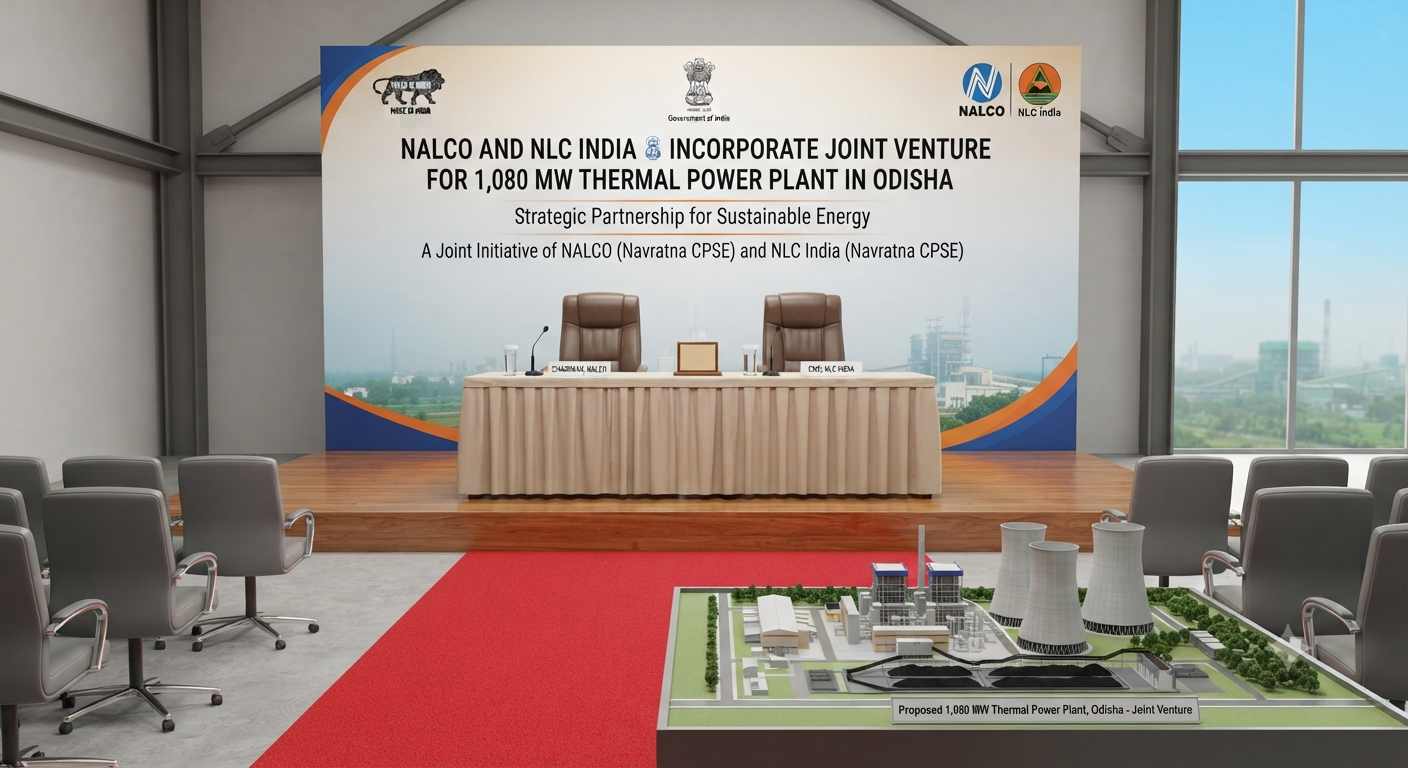
India’s industrial and power infrastructure development has received a significant boost with National Aluminium Company Limited (NALCO) and NLC India Limited incorporating a joint venture company to develop a 1,080 MW thermal captive power plant at Angul in Odisha. The project is expected to support NALCO’s planned aluminium smelter expansion and strengthen the availability of reliable electricity for energy-intensive industrial operations.
The newly incorporated company, NLC NALCO Power Private Limited (NNPPL), will be jointly owned by the two Navratna public sector enterprises, with each company holding a 50% equity stake. The development marks an important step in translating their earlier agreement into a dedicated corporate entity for implementing the proposed power project.
According to regulatory disclosures, the joint venture was incorporated in November 2026, with the Ministry of Corporate Affairs issuing its certificate of incorporation on November 12. NLC India received the certificate on November 23 and informed the stock exchanges about the development.
A 1,080 MW Power Project for Odisha
The proposed plant will have an installed capacity of 1,080 MW, divided into four units of 270 MW each. It will be developed at Angul, Odisha, within the premises of NALCO’s existing captive power plant infrastructure.
The project is intended to meet the additional electricity requirements arising from NALCO’s planned expansion of its aluminium smelter. Aluminium production is highly energy-intensive and requires a consistent, uninterrupted power supply. Captive generation therefore plays an important role in maintaining production stability, managing energy costs and supporting long-term industrial operations.
NALCO is undertaking a 0.5 million tonnes per annum (MTPA) expansion of its aluminium smelter at Angul, with commissioning envisaged during 2030–31. The expansion is expected to require approximately 800 MW of additional assured captive power. The proposed 1,080 MW facility is designed to provide the necessary generation capacity for this industrial growth.
The project will be developed in phases, allowing the companies to align capacity addition with the requirements of the expanding aluminium operations.
Equal Partnership Between Two Navratna PSUs
NALCO and NLC India signed their Joint Venture-cum-Shareholders’ Agreement on July 8, 2026, in the presence of Union Minister of Coal and Mines G. Kishan Reddy. The agreement established the framework for creating an equally owned company to develop the thermal captive power project.
The partnership brings together two government-owned enterprises with complementary capabilities. NALCO is one of India’s leading integrated aluminium producers, with operations spanning bauxite mining, alumina refining, aluminium smelting and power generation.
NLC India, meanwhile, has more than six decades of experience in mining and power generation, including thermal and renewable energy projects. Its expertise in fuel sourcing and power project execution is expected to contribute to the development and operation of the proposed facility.
The joint venture will have its registered office in Chennai and corporate office in Bhubaneswar, reflecting the participation of both companies and the project’s location in Odisha.
Long-Term Power and Fuel Supply Arrangements
The proposed commercial structure is intended to provide long-term certainty for both electricity consumption and fuel supply.
Under the July agreement, the joint venture company is expected to enter into a 25-year Power Purchase Agreement (PPA) with NALCO for the entire electricity output of the plant. The arrangement is proposed under Section 62 of the Electricity Act, 2003.
A long-term Fuel Supply Agreement is also envisaged with NLC India for coal at Coal India-notified prices. These arrangements are designed to establish a stable framework for power offtake and fuel availability over the project’s operating life.
The companies have also identified opportunities to complement thermal generation with renewable energy. NALCO plans to pursue approximately 200–250 MW of firm renewable energy through round-the-clock renewable energy arrangements, with NLC India expected to support the effort through long-term power purchase agreements or group-captive arrangements from its renewable energy portfolio.
This approach reflects an effort to balance the immediate requirement for dependable industrial power with the growing importance of renewable energy integration.
Supporting Industrial Growth and Odisha’s Economy
The power project is closely connected with the broader development of Odisha as an important centre for metals, mining and manufacturing.
Reliable electricity is essential for aluminium production, where interruptions can affect industrial processes and operational efficiency. By developing dedicated captive generation capacity, NALCO aims to strengthen the energy foundation required for its planned expansion.
The project may also create opportunities for employment during construction and operation, while generating demand for engineering, equipment, logistics, maintenance and other supporting services.
The use of existing power plant premises at Angul is expected to support a brownfield capacity addition. Such an approach can make use of established industrial infrastructure, although project execution will depend on the necessary technical, environmental and regulatory clearances.
The expansion also has wider implications for India’s domestic aluminium value chain. Additional production capacity can support downstream industries that depend on aluminium, including transportation, construction, electrical equipment, packaging and manufacturing.
Focus on Execution and Energy Transition
While incorporation of the joint venture represents an important administrative and corporate milestone, the project still needs to move through its development and implementation stages. Detailed information on the overall project cost, construction schedule and commissioning milestones has not been specified in the incorporation announcement.
The companies will need to coordinate project planning, financing, equipment procurement, construction and regulatory approvals to bring the facility into operation. Maintaining cost discipline and ensuring reliable fuel and power arrangements will also be important.
The proposed renewable energy component will be another area to watch. Integrating firm renewable power with captive thermal generation could help address industrial electricity requirements while supporting the companies’ efforts to meet applicable renewable consumption obligations.
The Worldonomics Times View
The incorporation of NLC NALCO Power Private Limited represents a strategic step in connecting India’s industrial expansion with long-term power infrastructure planning. NALCO’s aluminium smelter expansion will require a dependable electricity supply, and the joint venture with NLC India creates a dedicated structure to develop the necessary generation capacity.
The equal ownership arrangement also brings together complementary strengths: NALCO’s industrial power requirements and NLC India’s experience in mining and electricity generation. Long-term power offtake and fuel supply arrangements could provide greater predictability for the proposed project.
However, the project’s wider significance will depend on execution. Timely approvals, responsible project development, cost management and reliable operations will be essential. The proposed 200–250 MW renewable energy component also deserves attention, as it could help integrate cleaner electricity into the project’s overall energy strategy.
For Odisha, the development reinforces the connection between industrial investment and supporting infrastructure. If implemented as planned, the 1,080 MW facility could help provide the power foundation for NALCO’s next phase of growth and contribute to the state’s industrial development.
Conclusion: NALCO and NLC India’s joint venture marks an important step towards developing dedicated power capacity for aluminium production in Odisha. The focus now shifts from incorporation to project execution, with the plant expected to play a key role in supporting NALCO’s planned smelter expansion.