The Worldonomics Times
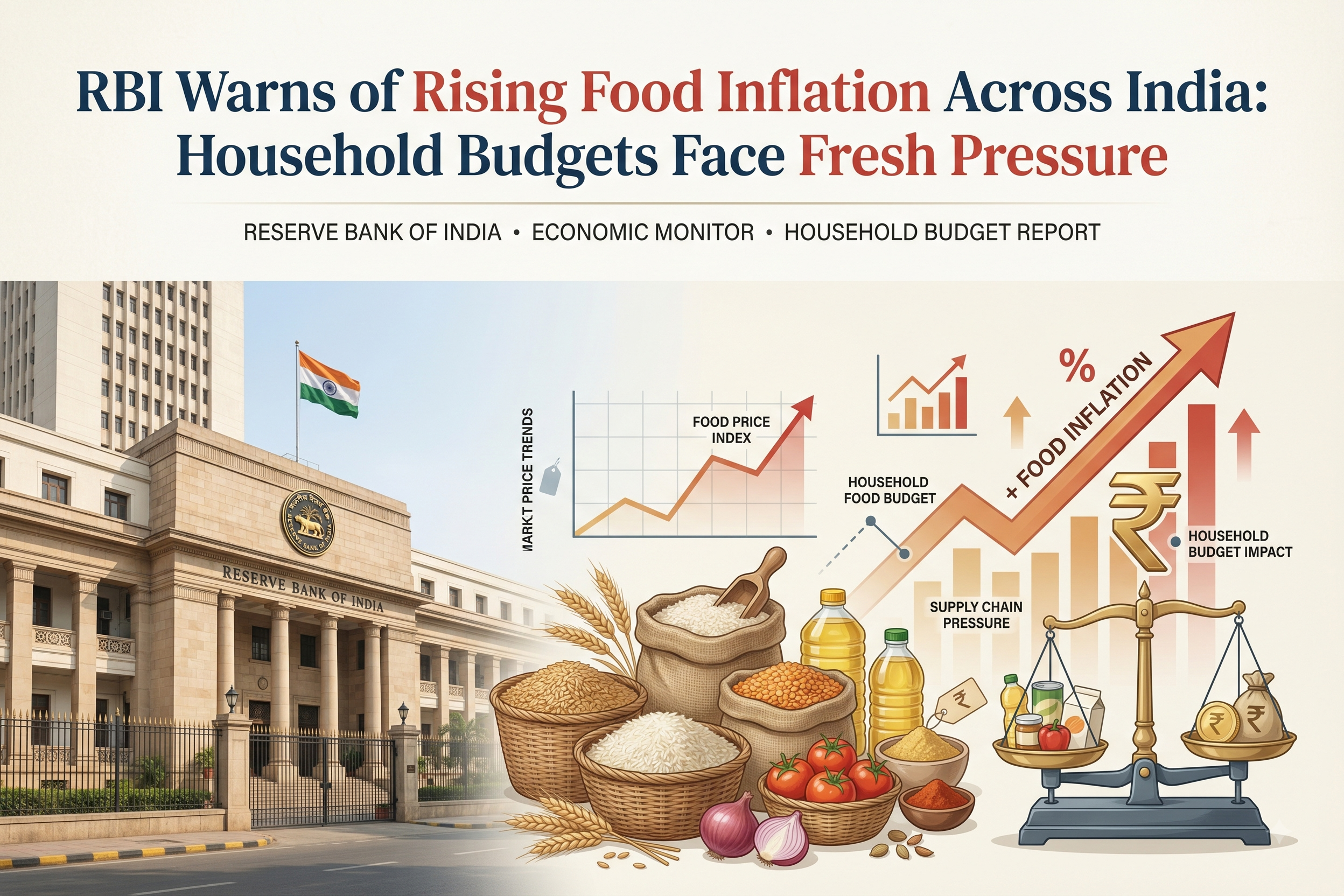
Rising food prices are creating fresh concerns for India’s economy as the Reserve Bank of India (RBI) highlights broad-based inflationary pressures across essential commodities, including cereals, pulses and edible oils. The warning comes at a time when retail inflation has crossed the central bank’s upper tolerance limit, putting household budgets and economic policymaking under renewed pressure.
According to official government data, India’s retail inflation reached 6.09% in October 2026, compared with 5.54% in September. Food inflation increased more sharply to 8.94%, indicating that essential food items are becoming significantly more expensive for consumers. The figures underline the growing challenge of managing price stability while maintaining economic growth.
Food Prices Drive Inflation Concerns
Food products account for a substantial share of household expenditure in India, making food inflation particularly important for the country’s overall economic outlook.
The RBI’s November bulletin reported that food-price pressures remained broad-based. Data available up to November 19 indicated increases in the prices of major cereals and pulses, while edible oil prices also recorded a widespread rise, led by mustard oil.
Cereals such as rice and wheat are essential components of everyday diets. Any sustained increase in their prices can affect millions of households, particularly lower- and middle-income families that spend a large proportion of their income on food.
Pulses are another important source of nutrition and protein. Higher prices can increase household expenses and make it difficult for consumers to maintain their usual food consumption patterns.
Edible oils also play an important role in daily cooking. Rising prices of mustard, palm and other edible oils can add to the cost of essential groceries and increase pressure on family budgets.
Retail Inflation Crosses the 6% Mark
The increase in retail inflation to 6.09% in October is significant because it moved above the RBI’s upper tolerance limit of 6% under India’s inflation-targeting framework.
The Consumer Price Index (CPI) measures changes in the prices of a basket of goods and services consumed by households. Food and beverages carry considerable weight in this basket, meaning that higher food prices can have a substantial influence on the overall inflation rate.
October’s food inflation figure of 8.94% highlights the extent of the pressure. The increase was visible in both rural and urban markets, with food inflation recorded at 9.09% in rural areas and 8.68% in urban areas.
Such developments can affect consumer confidence and spending decisions. When essential items become more expensive, households may reduce discretionary purchases, delay major expenses or adjust their monthly budgets.
Challenges for Farmers and Agricultural Supply Chains
Food inflation is influenced by several factors, including weather conditions, agricultural production, storage facilities, transportation costs and market demand.
The RBI has linked recent food-price pressures to weak monsoon rainfall. Uneven rainfall can affect crop yields, agricultural productivity and the availability of essential commodities.
Supply-chain inefficiencies can further increase prices. Limited storage capacity, transportation bottlenecks and delays in bringing agricultural produce to markets may create temporary shortages and raise distribution costs.
Farmers may benefit from higher selling prices in certain circumstances, but rising input expenses for seeds, fertilisers, fuel and labour can reduce their actual income gains.
Strengthening agricultural infrastructure, improving irrigation facilities and investing in modern storage systems are therefore important steps towards creating a more stable food supply.
Impact on Consumers and Businesses
The most immediate impact of food inflation is felt by ordinary households. Higher prices of cereals, pulses and cooking oils increase monthly grocery expenses and reduce disposable income.
Low-income families are particularly vulnerable because food represents a larger proportion of their total spending. Even moderate increases in essential commodity prices can create financial difficulties for these households.
Businesses may also face indirect consequences. Restaurants, food-processing companies, packaged-food manufacturers and retailers could experience higher procurement costs. Some businesses may absorb the additional expenses, while others may pass them on to customers through higher prices.
If food inflation remains elevated, it could also influence wage expectations and consumer demand across the wider economy.
RBI Faces a Monetary Policy Challenge
The RBI faces a difficult balancing act as inflation rises above its target range. Its monetary policy decisions must consider price stability while avoiding unnecessary pressure on economic activity.
Higher interest rates can help control demand-driven inflation by making borrowing more expensive. However, monetary policy cannot directly resolve supply-side problems such as poor crop output, weather disruptions or inadequate food storage.
The RBI’s October policy review had already raised the repo rate by 25 basis points to 5.50% and shifted its stance towards calibrated tightening. The November bulletin’s assessment of continuing food-price pressures has increased attention on the next monetary policy decision.
The policy committee must evaluate whether inflationary pressures are temporary or becoming more persistent before deciding its next course of action.
The Worldonomics Times View
Rising food inflation is not simply a statistical concern; it directly affects the everyday lives of millions of Indian households. Higher prices of cereals, pulses and edible oils can reduce purchasing power, increase financial stress and weaken consumer confidence.
The Worldonomics Times believes that controlling food inflation requires a combination of monetary discipline and effective supply-side management. Interest-rate adjustments may help manage broader inflationary expectations, but lasting relief will depend on improvements in agricultural productivity, storage, transportation and distribution.
The government should strengthen market monitoring, improve the availability of essential commodities and respond quickly to supply disruptions. Better irrigation, climate-resilient farming practices and modern agricultural infrastructure can also reduce the economy’s vulnerability to unpredictable weather conditions.
At the same time, policymakers must ensure that measures to control consumer prices do not unnecessarily undermine farmers’ incomes.
A balanced approach that protects both producers and consumers is essential for long-term food security and economic stability.
Conclusion
The RBI’s warning about broad-based food inflation highlights a growing challenge for India’s economy. With retail inflation reaching 6.09% and food inflation rising to 8.94% in October 2026, pressure on household budgets and business costs remains significant.
The coming months will be important in determining whether food prices stabilise or continue to push inflation higher. For India, ensuring affordable food supplies while supporting agricultural growth will be essential to maintaining economic stability and protecting consumer purchasing power.