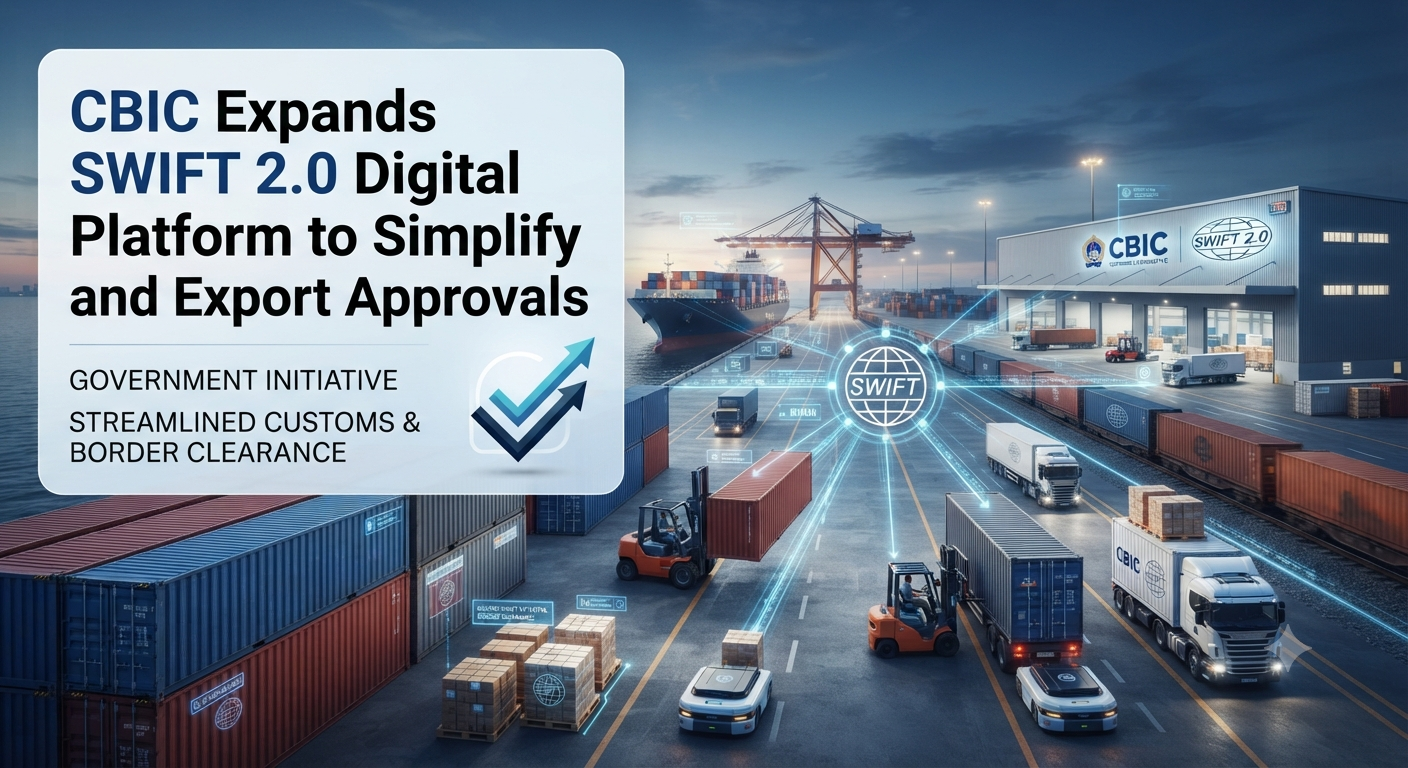
The Central Board of Indirect Taxes and Customs (CBIC) is strengthening India’s digital trade infrastructure through the expansion of its Single Window Interface for Facilitating Trade (SWIFT 2.0) platform. The initiative aims to simplify regulatory procedures for importers and exporters by bringing applications for certificates, licences, permits and other regulatory approvals onto a unified digital interface.
The expansion is expected to reduce paperwork, minimise repeated submissions and improve coordination between customs authorities and Partner Government Agencies (PGAs). By making regulatory services more accessible through the ICEGATE portal, CBIC is seeking to make cross-border trade more efficient, transparent and predictable for businesses.
The initiative is an important part of the government’s broader push towards paperless customs procedures and improved ease of doing business.
What Is SWIFT 2.0?
SWIFT stands for Single Window Interface for Facilitating Trade. It was developed to provide a common digital platform through which businesses can interact with customs authorities and government agencies involved in regulating international trade.
The upgraded SWIFT 2.0 system is designed to move beyond the earlier document-repository-based process. It provides a more integrated and data-driven framework for processing applications and obtaining regulatory clearances.
The platform is intended to serve importers, exporters, customs brokers and Partner Government Agencies involved in export-import operations.
Through a unified interface, trade users can submit additional information, upload supporting documents, respond to regulatory queries, monitor application progress and access approved certificates or No Objection Certificates (NOCs).
CBIC launched SWIFT 2.0 in February 2026, building on the initial framework announced through Circular No. 29/2025-Customs dated 21 November 2025.
Regulatory Approvals Moving to a Unified Digital Interface
One of the central objectives of SWIFT 2.0 is to integrate regulatory services that were previously handled through separate agency-specific systems or manual procedures.
The platform is being expanded in phases to onboard more than 60 Partner Government Agencies. These agencies are responsible for issuing various permissions, licences, certificates and NOCs required for the movement of regulated goods across India’s borders.
The services being integrated include:
- Export Turnover Certificates issued by 17 Export Promotion Councils and other designated bodies.
- Certificates and regulatory documents issued by the Marine Products Export Development Authority (MPEDA).
- Essentiality Certificates issued by the Directorate General of Hydrocarbons (DGH).
- Import NOCs issued by the Rubber Board.
- Other licences, permits, certificates and authorisations issued by participating government agencies.
The integration of these services is expected to reduce the need for businesses to navigate multiple portals and submit similar information repeatedly.
Key Digital Features for Importers and Exporters
SWIFT 2.0 introduces several features intended to make regulatory interactions more convenient.
1. Unified application dashboard
Importers and exporters can access relevant applications and monitor their progress through a centralised dashboard. This provides a consolidated view of regulatory interactions and outstanding requirements.
2. Online document submission
Businesses can submit additional information and supporting documents electronically. This reduces dependence on physical paperwork and repeated visits to government offices.
3. Real-time application tracking
Users can monitor application status and receive updates through SMS and email notifications. They can also respond to queries raised by the concerned regulatory authorities through the platform.
4. Digital payments and receipts
Where applicable, users can make online payments for agency fees and obtain digital receipts, helping streamline administrative processes.
5. Digital certificates and approvals
Once applications are approved, relevant certificates and NOCs can be viewed and downloaded electronically. This improves access to regulatory documents and reduces delays associated with physical collection.
6. Inspection-related updates
The platform also facilitates communication regarding inspections by participating agencies, including information about scheduled inspection dates and confirmations.
How the Expansion Could Benefit Businesses
The expansion of SWIFT 2.0 could have a significant impact on businesses involved in international trade.
For exporters, easier access to certificates and regulatory documents may reduce the administrative effort involved in completing export-related formalities. Export Turnover Certificates, for example, can be important for businesses seeking benefits or exemptions under applicable export promotion schemes.
For importers, digital access to agency approvals and NOCs can improve coordination between customs and other regulatory authorities. This is particularly relevant for products that require specialised clearances before they can enter the domestic market.
The platform could also benefit small and medium-sized enterprises (SMEs), which often face greater administrative challenges when dealing with multiple regulatory departments.
By reducing manual intervention and providing better visibility into application progress, SWIFT 2.0 may help businesses plan shipments, manage inventory and avoid unnecessary compliance-related delays.
However, actual clearance timelines will continue to depend on the nature of the goods, completeness of documentation, applicable regulations and the response time of the concerned agencies.
Digital Integration and India’s Trade Competitiveness
Efficient customs procedures are an important factor in determining a country’s competitiveness in global trade. Delays in regulatory approvals can increase logistics costs, disrupt production schedules and affect the reliability of supply chains.
India’s efforts to modernise customs administration are therefore closely linked to its ambitions to strengthen manufacturing, expand exports and improve its position in international supply networks.
SWIFT 2.0 represents a move towards a more coordinated regulatory framework in which government agencies can exchange information and process applications through integrated digital systems.
The phased onboarding of agencies is particularly important. A unified platform can deliver meaningful benefits only when participating departments adopt common processes, maintain reliable digital systems and coordinate effectively with customs authorities.
The Worldonomics Times View
The expansion of SWIFT 2.0 is a constructive step towards reducing the administrative complexity associated with India’s international trade procedures. Businesses need predictable regulatory systems, particularly when operating in competitive global markets where shipment delays and documentation issues can affect costs and customer commitments.
The biggest advantage of the initiative lies in its potential to connect multiple regulatory authorities through a common digital interface. Rather than treating each approval as an isolated administrative process, SWIFT 2.0 seeks to create a more coordinated system for import and export clearances.
Nevertheless, the success of the platform will depend on more than technology. Government agencies must ensure timely application processing, consistent documentation requirements and effective coordination. The system should also remain accessible to smaller businesses that may have limited technical and compliance resources.
CBIC should continue expanding the platform while publishing clear implementation guidelines and monitoring the actual reduction in processing time and paperwork.
Conclusion
CBIC’s expansion of SWIFT 2.0 marks an important development in India’s digital trade facilitation efforts. By integrating export certificates, import permissions and regulatory approvals into a unified platform, the initiative aims to reduce paperwork, improve transparency and simplify interactions between businesses and government agencies.
As more Partner Government Agencies join the system, SWIFT 2.0 could become a significant part of India’s paperless customs ecosystem. Consistent implementation and efficient coordination will determine how effectively the platform translates digital infrastructure into faster and more reliable trade clearances.