The Worldonomics Times
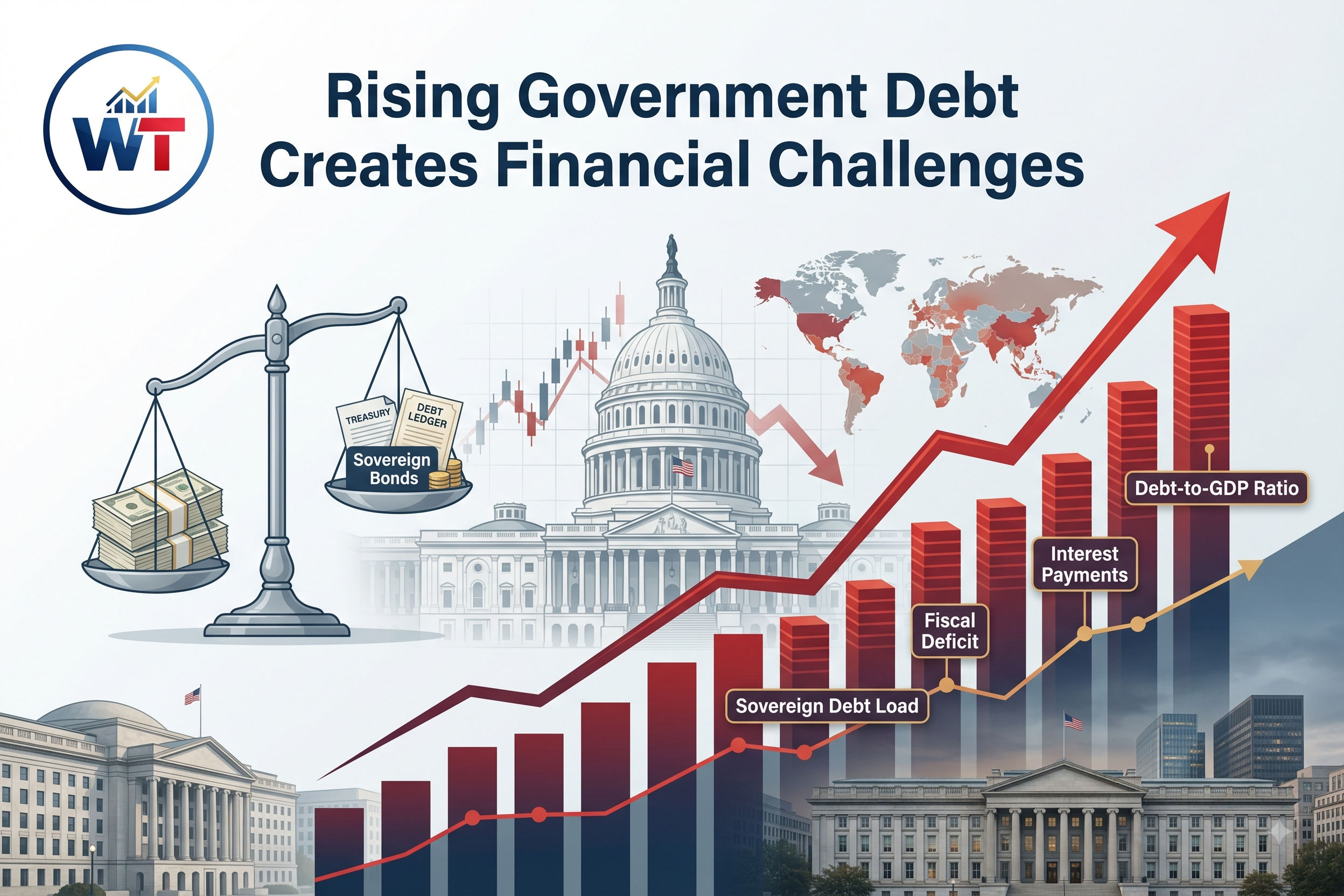
Rising government debt is becoming a major concern for the global economy as higher borrowing costs, persistent budget deficits, and increasing public expenditure place pressure on national finances. Governments across developed and developing economies are facing the challenge of managing growing debt obligations while continuing to fund infrastructure, healthcare, education, defence, social protection, and economic development.
Public borrowing is an important tool for financing development and responding to economic crises. However, when debt increases faster than a country’s ability to generate revenue and economic growth, governments may face difficulties meeting repayment obligations. The situation becomes more complicated when interest rates rise, making new borrowing and refinancing existing debt increasingly expensive.
Recent reports from international financial institutions indicate that global public debt and sovereign borrowing costs remain under significant pressure, raising concerns about long-term fiscal sustainability and financial stability.
Global Government Debt Continues to Rise
Government debt has increased substantially over recent years as countries borrowed to support their economies during the pandemic, manage economic disruptions, finance infrastructure, and respond to geopolitical challenges.
According to the International Monetary Fund’s April 2026 Fiscal Monitor, global public debt reached nearly 94% of global GDP in 2025. The IMF projected that it could reach 100% of global GDP by 2029 under its baseline outlook.
The organisation has also highlighted growing spending requirements related to ageing populations, defence, energy security, social protection, and strategic investment.
These competing demands are making it difficult for governments to reduce budget deficits while maintaining essential public services.
Although borrowing can support economic development when used productively, continued debt accumulation without sustainable revenue growth can increase financial vulnerabilities.
Higher Interest Rates Increase Government Borrowing Costs
One of the biggest challenges facing governments is the rising cost of servicing public debt.
When central bank interest rates and long-term government bond yields increase, governments may have to pay more to issue new bonds or refinance existing obligations. The impact depends on the maturity structure of debt, investor demand, currency exposure, and the country’s creditworthiness.
An October 2026 IMF analysis reported that the average yield on 10-year government bonds across the G7 increased by more than one percentage point between February and September, reaching its highest level in nearly two decades.
The IMF also projected that the effective average interest cost of government financing could increase from 2.3% in 2021 to 3.7% by 2031.
Higher interest payments reduce the funds available for public investment and essential services. Governments may consequently face difficult decisions involving taxation, spending priorities, borrowing requirements, and fiscal reforms.
Developing Economies Face Greater Debt-Service Pressure
Developing economies are particularly vulnerable to rising international borrowing costs because many depend on external financing to support infrastructure, energy projects, healthcare, education, and industrial development.
The World Bank’s International Debt Report 2026 revealed that the external debt of developing countries increased to a record $9.4 trillion in 2025.
The report also found that low- and middle-income countries paid approximately $1.4 trillion in principal and interest during 2025, marking a fifth consecutive annual increase.
For countries with limited government revenue, large debt repayments can reduce the resources available for poverty reduction, public infrastructure, education, and healthcare.
Currency depreciation can create additional pressure when governments have borrowed in foreign currencies. A weaker domestic currency increases the local-currency cost of servicing dollar- or euro-denominated debt.
These challenges can make long-term development planning more difficult, particularly for countries with limited access to affordable international financing.
Pressure on Public Spending and Economic Development
Growing debt-servicing obligations can influence government spending priorities.
When a larger share of public revenue is allocated to interest payments, fewer resources may remain available for infrastructure development, transport networks, renewable energy, education, healthcare, and social welfare programmes.
This creates an economic trade-off. Reducing development expenditure may weaken productivity and future economic growth, while continuing to borrow without a credible repayment strategy can increase financial risks.
Governments must therefore balance short-term public needs with long-term fiscal responsibility.
Investment in productive infrastructure, digital systems, education, and industrial capacity can improve economic output and strengthen future tax revenues. However, such investment must be supported by effective project selection, transparent procurement, and responsible financial management.
Financial Markets Become More Sensitive to Fiscal Risks
Government borrowing conditions are closely connected to investor confidence and financial market stability.
Investors assess a country’s debt levels, fiscal deficit, economic growth, inflation, political and institutional stability, and ability to generate sufficient revenue.
When concerns about debt sustainability increase, investors may demand higher returns to hold government bonds. This can raise sovereign borrowing costs and increase the financial burden on governments.
The Bank of England’s November 2026 Financial Stability Report highlighted that sovereign bond yields have increased across several advanced economies, with some reaching levels close to two-decade highs.
The report also noted that weaker fiscal outlooks and higher government borrowing requirements have contributed to changing bond-market conditions.
A sudden increase in sovereign borrowing costs can affect banks, insurance companies, pension funds, and businesses that hold government securities or depend on government bond yields as a reference for financing.
India and the Challenge of Fiscal Management
India, like other emerging economies, must balance infrastructure investment, social development, economic expansion, and responsible public borrowing.
Investment in roads, railways, ports, renewable energy, manufacturing, digital infrastructure, and public services can strengthen long-term productivity and support employment.
However, maintaining a sustainable fiscal position remains important for economic stability. Higher borrowing costs or unexpected external shocks can increase budgetary pressure and affect the availability of resources for development programmes.
Improving tax collection, strengthening public-sector efficiency, encouraging private investment, and carefully evaluating infrastructure projects can help support long-term fiscal sustainability.
India’s expanding domestic economy and financial markets provide opportunities to finance development, but maintaining investor confidence and prudent debt management remains essential.
What Lies Ahead for Global Government Debt?
The future direction of public debt will depend on economic growth, interest rates, government revenue, inflation, fiscal policies, and geopolitical developments.
Governments may need to strengthen tax systems, review inefficient expenditure, improve public financial management, and establish credible medium-term debt strategies.
International institutions also emphasise the importance of transparency, effective debt restructuring frameworks, and improved access to sustainable financing for vulnerable economies.
The objective should not simply be to reduce borrowing but to ensure that public debt supports productive investment without creating unsustainable financial obligations.
The Worldonomics Times View
The Worldonomics Times believes that rising government debt represents a significant challenge for global financial stability and long-term economic development. Public borrowing can play an important role in financing infrastructure, supporting economic recovery, and improving living standards. However, borrowing must be accompanied by responsible fiscal planning and a clear strategy for generating future economic returns.
Governments should prioritise productive expenditure, strengthen revenue collection, improve transparency, and carefully evaluate the long-term costs of new borrowing. Short-term fiscal adjustments should also be designed to protect essential public services and vulnerable communities.
Developing economies require particular attention because excessive debt-servicing costs can limit their ability to invest in education, healthcare, infrastructure, and industrial development.
International cooperation, transparent lending practices, and effective debt-management frameworks will be important in addressing global financing challenges.
The Worldonomics Times believes that sustainable economic development requires more than access to borrowing. It requires governments to use public resources efficiently, maintain investor confidence, and ensure that today’s financial obligations do not restrict tomorrow’s opportunities.