The Worldonomics Times
Artificial intelligence (AI) is becoming one of the most influential forces shaping the global economy, attracting significant investment from technology companies, financial institutions, governments, and industrial organisations. Growing demand for AI applications, advanced semiconductors, cloud computing, and data-centre infrastructure is creating new business opportunities while influencing international financial markets and industrial activity.
The rapid adoption of generative AI, automation, machine learning, and intelligent data-processing systems has encouraged companies to increase spending on advanced technologies. Major technology firms are investing heavily in computing infrastructure, specialised processors, memory chips, software platforms, and energy systems to support the expanding demand for AI services.
This investment cycle is extending beyond the technology sector. Semiconductor manufacturers, construction companies, electricity providers, equipment suppliers, and telecommunications businesses are also benefiting from the growing AI ecosystem.
Global AI Investment Reaches New Levels
The scale of investment in artificial intelligence has increased significantly as businesses compete to develop and deploy advanced AI capabilities.
According to an estimate by UBS published in November 2026, global AI-related investment could rise from approximately $1 trillion in 2026 to $1.4 trillion in 2027 and $1.5 trillion in 2028.
Major cloud service providers and technology companies are directing substantial capital towards data centres, computing networks, specialised processors, and AI development platforms. These investments are intended to expand computing capacity and meet the growing demand for AI-powered products and services.
The investment trend is also attracting financial institutions and institutional investors seeking opportunities across the technology supply chain.
However, the scale of spending is creating an important question for markets: whether future revenues and productivity gains will be sufficient to justify the enormous investment being made today.
Semiconductor Industry Benefits from AI Demand
Semiconductors are at the centre of the global AI expansion. Advanced chips are essential for training large AI models, processing information, operating data centres, and delivering AI-powered services.
Demand is increasing for graphics processing units (GPUs), high-performance processors, memory chips, and advanced semiconductor packaging technologies.
According to the Semiconductor Industry Association’s November 2026 policy brief, global semiconductor sales reached approximately $517.7 billion in the third quarter of 2026, representing 24.1% growth compared with the previous quarter. The report also indicated that sales had exceeded $1 trillion cumulatively by August.
This expansion is encouraging semiconductor manufacturers to invest in new production facilities, advanced manufacturing equipment, research, and packaging capabilities.
Countries such as the United States, Taiwan, South Korea, Japan, and China remain important participants in the semiconductor ecosystem. Their manufacturing capabilities and technology policies will influence the future direction of the global chip industry.
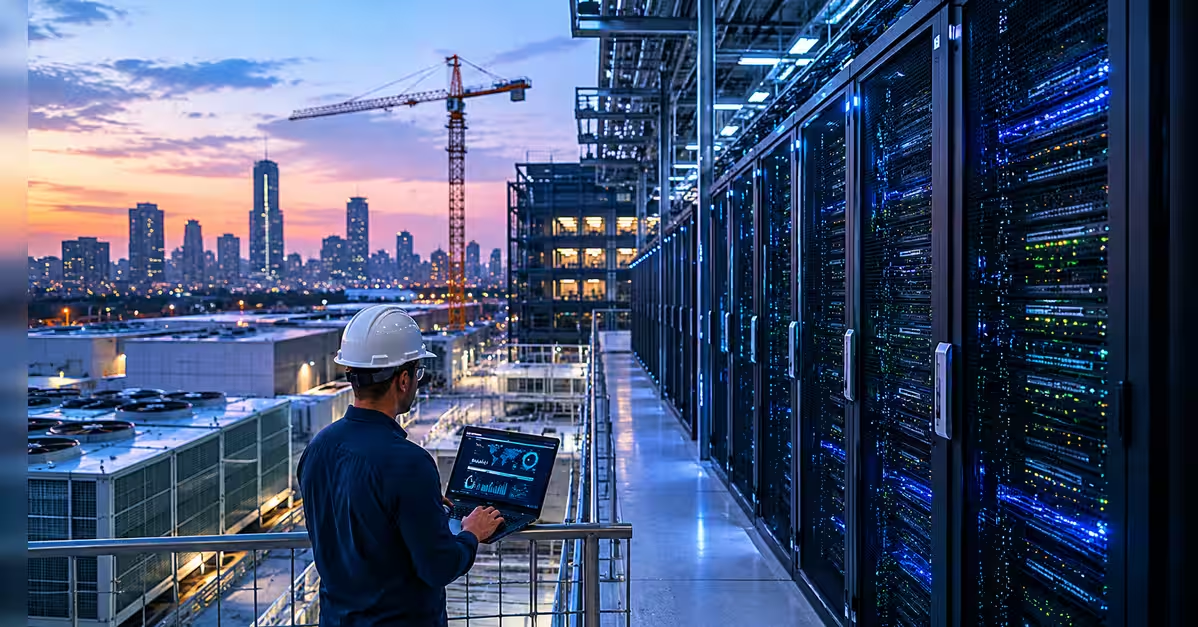
Data Centres Become a Major Investment Priority
The rapid expansion of AI applications has increased demand for data centres capable of handling large volumes of computing workloads.
Modern AI systems require substantial processing capacity, high-speed networking, specialised cooling systems, reliable electricity supplies, and advanced storage infrastructure.
According to IDC’s November 2026 update, global spending on AI infrastructure reached $121.4 billion in the second quarter of 2026, an increase of 53% compared with the same period in the previous year. IDC also raised its full-year 2026 spending forecast to approximately $521 billion.
These figures highlight the growing importance of data-centre infrastructure in the global investment landscape.
The expansion is creating opportunities for construction companies, electrical equipment manufacturers, cooling technology providers, cloud computing businesses, and power-generation companies.
However, data-centre development also faces challenges involving electricity availability, land requirements, water consumption, infrastructure costs, and regulatory approvals.
Global Financial Markets Respond to AI Investment
AI investment is increasingly influencing international stock markets and investor sentiment.
Technology companies associated with artificial intelligence, semiconductor manufacturing, cloud computing, and digital infrastructure have attracted considerable investor attention.
The expectation of stronger future earnings has supported valuations across parts of the technology sector. At the same time, companies supplying essential AI infrastructure have benefited from increased demand for chips, memory, networking equipment, and specialised computing systems.
The influence of AI investment is also spreading to international markets. Semiconductor-producing economies in East Asia and suppliers of industrial materials are gaining importance as global companies expand their AI-related operations.
However, rising market concentration creates risks. When a relatively small number of large technology companies account for a substantial share of market performance, disappointing earnings or weaker investment expectations can trigger wider financial market volatility.
Opportunities for Emerging Economies
The expansion of artificial intelligence offers significant opportunities for emerging economies, including India.
India has the potential to strengthen its position in software development, IT services, semiconductor-related activities, data-centre operations, digital infrastructure, and AI-enabled business services.
The country’s skilled technology workforce, expanding digital economy, and growing domestic demand provide opportunities for companies seeking to develop AI solutions and technology services.
Investment in data centres, semiconductor manufacturing, electronics production, and research facilities could also support employment, infrastructure development, and industrial growth.
However, attracting long-term investment will require reliable electricity, advanced infrastructure, skilled professionals, supportive regulations, and continued investment in research and innovation.
Developing domestic capabilities will be important for reducing dependence on imported advanced technologies and strengthening India’s position in global technology supply chains.
Risks of Overinvestment and Financial Uncertainty
Despite the strong growth outlook, the AI investment boom is not without risks.
Technology companies are committing enormous financial resources to infrastructure development, but the commercial returns from these investments may take time to materialise.
The European Central Bank’s November 2026 Financial Stability Review highlights concerns about the growing use of external financing for AI infrastructure investment. It notes that major US technology companies could collectively spend approximately $5.5 trillion in capital expenditure by 2030, although estimates vary.
Increasing dependence on borrowing and external funding could create financial vulnerabilities if expected revenues fail to meet investment expectations.
Other challenges include semiconductor supply constraints, rising electricity demand, cybersecurity threats, regulatory uncertainty, and intensifying international competition.
Investors will therefore need to assess not only how much companies are spending on AI but also whether that spending is generating sustainable revenue, productivity improvements, and long-term profitability.
What Lies Ahead for AI and Global Markets?
Artificial intelligence is expected to remain an important driver of global investment and technological transformation.
Future growth will depend on the commercial adoption of AI applications, semiconductor manufacturing capacity, data-centre expansion, energy infrastructure, and the ability of businesses to convert technological innovation into measurable economic benefits.
Governments will also play an important role through research funding, digital infrastructure development, technology regulations, and international trade policies.
The next phase of AI development may increasingly focus on practical business applications, industrial automation, healthcare technology, financial services, education, and advanced manufacturing.
The Worldonomics Times View
The Worldonomics Times believes that artificial intelligence represents one of the most significant investment and industrial transformation opportunities of the modern global economy. The growing demand for semiconductors, data centres, computing infrastructure, and advanced technologies is creating opportunities that extend far beyond traditional technology companies.
However, investment growth alone should not be treated as proof of long-term economic success. Businesses must demonstrate that AI adoption improves productivity, reduces operating costs, creates commercial value, and generates sustainable returns.
Governments should encourage innovation while strengthening digital infrastructure, developing skilled workforces, supporting research, and ensuring responsible technology development.
For emerging economies such as India, the priority should be to move beyond technology consumption and build stronger capabilities in AI development, semiconductor manufacturing, electronics, and digital infrastructure.
The Worldonomics Times believes that the long-term winners of the AI revolution will not necessarily be the companies spending the most, but those capable of converting technological investment into sustainable productivity, innovation, and economic value.