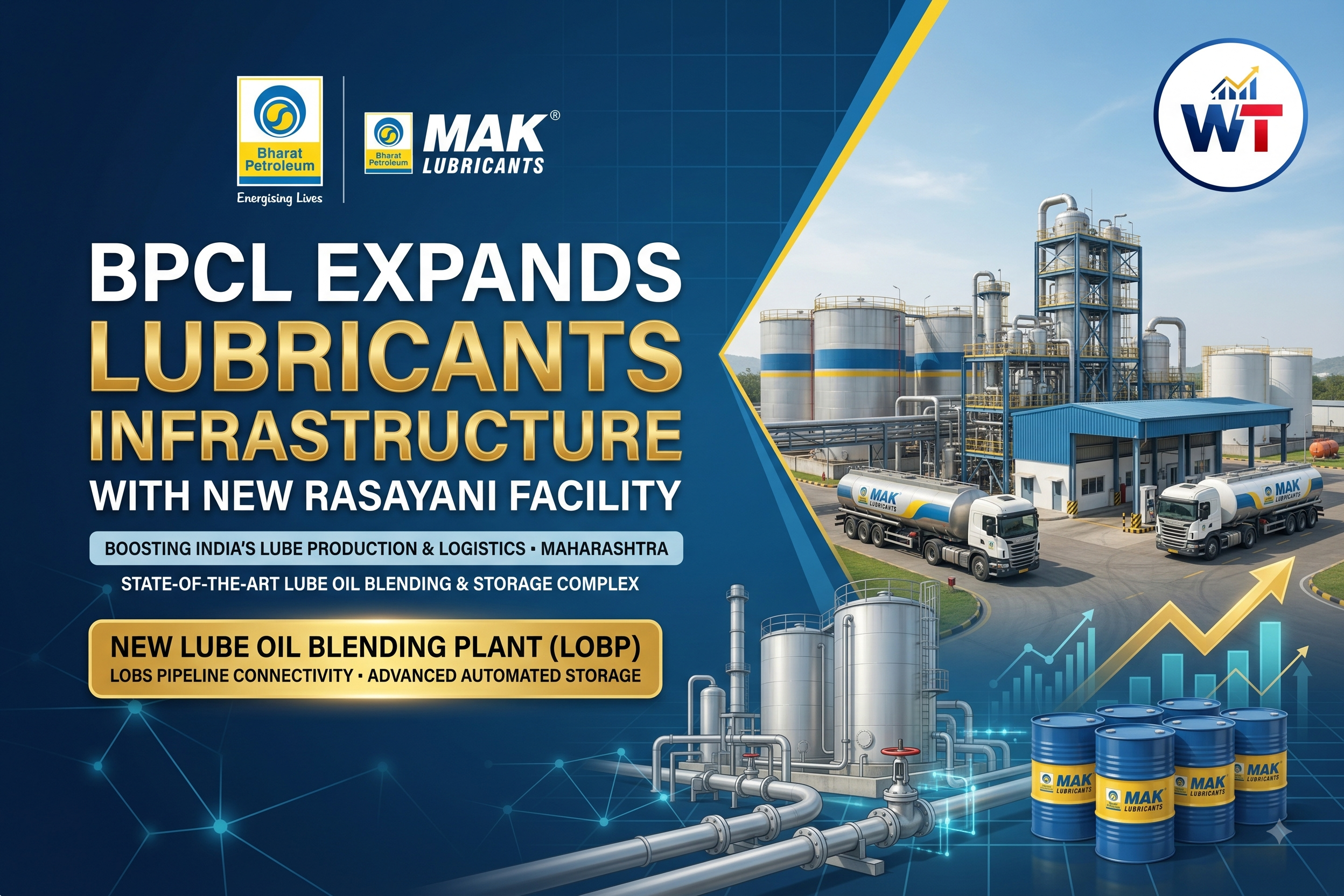
Rasayani, Maharashtra, November 27, 2026 — Bharat Petroleum Corporation Limited (BPCL) has strengthened its lubricants manufacturing and supply-chain infrastructure with the inauguration of a new Lube Oil Blending Plant (LOBP) and Base Oil Terminal (BOT) at Rasayani in Maharashtra. The facilities were inaugurated by BPCL Chairman and Managing Director Sanjay Khanna on November 26, marking an important development in the company’s plans to expand its lubricants business.
The new infrastructure is dedicated to MAK Lubricants, BPCL’s established lubricants brand. Equipped with advanced automation, integrated operations, smart warehousing and automated filling systems, the facilities are expected to improve manufacturing efficiency, inventory management, operational safety and customer service.
The inauguration was attended by BPCL Director (Finance) V. R. K. Gupta, Director (Marketing) Subhankar Sen and Director (HR) Pushp Kumar Nayar, along with other senior officials.
New Facilities Strengthen MAK Lubricants Operations
The new Lube Oil Blending Plant will play an important role in the production of finished lubricants. Lubricant manufacturing involves blending base oils with specialised additives to develop products with specific performance characteristics.
These products are used across several applications, including automobiles, industrial machinery, commercial vehicles and manufacturing equipment. Consistent product quality and efficient production processes are essential for meeting the requirements of different customers and industries.
The accompanying Base Oil Terminal will support the receipt and storage of the base oils required for lubricant production. Having dedicated storage infrastructure alongside the blending facility can help improve material handling and coordination between the different stages of manufacturing.
By bringing these operations together at Rasayani, BPCL aims to strengthen the manufacturing and supply-chain capabilities of its lubricants business.
Automation and Smart Warehousing to Improve Efficiency
A key feature of the newly inaugurated facilities is the integration of modern automation and operational systems.
BPCL has highlighted the use of advanced automation, integrated operations, smart warehousing and automated filling systems. These capabilities are intended to support more efficient manufacturing processes and improve the movement of materials and finished products.
Automation can help reduce repetitive manual activities, improve process consistency and support better control over production operations. In lubricant manufacturing, accurate blending and filling processes are particularly important because finished products must meet specific technical and quality requirements.
Smart warehousing can also contribute to improved inventory visibility, storage management and coordination between production and distribution activities.
The company expects these improvements to strengthen operational safety and inventory management while supporting more reliable customer service.
Although BPCL has not publicly detailed the plant’s production capacity or the expected increase in output, the new facilities represent an investment in strengthening the physical and operational foundation of its lubricants business.
Rasayani’s Strategic Importance for BPCL
Rasayani has an important place in BPCL’s broader infrastructure development plans in Maharashtra. Located in Raigad district, the area is being developed as a strategic extension of the company’s Mumbai Refinery operations.
BPCL’s earlier infrastructure plans for Rasayani included petroleum product storage, base oil storage, blending facilities and pipeline connectivity with the Mumbai Refinery.
A Petroleum and Natural Gas Regulatory Board (PNGRB) public notice issued in February 2025 outlined proposed pipeline infrastructure connecting the refinery with the upcoming Rasayani facilities. The plan included a 43-kilometre base oil pipeline with a proposed capacity of 0.65 million tonnes per annum, alongside a multi-product pipeline and provision for a future propylene pipeline.
These proposals demonstrate the location’s wider strategic relevance for BPCL’s logistics and manufacturing network. However, the proposed pipeline capacities should not be interpreted as confirmed operating capacity of the newly inaugurated blending plant.
Supporting the Growth of India’s Lubricants Market
India’s lubricants market serves a wide range of industries, including transportation, manufacturing, construction, mining, agriculture and power generation.
The expansion of road networks, growth in vehicle ownership, industrial activity and infrastructure development create demand for lubricants used in engines, machinery and specialised equipment.
Commercial transportation and industrial operations require products that can provide effective lubrication, reduce friction, protect machinery and support equipment performance. As technology and operating requirements evolve, lubricant manufacturers must also focus on product quality, research, formulation capabilities and reliable distribution.
BPCL’s investment in Rasayani is intended to strengthen its ability to serve these requirements through improved manufacturing and supply-chain infrastructure.
The MAK Lubricants business operates in a competitive market that includes domestic and international brands. Greater operational efficiency and reliable product availability can support its ability to serve customers across automotive and industrial segments.
However, long-term competitiveness will also depend on product innovation, pricing, distribution reach, technical support and the company’s ability to respond to changing customer requirements.
BPCL’s Broader Infrastructure and Business Strategy
The Rasayani inauguration reflects BPCL’s wider approach to strengthening its petroleum and downstream infrastructure.
As one of India’s major public sector oil marketing companies, BPCL operates across refining, fuel marketing, LPG, aviation fuel, lubricants and other energy-related businesses. Investments in manufacturing facilities, terminals, storage systems and transportation infrastructure are important for improving operational efficiency across these activities.
The company has also been working to modernise its existing facilities and develop infrastructure that can support future business requirements.
For the lubricants segment, the new Rasayani facilities provide an opportunity to improve integration between base oil storage, blending, filling and inventory management. Such integration can help streamline operations and provide a stronger foundation for expanding product availability.
The project also reflects the importance of specialised manufacturing infrastructure within the broader petroleum industry. While fuel distribution remains a major part of oil marketing operations, lubricants offer opportunities to serve a diverse range of automotive, industrial and commercial customers.
The Worldonomics Times View
BPCL’s inauguration of the new Lube Oil Blending Plant and Base Oil Terminal at Rasayani marks a significant step in strengthening its lubricants manufacturing and supply-chain capabilities.
The integration of blending, storage, automation and filling infrastructure can help improve operational coordination, product handling and inventory management. The facilities also reinforce Rasayani’s growing importance in BPCL’s broader infrastructure network in Maharashtra.
For India’s lubricants industry, investments in modern manufacturing facilities are important as demand continues to come from transportation, industrial production and infrastructure-related activities. Companies will need to combine efficient operations with product innovation, quality standards and dependable distribution to remain competitive.
The long-term value of BPCL’s new facilities will depend on their utilisation, production efficiency, product demand and contribution to the company’s lubricants business. The availability of modern infrastructure provides a foundation, but consistent execution and customer satisfaction will determine its commercial impact.
As BPCL continues to develop its downstream operations, Rasayani could become an increasingly important part of its manufacturing and logistics network. The project highlights how investments in specialised facilities can support the modernisation of India’s public sector energy companies and strengthen domestic industrial capabilities.