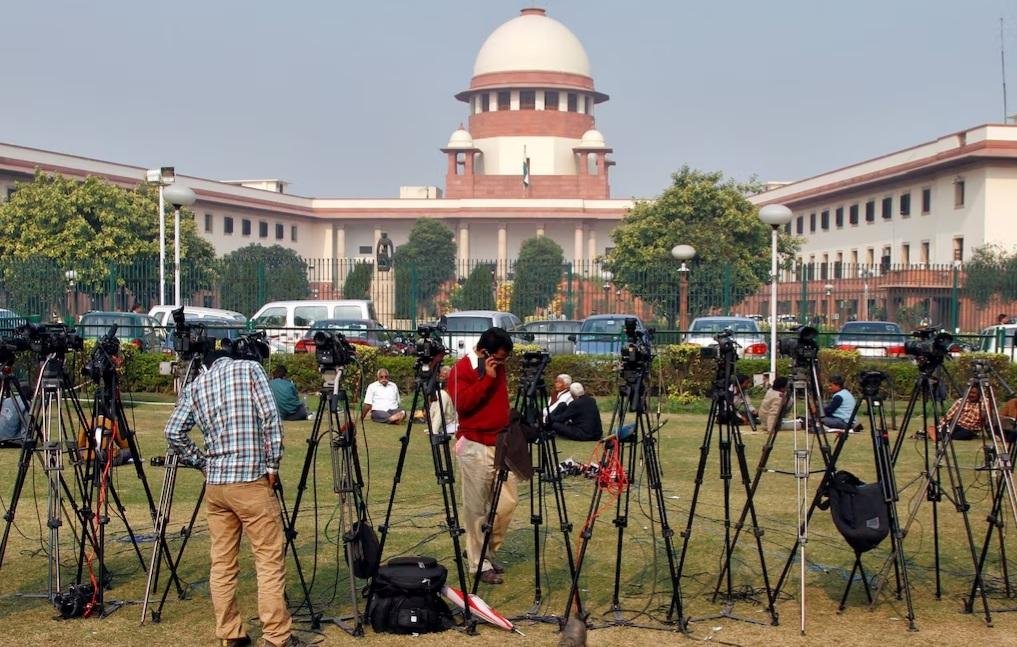
The relationship between privacy and press freedom now becomes a question, not only a compliance issue.
The enactment of the DPDP Act 2023 has brought a question to the forefront: how far can the State regulate the collection, use and publication of personal information without affecting the freedom of the press?
The right to privacy is a right recognised by the Supreme Court in K.S. Puttaswamy v. Union of India (2017) 10 SCC 1. At the time freedom of speech and expression under Article 19(1)(a) protects the press, including the presss ability to investigate matters of public importance and disseminate information.
Neither privacy nor press freedom is absolute. The real constitutional challenge is to ensure that the protection of one does not unnecessarily destroy the exercise of the other.
Why has the DPDP Act become controversial for the media?
The DPDP Act regulates how digital personal data is processed. A news organisation that collects, stores, analyses or publishes information about individuals may be called a Data Fiduciary depending on what it does.
Consider a journalist examining a public procurement contract. The investigation may involve collecting the names of government officials details of transactions, company directorships, property records and communications.
Much of this information may qualify as data when it relates to an identifiable individual.
Under the Act processing data must follow rules about lawful use, notice, consent or recognised legitimate purposes and it must meet rules about security, deletion and accountability.
The difficulty is clear. A journalist cannot normally ask the person being investigated for consent before gathering information. That could hurt the investigation.
The concern is not limited to reporting. Routine reporting, political journalism, public‑interest disclosures and the maintenance of news archives may also involve personal data.
The absence of an exemption
One of the objections raised by media organisations is that the Act does not provide a specific exemption for processing personal data for journalistic purposes.
Section 17 contains exemptions for categories of processing. However it does not create a journalistic exemption.
In particular the research, archiving and statistical purposes exemption under Section 17(2)(a) should not be mistaken for a blanket exemption covering journalism.
This distinction matters because journalism is not confined to research or statistical analysis. It frequently involves collecting information about individuals, verifying allegations, contacting sources and publishing findings in the interest.
The absence of a drafted exemption creates uncertainty about how the statutory framework will apply to such activities once the relevant provisions become operative.
The challenge before the Supreme Court
Several petitions challenging the DPDP framework raise questions concerning its effect on the right to information investigative journalism, State access to personal data and the independence of the Data Protection Board.
The challenge has become especially important after the petition filed by the Digital News Publishers Association (DNPA) which represents 21 news publishers.
On 27 October 2026 the Supreme Court issued notice on the DNPAs application seeking protection against provisions of the Act and Rules. It declined to grant relief without hearing the Union Government. The matter was listed for 17 November 2026.
Supreme Court Observer+1
The petition raises concerns that the absence of an exemption could compel news organisations to seek consent from individuals who are the subjects of investigations potentially affecting editorial independence and investigative reporting.
The Courts observation that a balance must be struck between the rights of citizens and the freedom of the press captures the central constitutional difficulty.
Supreme Court Observer
The RTI amendment adds another dimension
Section 44(3) of the DPDP Act substitutes Section 8(1)(j) of the Right to Information Act, 2005.
Earlier the RTI provision permitted disclosure of personal information where the larger public interest justified disclosure. The amended provision uses an exclusion for information relating to personal information.
This raises questions where information held by public authorities relates to public officials, government expenditure, public contracts or alleged misuse of public office.
The issue is whether privacy protection should operate as a barrier or whether disclosure should remain possible after balancing privacy against legitimate public interest.
The amendment has therefore become a part of the constitutional challenge.
Explained News. The Indian Express
What should the Supreme Court examine?
There are least four important questions.
First whether the absence of an exemption creates a disproportionate restriction, on Article 19(1)(a).
Does the statutory framework clearly separate commercial exploitation of personal data from bona fide journalism that serves public interest?
Third do the powers of Government and the Data Protection Board contain safeguards to stop interference with confidential journalistic material?
Fourth does the amended RTI exemption keep a public-interest assessment intact?
The proportionality test in Puttaswamy is especially relevant here. A restriction on a right must aim at a legitimate objective and must be proportionate to that objective with proper safeguards against abuse.
Finding the balance
The debate should not shrink into a simple choice between privacy and journalism.
Individuals must be shielded from disclosure, harassment, identity theft and needless spread of sensitive personal information. Likewise public-interest journalism must not rely on consent from the individuals whose conduct is under investigation.
A designed journalistic exemption, protected by safeguards against malicious disclosure and unrelated commercial exploitation could offer a more balanced approach.
The Supreme Courts attention to these issues matters not for media organisations but also for the future link between data protection, transparency and constitutional freedoms in India.
The larger question is simple: can a democracy guard an individuals privacy while still allowing the press to hold those, in power accountable?