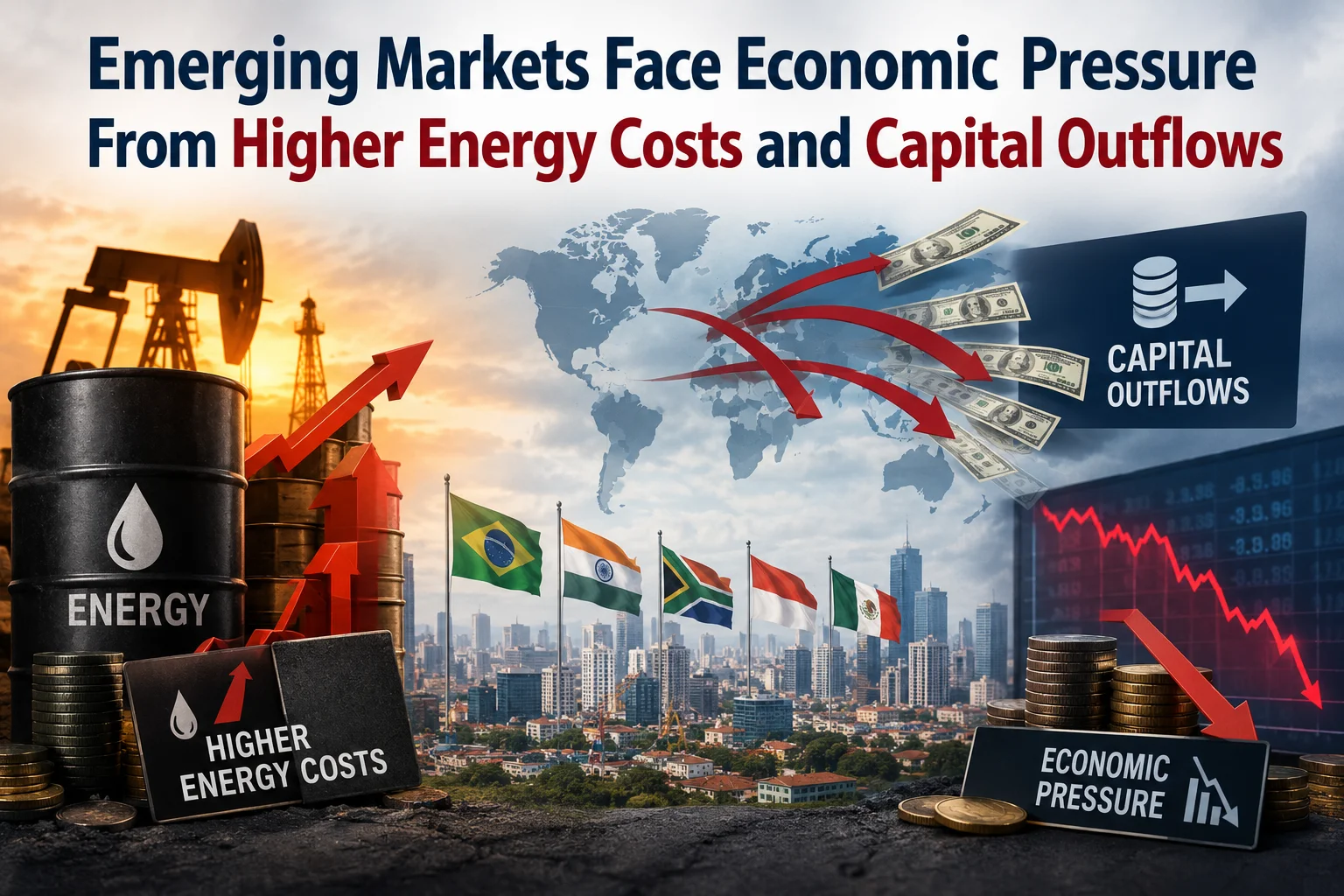
Developing countries are dealing with expensive financing, currency volatility, and rising external debt obligations.
By The Worldonomics Times | Global Economy
Emerging and developing economies are facing growing financial pressure as borrowing costs remain elevated, currencies experience volatility and external debt obligations consume an increasing share of government resources. Although some international financing conditions improved during 2025, the cost of accessing capital remains significantly higher for many developing countries than for advanced economies. These pressures are limiting governments’ ability to invest in infrastructure, healthcare, education and other priorities essential for long-term economic growth.
The challenge comes at a time when developing nations need substantial investment to strengthen economic resilience, create employment and achieve sustainable development goals. Higher financing costs are making these objectives increasingly difficult to accomplish.
Rising Borrowing Costs Increase Financial Pressure
Higher interest rates and changing global financial conditions have increased the cost of raising capital for many emerging economies. Governments that depend on international bond markets or foreign-currency loans are particularly exposed to changes in global investor sentiment and monetary policy.
According to UN Trade and Development (UNCTAD), developing countries’ external debt reached approximately $12.3 trillion in 2025. Although total external debt service declined to $1.6 trillion, interest costs on long-term external debt increased by almost 14% during the year. This highlights how lower overall repayments do not necessarily translate into reduced financial pressure.
The World Bank has also identified a growing relationship between government debt and sovereign borrowing costs. Its 2026 analysis indicates that higher debt levels can lead to progressively larger increases in interest rates, particularly in countries already carrying substantial financial obligations.
For governments with limited revenue and weaker credit ratings, expensive borrowing can create a difficult cycle. More public funds are directed towards interest payments, leaving fewer resources for development projects and essential services.
Currency Volatility Adds to Debt Obligations
Exchange-rate fluctuations are another major concern for developing economies. Many governments and businesses borrow in US dollars or other foreign currencies while generating most of their income in domestic currencies.
When local currencies depreciate, the domestic-currency value of foreign debt increases. Governments may therefore need to allocate additional budget resources to meet the same dollar-denominated repayment obligations.
Currency weakness can also increase import costs, particularly for countries that depend heavily on imported energy, food, machinery and industrial materials. Higher import prices may contribute to inflation, putting pressure on households and businesses.
Central banks face difficult decisions in this environment. Raising interest rates may help contain inflation and support currency stability, but it can also increase domestic borrowing costs and slow economic activity. Allowing currencies to adjust may support exports, but sharp depreciation can worsen inflation and foreign-currency debt burdens.
The Bank for International Settlements has highlighted how foreign-currency debt and relatively shallow foreign-exchange markets can amplify the effects of external financial shocks. Countries with limited hedging opportunities may be particularly vulnerable when exchange rates move sharply.
External Debt Reduces Fiscal Flexibility
Rising debt-servicing obligations are increasingly affecting government budgets across developing regions. UNCTAD reported that least developed countries spent 18.2% of their export earnings on external debt service in 2025. Such payments can significantly reduce the resources available for public investment and social development.
The pressure is not limited to the poorest economies. Developing countries face a substantial financing gap, while external financial inflows have become a smaller contributor to investment. UNCTAD estimates that external sources accounted for only 11% of investment financing in developing economies in 2024.
When governments devote larger portions of revenue to debt repayment, spending on schools, hospitals, roads, electricity and water infrastructure can be delayed or reduced. This can weaken productivity and slow economic growth, making it harder for countries to improve their capacity to repay debt in the future.
Businesses also feel the consequences. Higher government borrowing costs can influence domestic interest rates, increase financing expenses for private companies and reduce the availability of credit for productive investment.
Global Financial Conditions Create Additional Risks
Developing economies remain exposed to monetary policy decisions in major advanced economies. Changes in US interest-rate expectations, movements in the dollar and shifts in international investor confidence can influence capital flows towards emerging markets.
When investors become more cautious, they may move funds towards assets considered safer, creating pressure on emerging-market currencies and financial markets. Countries with large external financing requirements, limited foreign-exchange reserves or weaker fiscal positions are particularly exposed.
Geopolitical tensions and disruptions to global energy and commodity markets can intensify these challenges. Higher oil and transportation costs may increase import bills, worsen inflation and place additional pressure on government finances.
The International Monetary Fund has warned that rising sovereign yields and fiscal vulnerabilities could make future financing more difficult. While some emerging economies have benefited from improved market access, favourable conditions may change if global risk appetite weakens.
Policy Measures to Strengthen Financial Stability
Governments need to adopt responsible debt-management strategies to reduce exposure to external shocks. Improving tax collection, controlling inefficient expenditure and increasing transparency in public finances can strengthen investor confidence and support fiscal sustainability.
Diversifying sources of financing is also important. Countries can reduce excessive dependence on short-term foreign-currency borrowing by developing domestic capital markets, attracting long-term investment and improving access to concessional financing from multilateral institutions.
Central banks must maintain credible monetary policies while ensuring that exchange-rate movements do not create unnecessary financial instability. Adequate foreign-exchange reserves, effective financial regulation and deeper currency markets can help economies manage periods of volatility.
International cooperation will also be essential. Multilateral development banks and international financial institutions can support vulnerable economies through affordable long-term lending, technical assistance and more effective debt-restructuring mechanisms.
The Worldonomics View
Higher borrowing costs are more than a financial-market concern; they represent a direct challenge to economic development. When governments spend increasing amounts on interest payments, their ability to invest in infrastructure, education, healthcare and employment opportunities becomes restricted.
However, the situation should not be viewed as identical across all emerging economies. Countries with stronger institutions, diversified exports, credible monetary frameworks and manageable debt levels are better positioned to withstand external financial pressure. Those with limited fiscal capacity and substantial foreign-currency obligations face greater risks.
The priority should be to make development financing more affordable and predictable while encouraging responsible borrowing. International lenders must recognise that sustainable debt arrangements are important not only for creditors but also for the long-term economic stability of borrowing nations.
Conclusion
Emerging economies are navigating a challenging financial environment shaped by expensive borrowing, currency volatility and rising external debt obligations. These pressures threaten to reduce investment, constrain public spending and slow economic progress.
Strengthening fiscal management, diversifying financing sources and improving international financial cooperation will be critical to addressing these risks. Ultimately, developing countries need access to stable and affordable capital if they are to maintain economic growth, improve living standards and build greater resilience against future global shocks.