By The Worldonomics Times | Global Economy
Date: 3 November 2026
Global Food Markets Face Renewed Price Pressures
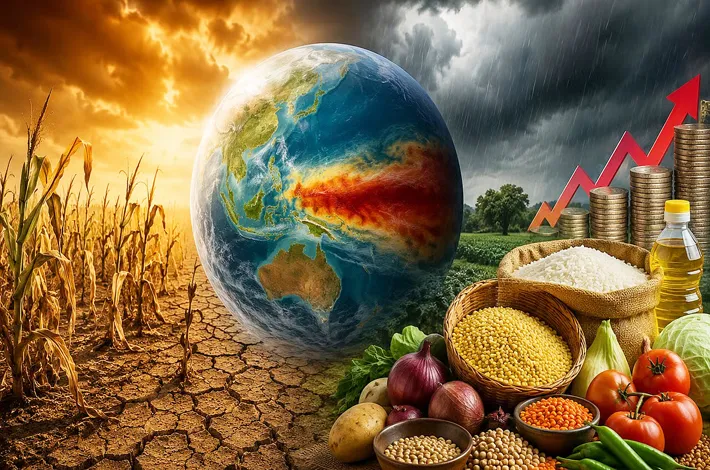
Global food markets are experiencing renewed pressure as geopolitical tensions, disrupted grain shipments, rising agricultural input costs and increasingly unpredictable weather conditions threaten food supply chains. Although global grain availability remains supported by substantial production and stocks from previous seasons, growing uncertainty over transportation, harvests and fertilizer supplies is creating risks for consumers, farmers and governments.
According to the World Bank’s October 2026 Commodity Markets Outlook, global food commodity prices are expected to increase by approximately 10% in 2026 and a further 7% in 2027. This represents a cumulative increase of around 18% over the two years. The institution identifies disruptions to grain shipments, the threat of a strong El Niño weather pattern and elevated energy and fertilizer costs as major factors behind the projected increase.
The outlook is raising concerns about food affordability, particularly in developing economies where households spend a significant share of their income on essential food products.
Grain Shipment Disruptions Affect Global Supply
International grain transportation has become a major concern for agricultural markets. The Black Sea region, which includes major wheat and maize exporters such as Russia and Ukraine, plays an important role in global food trade. Continuing geopolitical tensions and logistical difficulties have affected the movement of agricultural products through important export routes.
The Food and Agriculture Organization (FAO) reported that logistical constraints in the Black Sea region contributed to higher international wheat prices in September 2026. Importing countries were increasingly looking towards alternative suppliers, adding pressure to global grain markets.
According to the FAO, its Cereal Price Index increased by 5.1% in September 2026 compared with August, while international wheat prices rose by 6.3%. Maize prices also increased by 5.6%, reaching their highest level in more than three years.
The FAO’s latest cereal supply and demand assessment also indicates that global cereal trade in the 2026/27 marketing season is forecast at 505.8 million tonnes, down 3.5% from the previous season. Lower projected wheat and maize exports, particularly from the Black Sea region, are contributing to the reduction.
When shipping routes become unreliable, importers may need to source grain from more distant markets or pay higher transportation and insurance costs. These additional expenses can eventually influence the prices paid by food manufacturers, wholesalers and consumers.
Fertilizer Costs Increase Agricultural Pressure
Fertilizer prices are another important factor influencing global food production. Modern agriculture depends heavily on nitrogen, phosphate and potash-based fertilizers to maintain crop yields. When fertilizer becomes more expensive or difficult to obtain, farmers face higher production costs and may reduce the quantity of fertilizer applied to their fields.
The World Bank projects that fertilizer prices will rise by approximately 14% in 2026, reflecting higher input costs, disruptions to shipping and trade restrictions. Although prices are expected to ease in 2027, the increase is adding pressure to agricultural production budgets in the current season.
Energy prices are closely connected to fertilizer production because natural gas is a major input in the manufacture of nitrogen fertilizers. Higher energy costs can therefore raise the cost of producing, transporting and distributing agricultural inputs.
For farmers, the impact is particularly significant because fertilizer expenses represent an important part of total cultivation costs. Small-scale producers in developing countries may have limited access to affordable credit or government support, making it more difficult to absorb sudden increases in input prices.
If farmers reduce fertilizer use, crop productivity could be affected, potentially tightening supplies in subsequent harvests.
Adverse Weather Conditions Threaten Harvests
Climate conditions are adding another layer of uncertainty to agricultural markets. The development of a strong El Niño weather pattern is raising concerns about rainfall distribution, temperatures and crop yields in several agricultural regions.
El Niño can influence weather patterns across different parts of the world, increasing the risk of drought in some regions while bringing excessive rainfall to others. Such conditions can affect the production of wheat, rice, maize, sugar and vegetable oils.
The World Bank has warned that a very strong El Niño, combined with disrupted Black Sea grain shipments and higher agricultural input costs, could push food commodity prices significantly above its baseline projections. In an adverse scenario, food prices could be around 12% higher than expected in 2027.
The FAO has also highlighted the impact of dry weather in parts of North America on winter wheat planting conditions. Lower-than-expected maize yields in the United States and reduced export availability from Brazil have contributed to tighter market expectations.
The combination of weather-related production risks and transportation disruptions could make food markets more vulnerable to sudden supply shortages.
Impact on Developing Economies and Consumers
Rising food prices have serious implications for developing economies, where food accounts for a relatively large proportion of household expenditure. Low-income families are particularly vulnerable because they have limited financial flexibility when essential commodities become more expensive.
Higher prices for wheat, maize, cooking oils and other staple products can increase household expenses and reduce spending on education, healthcare and other necessities. Food manufacturers and restaurants may also face higher operating costs, potentially passing some of the increase on to consumers.
For countries dependent on imported food and agricultural inputs, the challenge can be greater. A combination of higher international commodity prices, expensive freight and currency depreciation can increase the domestic cost of imports.
India also needs to monitor these developments closely. Although domestic agricultural production provides an important supply base, international price movements can influence the cost of imported edible oils, fertilizers and other agricultural inputs. Weather conditions, crop production and supply management will remain important factors in maintaining domestic food-price stability.
Governments Focus on Food Security Measures
Governments and international organisations are facing growing pressure to protect consumers while maintaining stable agricultural production. Measures such as targeted food subsidies, direct support for vulnerable households, affordable agricultural credit and improved access to fertilizers can help reduce the immediate burden.
Investment in irrigation, climate-resilient seeds, agricultural research, storage facilities and transportation infrastructure is equally important. Better storage and distribution systems can reduce post-harvest losses and improve the availability of food during periods of supply disruption.
International cooperation also remains essential. Maintaining open agricultural trade, avoiding unnecessary export restrictions and strengthening alternative shipping routes can help reduce market volatility.
The Worldonomics Times Views
The renewed pressure on global food prices demonstrates how closely food security is connected to energy markets, international trade and climate conditions. A disruption in one region can influence agricultural costs and consumer prices across the world.
Governments should prioritise affordable agricultural inputs, reliable food distribution and targeted protection for vulnerable households. At the same time, long-term investment in climate-resilient agriculture and modern supply chains is essential to reduce dependence on unstable external conditions.
Food affordability should not be treated only as a market issue. It is also a matter of economic stability, public welfare and national security. International cooperation and responsible trade policies will be crucial in preventing temporary supply disruptions from developing into wider food crises.
Conclusion
Global food prices are facing upward pressure from disrupted grain shipments, higher fertilizer costs and adverse weather conditions. While existing grain stocks and production provide some protection, the combination of geopolitical uncertainty, rising agricultural expenses and climate risks could make food markets increasingly volatile.
The coming months will be important for determining the extent of these pressures. Governments, farmers and international institutions must work together to strengthen agricultural supply chains, support food production and protect consumers. Ensuring affordable and reliable food supplies will remain one of the major economic priorities for the global community.