The Worldonomics Times | November 2026
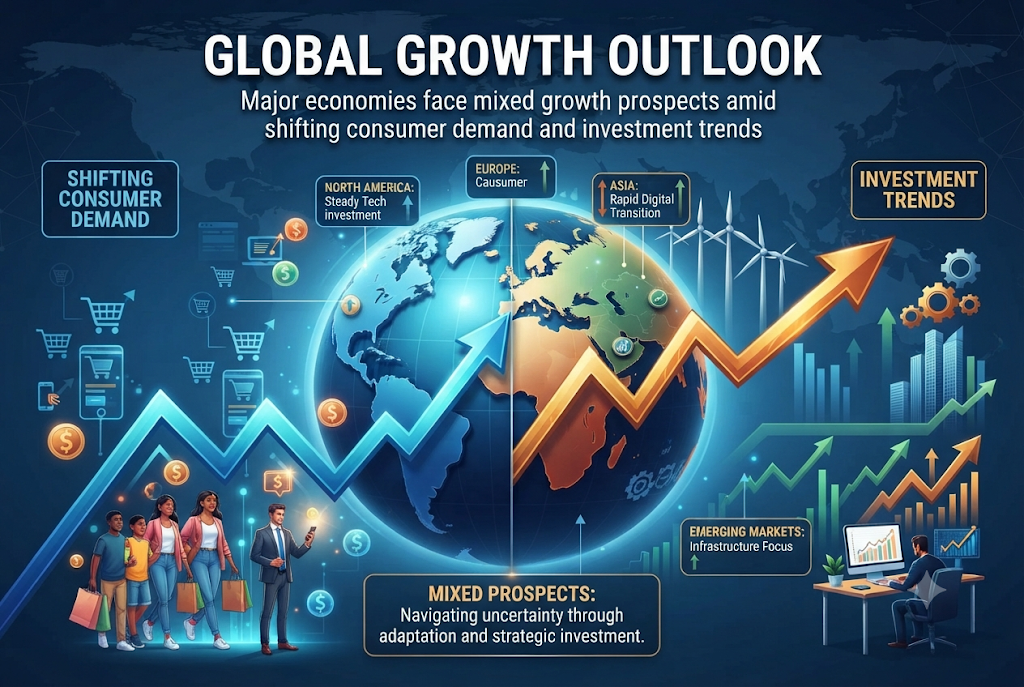
The global economy is entering a period of significant transition, with major economies experiencing mixed growth prospects amid changing consumer demand, evolving investment priorities and ongoing geopolitical uncertainty. While some countries continue to demonstrate economic resilience through strong domestic consumption, technological advancements and infrastructure development, others are facing challenges associated with inflation, higher borrowing costs, trade disruptions and weaker business confidence. These contrasting developments are reshaping the global economic landscape and influencing the decisions of governments, investors and business leaders.
As international markets become increasingly interconnected, the performance of individual economies is influenced not only by domestic policies but also by global trade patterns, financial conditions and technological developments. Understanding these factors is essential to assessing the direction of global growth and identifying emerging opportunities.
Major Economies Experience Uneven Growth
Economic growth across major global markets remains uneven, reflecting differences in industrial activity, consumer spending, investment levels and government policies. Developed economies are navigating changing financial conditions, inflationary pressures and cautious household spending, while emerging markets are seeking to strengthen their economic positions through manufacturing expansion, infrastructure investment and digital innovation.
The United States continues to benefit from domestic consumption, business investment and technological development, although economic uncertainty and borrowing costs remain important considerations. European economies are focusing on industrial competitiveness, energy security and investment in sustainable infrastructure. Meanwhile, Asian economies are gaining importance through manufacturing, international trade, technological innovation and expanding consumer markets.
These regional differences highlight that global economic growth is not following a single direction. Instead, individual countries are experiencing distinct opportunities and challenges depending on their economic structures and policy priorities.
Changing Consumer Demand Reshapes Markets
Consumer spending remains one of the most important drivers of economic activity. However, changing household priorities, inflation and variations in purchasing power are influencing consumption patterns across different regions.
Consumers are becoming increasingly conscious of prices, product quality and overall value. In several markets, households are prioritising essential goods and services while becoming more selective about discretionary purchases. This shift is encouraging businesses to rethink their pricing strategies, product offerings and customer engagement approaches.
The expansion of digital commerce, online services and technology-enabled shopping is also transforming consumer behaviour. Businesses that understand changing preferences and respond quickly to market expectations are better positioned to maintain customer loyalty and generate sustainable revenue.
Consumer confidence will therefore remain a critical factor in determining the strength of economic growth. Improvements in employment, wages and purchasing power could encourage spending, whereas persistent inflation and financial uncertainty may limit consumption.
Investment Trends Drive New Economic Opportunities
Investment activity is playing an increasingly important role in shaping the global economic outlook. Businesses and governments are directing capital towards emerging technologies, artificial intelligence, renewable energy, infrastructure, automation and advanced manufacturing.
Artificial intelligence has become a particularly significant investment area, attracting attention from technology companies, financial institutions and industrial businesses. Investments in data centres, cloud computing, semiconductor manufacturing and digital infrastructure are creating new opportunities while supporting innovation and productivity improvements.
At the same time, renewable energy and sustainable infrastructure are attracting investment as countries work towards energy security and long-term environmental objectives. Manufacturing companies are also reviewing their supply chains and production strategies to reduce operational risks and improve efficiency.
However, investment decisions remain sensitive to interest rates, market confidence and expected returns. Businesses must balance expansion opportunities with financial discipline to ensure that capital expenditure contributes to long-term competitiveness.
Global Trade and Geopolitical Challenges
International trade remains an important contributor to economic growth, but changing trade policies, geopolitical tensions and supply-chain disruptions continue to create uncertainty. Businesses operating across international markets are increasingly focused on diversifying suppliers, improving logistics networks and reducing dependence on individual markets.
Governments are also strengthening domestic manufacturing capabilities and investing in strategically important industries. Although these initiatives can support employment and industrial development, increased trade restrictions and protectionist policies may create additional costs for businesses and consumers.
Energy prices, currency fluctuations and global financial market movements further influence economic stability. Policymakers must therefore balance domestic economic priorities with international cooperation to maintain trade relationships and encourage investment.
Emerging Markets Offer Growth Potential
Emerging economies are becoming increasingly important to the global growth story. Several countries are benefiting from expanding urban populations, rising infrastructure requirements, manufacturing investment and growing digital adoption.
India, for example, continues to attract attention because of its expanding domestic market, infrastructure development, digital ecosystem and growing services sector. Other emerging Asian economies are also strengthening their manufacturing and export capabilities.
However, these markets must address challenges such as infrastructure gaps, employment generation, income inequality and access to affordable financing. Sustained investment in education, technology and productive industries will be essential to translating growth opportunities into long-term economic progress.
The Road Ahead: Balancing Growth and Stability
Looking ahead, the global economic outlook will depend on how effectively countries manage changing consumer demand, investment requirements and external economic risks. Central banks will need to maintain an appropriate balance between inflation control and supporting economic activity, while governments must encourage productive investment and strengthen economic resilience.
For businesses, adaptability, technological innovation and efficient resource management will remain essential competitive advantages. Investors will need to assess regional economic conditions carefully and identify opportunities in sectors supported by long-term structural demand.
Despite the uncertainties, the global economy continues to offer considerable opportunities for innovation, investment and expansion. While growth prospects may differ across major economies, the ability to respond to changing market conditions will determine which countries and businesses emerge stronger.
Ultimately, sustainable global growth will depend on a combination of resilient consumer demand, productive investment, technological progress and stable economic policies. As the world economy continues to evolve, these factors will shape the next phase of international economic development.
The Worldonomics Times brings readers insights into global markets, economic developments, business trends and the forces shaping the future of the world economy.
The Worldonomics Times View
The mixed global growth outlook highlights the need for a balanced approach to economic development. While technological innovation, infrastructure investment and expanding consumer markets offer significant opportunities, policymakers must also address inflation, employment challenges, trade uncertainty and financial stability.
The Worldonomics Times believes that sustainable economic growth should go beyond short-term GDP expansion. Stronger international cooperation, responsible investment, innovation-driven industries and policies that support purchasing power will be essential to building resilient economies.
For businesses, the message is equally clear: adaptability and strategic planning will define future competitiveness. Companies that embrace technological transformation, understand changing consumer expectations and invest in long-term efficiency will be better positioned to navigate economic uncertainty.
Ultimately, the next phase of global growth will depend not simply on how much economies expand, but on how effectively they create opportunities, strengthen resilience and deliver lasting economic value.