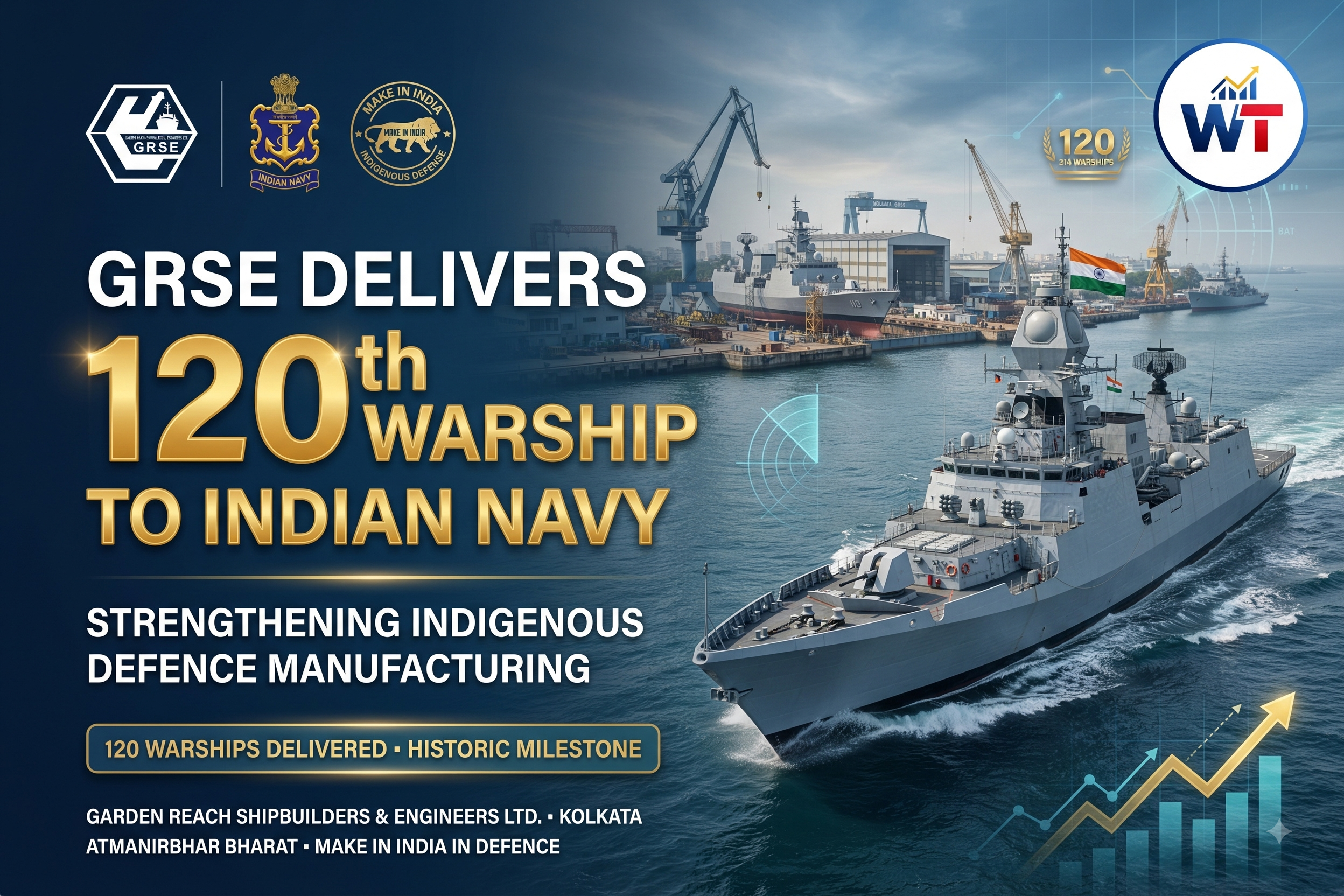
Kolkata / Visakhapatnam, November 27, 2026 — Garden Reach Shipbuilders & Engineers (GRSE) has delivered the anti-submarine warfare shallow-water craft Ashank to the Indian Navy, marking the construction of its 120th warship. The milestone highlights the Kolkata-based shipbuilder’s contribution to India’s naval modernisation programme and the country’s growing capacity to design and manufacture advanced defence platforms domestically.
The delivery represents another achievement for India’s public sector defence manufacturing ecosystem, which has been expanding its role in meeting the operational requirements of the armed forces. It also underlines the importance of indigenous shipbuilding in strengthening maritime security, reducing dependence on overseas suppliers and developing specialised industrial capabilities.
Ashank Strengthens Coastal Anti-Submarine Warfare Capabilities
Delivered on November 23, 2026, at Visakhapatnam, Ashank is designed to meet the Navy’s requirements for anti-submarine warfare in coastal waters. The vessel will strengthen surveillance and response capabilities in the littoral domain, where shallow waters, complex seabed conditions and proximity to coastlines create distinct operational challenges.
The craft is equipped with advanced sonar systems, lightweight torpedoes and indigenous rocket launchers. These systems are intended to help detect, track and engage underwater threats. The platform also features waterjet propulsion, a configuration suited to operations in shallow coastal waters.
The Ministry of Defence has described the vessel as an important addition to the Navy’s anti-submarine, coastal surveillance and mine-laying capabilities. Its delivery reflects the increasing emphasis on strengthening maritime security across India’s extensive coastline.
Indigenous Content Highlights Domestic Manufacturing Progress
A major feature of the Anti-Submarine Warfare Shallow Water Craft programme is its high level of indigenous content. GRSE has stated that the programme incorporates approximately 88% indigenous content, while the Ministry of Defence has highlighted that Ashank itself has more than 80% indigenous content.
The vessel also features a 30mm Naval Surface Gun manufactured by GRSE. Its construction demonstrates the shipyard’s ability to integrate weapons, sensors, propulsion and other complex systems into a frontline naval platform.
The programme supports the government’s Aatmanirbhar Bharat initiative, which aims to strengthen domestic defence production and reduce reliance on imported equipment. Greater indigenous participation can also create opportunities for Indian component manufacturers, engineering companies, technology providers and specialised suppliers.
Developing these capabilities domestically is strategically important because naval platforms require long-term maintenance, spare parts, upgrades and technical support. A stronger domestic supply chain can improve the availability of equipment and provide greater control over lifecycle support.
GRSE Maintains Momentum in Naval Shipbuilding
The delivery of Ashank came just 18 days after GRSE handed over another anti-submarine warfare shallow-water craft, Amini, to the Indian Navy on November 5, 2026. The two deliveries within the same month demonstrate the shipyard’s continuing execution of its naval construction programme.
GRSE has now built 120 warships, of which 82 have been delivered to the Indian Navy. This distinction is important: the 120 figure represents the shipyard’s total warships built, while 82 is the number delivered to the Navy.
The company is currently constructing 12 frontline naval platforms. These include one Project 17A Advanced Stealth Frigate, two additional anti-submarine warfare shallow-water crafts, four Next Generation Offshore Patrol Vessels and five Next Generation Corvettes.
Beyond these frontline platforms, GRSE is also building 36 other vessels, including 13 export platforms. Its order book reflects a broad portfolio covering domestic naval requirements as well as opportunities in international shipbuilding markets.
A Wider Role in India’s Defence Industrial Ecosystem
GRSE’s progress reflects the broader transformation of India’s defence manufacturing sector. Public sector shipyards, private manufacturers, research institutions and component suppliers are increasingly contributing to the development of complex military platforms.
Indigenous shipbuilding requires expertise across naval architecture, marine engineering, propulsion, electronics, weapons integration and advanced manufacturing. The development of these capabilities can strengthen industrial skills and encourage technology transfer across the domestic supply chain.
The Navy’s demand for modern platforms also provides long-term opportunities for Indian shipyards. However, the success of this expansion will depend on timely project execution, quality control, cost management and the ability to integrate increasingly sophisticated technologies.
GRSE’s ongoing construction programme, together with its export-related work, provides a foundation for strengthening India’s position in the global shipbuilding industry. Its performance will be closely linked to its ability to deliver vessels on schedule while meeting demanding naval specifications.
The Worldonomics Times View
The delivery of Ashank marks an important milestone for GRSE and India’s indigenous naval shipbuilding programme. The completion of the company’s 120th warship built demonstrates its longstanding contribution to maritime defence, while the vessel’s delivery adds another specialised platform to the Indian Navy’s coastal anti-submarine warfare capabilities.
The high indigenous content of the ASW-SWC programme is particularly significant. Domestic production of critical systems and their integration into operational naval platforms can strengthen India’s defence supply chain, reduce import dependence and build technical expertise.
GRSE’s expanding construction portfolio also points to sustained opportunities for India’s public sector defence industry. Nevertheless, the long-term value of this progress will depend on consistent delivery, technological advancement, operational reliability and the competitiveness of domestic manufacturing.
As India seeks to strengthen its maritime preparedness and defence self-reliance, projects such as Ashank demonstrate how public sector shipyards can contribute to both national security and industrial development. The milestone is not simply a record for GRSE; it is also an indication of the growing capabilities of India’s domestic defence manufacturing ecosystem.