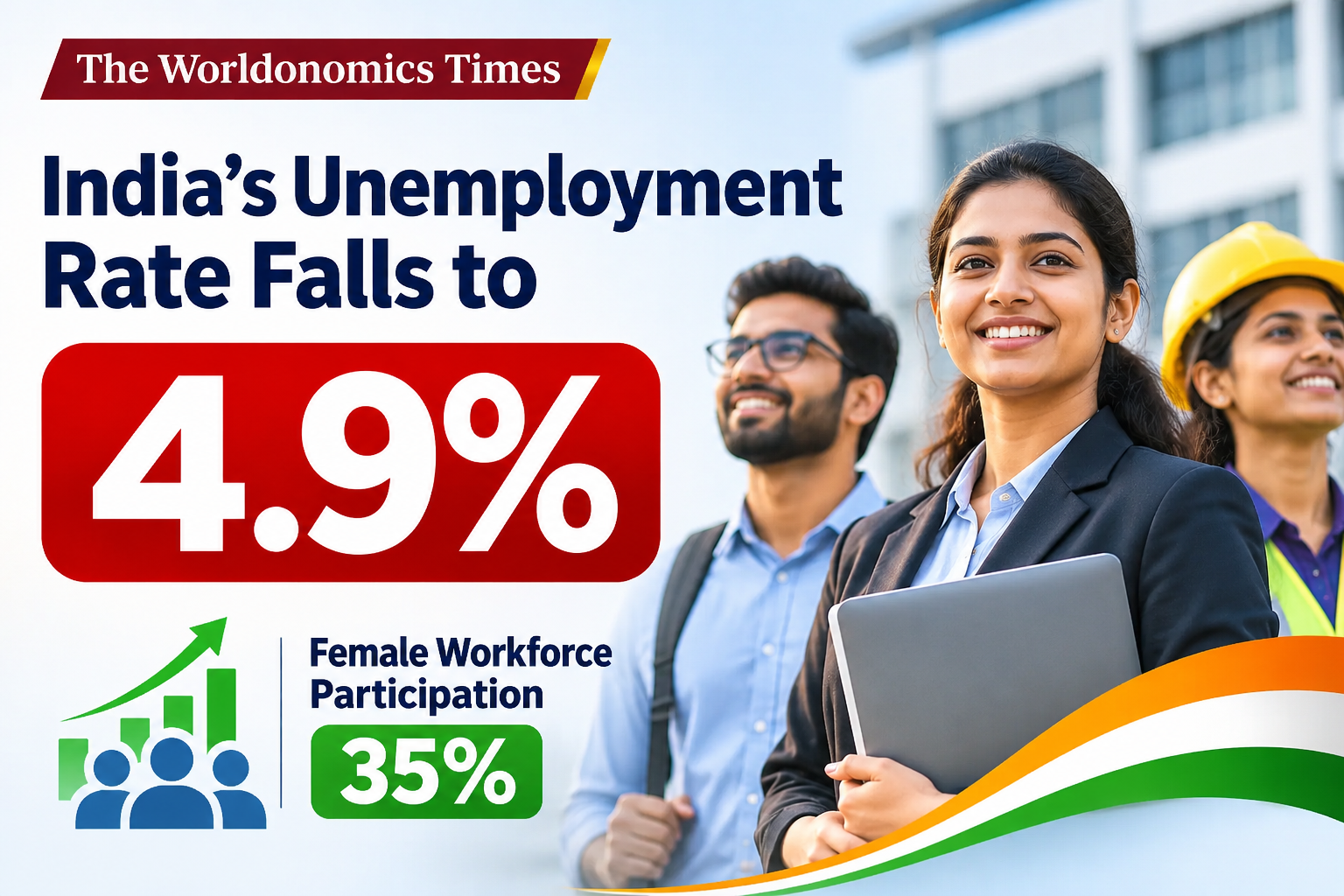
India’s unemployment rate declined to 4.9% in October 2026 from 5% in September, according to the latest Periodic Labour Force Survey (PLFS) released by MoSPI. Female labour force participation increased to 35%, while urban unemployment eased to 6.7%, indicating an improvement in labour market conditions.
India’s labour market recorded a modest improvement in October 2026, with the overall unemployment rate declining to 4.9% among persons aged 15 years and above. The latest figures were released on 16 November 2026 by the Ministry of Statistics and Programme Implementation (MoSPI).
The decline in unemployment was accompanied by an improvement in workforce participation, particularly among women and rural workers.
The data provides an important indication of employment trends, workforce participation and labour market conditions across the country.
According to the October PLFS Monthly Bulletin, the unemployment rate declined by 0.3 percentage points compared with October 2025, when it stood at 5.2%. Press Information Bureau+1
India’s Unemployment Rate Falls to 4.9% in October 2026: Female Workforce Participation Improves
India’s unemployment rate declined to 4.9% in October 2026 from 5% in September, according to the latest Periodic Labour Force Survey (PLFS) released by MoSPI. Female labour force participation increased to 35%, while urban unemployment eased to 6.7%, indicating an improvement in labour market conditions.
India’s labour market recorded a modest improvement in October 2026, with the overall unemployment rate declining to 4.9% among persons aged 15 years and above. The latest figures were released on 16 November 2026 by the Ministry of Statistics and Programme Implementation (MoSPI).
The decline in unemployment was accompanied by an improvement in workforce participation, particularly among women and rural workers.
According to the October PLFS Monthly Bulletin, the unemployment rate declined by 0.3 percentage points compared with October 2025, when it stood at 5.2%.
Unemployment Rate Declines to 4.9%
The latest PLFS data indicates that India’s overall unemployment rate decreased from 5% in September 2026 to 4.9% in October 2026.
The improvement was particularly visible in urban areas, where unemployment declined from 6.9% to 6.7%. Rural unemployment remained unchanged at 4.2%.
The figures suggest an improvement in labour market conditions, although employment opportunities, job quality and workforce participation remain important areas for policymakers.
| Indicator | September 2026 | October 2026 |
|---|---|---|
| Overall unemployment | 5.0% | 4.9% |
| Rural unemployment | 4.2% | 4.2% |
| Urban unemployment | 6.9% | 6.7% |
| Female unemployment | 5.2% | 5.0% |
Female Labour Force Participation Reaches 35%
One of the important findings of the October survey is the improvement in female labour force participation.
The female Labour Force Participation Rate (LFPR) increased to 35% in October 2026 from 34.6% in September.
The figure also represents an improvement from 34.2% recorded in October 2025.
Rural female labour force participation increased to 39.5%, compared with 38.9% in September. Urban female participation remained unchanged at 25.9%.
The improvement is significant because greater participation of women in the workforce can contribute to household incomes, economic productivity and inclusive economic development.
Female unemployment also declined to 5% in October from 5.2% in September.
Worker Population Ratio Improves
The Worker Population Ratio (WPR), which measures the proportion of the population that is employed, increased to 53% in October 2026 from 52.7% in September.
Rural WPR improved to 56%, compared with 55.5% in the previous month.
Urban WPR remained broadly stable at 47.1%.
The overall improvement indicates that a higher proportion of the population aged 15 years and above was employed during the survey period.
Rural Areas Lead Workforce Participation Growth
Rural India continued to record stronger labour force participation.
The overall rural LFPR increased to 58.4% in October from 58% in September.
In comparison, urban LFPR stood at 50.5%, slightly lower than 50.7% in September.
The increase in rural participation highlights the importance of agricultural activities, rural enterprises, construction, self-employment and small businesses in supporting employment.
However, policymakers must continue focusing on productive employment, skill development and stable income opportunities in rural areas.
What Does the Latest Employment Data Mean for the Indian Economy?
Employment is an important indicator of economic performance because it influences household consumption, savings, investment and overall demand.
A declining unemployment rate, combined with improving workforce participation, can support economic growth.
The latest figures have several implications:
1. Household Consumption: Greater employment opportunities can improve household income and strengthen demand for goods and services.
2. Women Empowerment: Higher female workforce participation can contribute to financial independence and inclusive economic development.
3. MSME Development: Micro, small and medium enterprises remain important sources of employment, particularly in manufacturing, trading and services.
4. Rural Economy: Improving rural workforce participation can support local businesses, agricultural activities and non-farm employment.
5. Skill Development: Continued investment in vocational education, professional training and industry-oriented skills remains essential for improving employability.
MSMEs and Employment Generation
India’s MSME sector plays a significant role in employment generation and economic development.
Small businesses operating in manufacturing, retail, logistics, professional services, technology and hospitality provide employment opportunities across urban and rural markets.
Expanding MSME financing, improving access to government procurement, promoting entrepreneurship and strengthening skill development can further support employment creation.
Greater participation of women entrepreneurs and skilled professionals can also help strengthen India’s business ecosystem.
Conclusion: Employment Trends Show Gradual Improvement
India’s unemployment rate declining to 4.9% in October 2026 is an encouraging development. The improvement in female labour force participation and workforce participation also highlights positive changes in the labour market.
However, the long-term priority should be to create quality employment opportunities, improve wages, expand formal-sector participation and strengthen skill development.
As India continues its economic expansion, employment generation will remain essential for converting GDP growth into higher household incomes and inclusive prosperity.
Source: Ministry of Statistics and Programme Implementation (MoSPI), National Statistical Office (NSO), Periodic Labour Force Survey – October 2026 Monthly Bulletin.
The Worldonomics Times | Economics, Employment & Labour Market