The Central Board of Indirect Taxes and Customs (CBIC) has introduced several important changes to the Goods and Services Tax (GST) framework through Notification No. 05/2026–Central Tax dated 26 October 2026. The notification introduces the Central Goods and Services Tax (Amendment) Rules, 2026, bringing changes to various registration, return filing, refund, composition and demand-related forms.
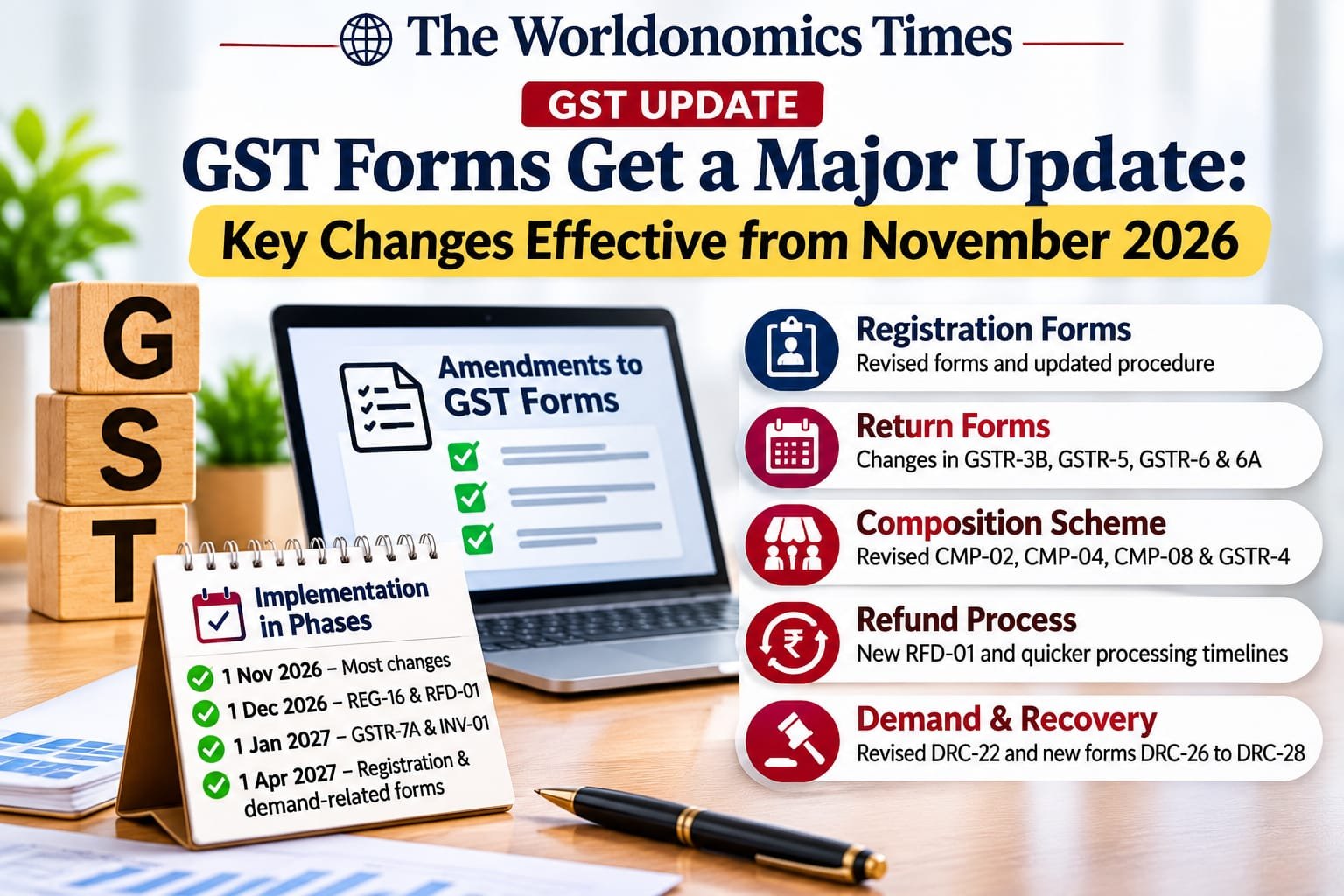
The amendments are significant because they aim to simplify GST procedures, improve digital compliance and make certain processes more structured and system-driven. While most of the changes came into effect on 1 November 2026, some amendments have been scheduled for December 2026, January 2027 and April 2027.
- Changes in GST Registration Forms
One of the important areas covered by the notification is GST registration.
FORM GST REG-01 has been substituted with a revised format. The updated form incorporates provisions relating to the new registration mechanism under Rule 14B, which allows eligible suppliers selling goods through e-commerce operators to obtain registration in another State or Union Territory without having a physical place of business there, subject to prescribed conditions.
The revised form also includes details relating to e-commerce operator warehouses, home-State GSTIN and supporting documents.
FORM GST REG-14 has also been substituted to align with the revised procedure for amendments in registration particulars.
These changes are intended to make registration-related procedures more organised and provide clearer documentation requirements.
- Revised Procedure for Amendment of Registration
The notification also substitutes Rule 19 of the CGST Rules, 2017, dealing with amendments in registration particulars.
Under the revised provisions, a registered person is generally required to submit an application for changes in relevant registration details within 15 days of the occurrence of such change.
The amended procedure also prescribes timelines for the proper officer to examine applications, issue notices seeking clarification and process responses.
This is an important development for businesses because changes in business addresses and other registration particulars must be reported correctly and within the prescribed period.
- Changes in GST Return Forms
Several GST return-related forms have also been amended.
FORM GSTR-3B: The reference to Rule 61(5) has been changed to Rule 61(1), aligning the form with the amended provisions.
FORM GSTR-5: The instructions have been revised to reflect the due date of the 13th day of the succeeding month instead of the earlier 20th-day reference.
FORM GSTR-6: Certain tables, including Tables 7 and 11, have been omitted. Related instructions concerning distribution within the same period have also been removed.
FORM GSTR-6A: The form has been updated to function as the auto-drafted statement for Input Service Distributors (ISDs) under Rule 60(2).
These amendments aim to improve consistency in return reporting and align the forms with the revised GST provisions.
- Important Changes for Composition Taxpayers
Composition taxpayers will also notice changes in their compliance forms.
FORM GST CMP-02 and FORM GST CMP-04 have been amended to revise the categories of registered persons eligible for the composition scheme.
FORM GST CMP-08 has also been revised to provide separate reporting of outward supplies of goods and services, including specified services supplied through e-commerce operators where the operator is liable to pay tax under Section 9(5) of the CGST Act.
Corresponding changes have also been made to FORM GSTR-4 and FORM GSTR-4A.
These amendments are important because they provide clearer reporting requirements for composition taxpayers and help distinguish different categories of outward supplies.
- Changes in GST Refund Procedures
Refund-related forms have also been covered under the notification.
FORM GST RFD-01 has been substituted with effect from 1 December 2026.
The revised form introduces structured, system-readable information for refund applications. It also incorporates additional statements and declarations relating to different categories of refund claims.
The objective is to reduce reliance on scanned documents and make refund application processing more organised.
The notification also contains amendments to refund-related rules, including provisions concerning acknowledgement of refund applications and provisional refunds.
Under the revised framework, the prescribed period for acknowledgement or issuance of a deficiency memo has been reduced from 15 days to 10 days. The system-based mechanism also provides for deemed acknowledgement where the prescribed period expires without action.
Certain eligible refund claims may also receive system-generated provisional sanction, subject to the applicable conditions and risk evaluation.
These changes are particularly relevant for exporters and businesses claiming refunds under the inverted duty structure.
- Changes in GST Demand and Recovery Forms
The notification also introduces changes in forms relating to GST demand and recovery proceedings.
FORM GST DRC-22 has been restructured into two parts. Part A relates to the order of provisional attachment, while Part B provides for an order rejecting an objection against such attachment.
This provides a more structured way of recording attachment orders and decisions on objections.
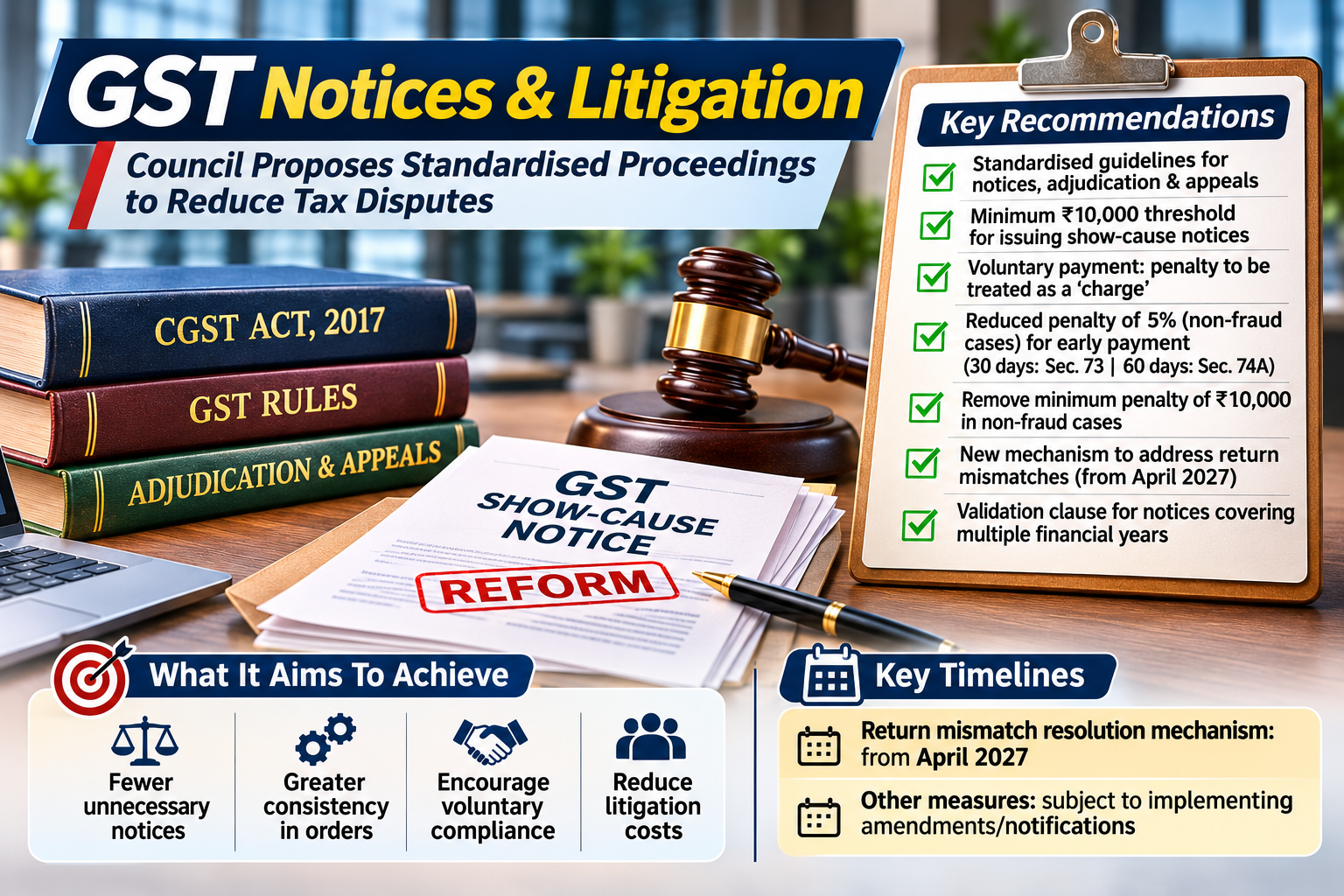
Further changes relating to show cause notices and demand proceedings are scheduled to take effect from 1 April 2027.
These include changes to FORM GST DRC-01, DRC-01A and DRC-07.
New forms GST DRC-26, DRC-27 and DRC-28 have also been introduced for matters relating to restrictions on debit from the electronic credit ledger under Rule 86A and the corresponding objection mechanism.
- Important Implementation Dates
The amendments under Notification No. 05/2026–Central Tax have different effective dates.
The key dates are:
- 1 November 2026: Most of the amendments to GST forms and rules came into effect.
- 1 December 2026: Changes relating to FORM GST REG-16 and the revised FORM GST RFD-01 become applicable.
- 1 January 2027: Changes relating to FORM GSTR-7A and FORM GST INV-01 become applicable.
- 1 April 2027: Several changes relating to registration suspension and cancellation, electronic credit ledger restrictions and standardised demand-related forms become applicable.
Businesses should carefully check the effective date applicable to each form rather than assuming that all amendments commenced on the same day.
What Should Taxpayers Do?
Taxpayers, accountants and GST practitioners should review the amended forms and procedures to understand their impact on existing compliance practices.
Businesses should update their accounting software, internal documentation, registration details and return-filing processes wherever required.
They should also keep track of further instructions issued by CBIC and GSTN regarding the implementation of the revised procedures.
Conclusion
Notification No. 05/2026–Central Tax represents a significant step towards improving India’s GST compliance framework. The changes cover multiple areas, including registration, returns, refunds, composition taxpayers and demand proceedings.
With amendments being implemented in different phases, businesses need to remain informed about the applicable provisions and timelines.
Understanding these changes in advance will help taxpayers prepare their systems, maintain accurate records and avoid unnecessary compliance difficulties.