India’s Digital Personal Data Protection (DPDP) framework is moving towards its next major implementation milestone in May 2027. For companies processing substantial volumes of personal data, compliance cannot remain only an IT or legal department responsibility. Boards need a clear view of the organisation’s readiness, risks, accountability and evidence.
1. Why does the board need a DPDP dashboard?
The DPDP Act, 2023 places responsibility for compliance on the Data Fiduciary, including where personal data is processed by a third-party Data Processor. Section 8 covers general obligations such as security safeguards, breach response, erasure, grievance redressal and accountability for processing undertaken on the organisation’s behalf.
Section 10 provides additional obligations for Significant Data Fiduciaries (SDFs). Sections 11–14 establish rights of Data Principals, including access to information, correction and erasure, grievance redressal and nomination.
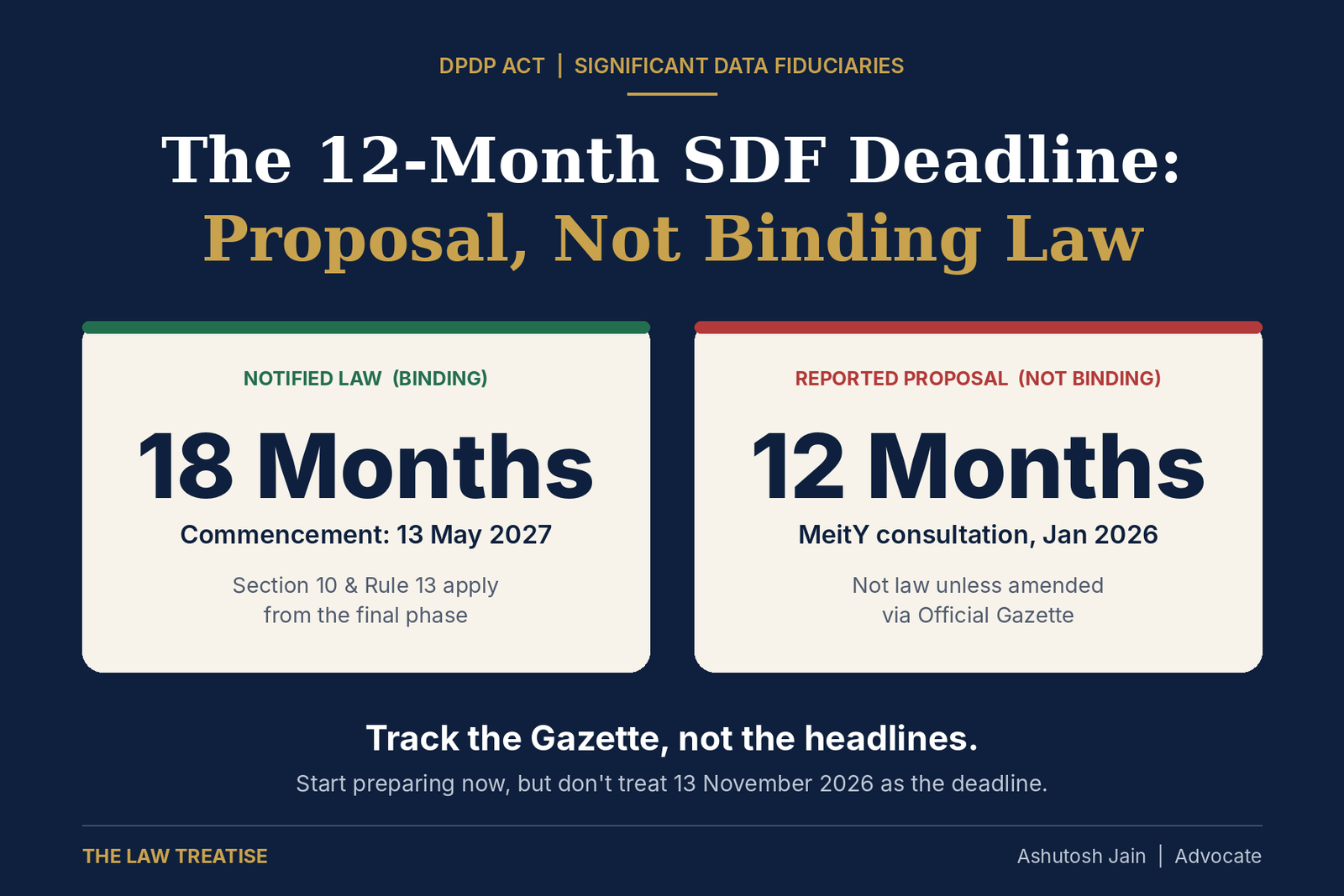
These provisions are scheduled to commence in the eighteen-month implementation phase following publication of the Act’s commencement notification. The corresponding Rules 3 and 5–16 are also in that phase. The commonly stated target date is 13 May 2027.
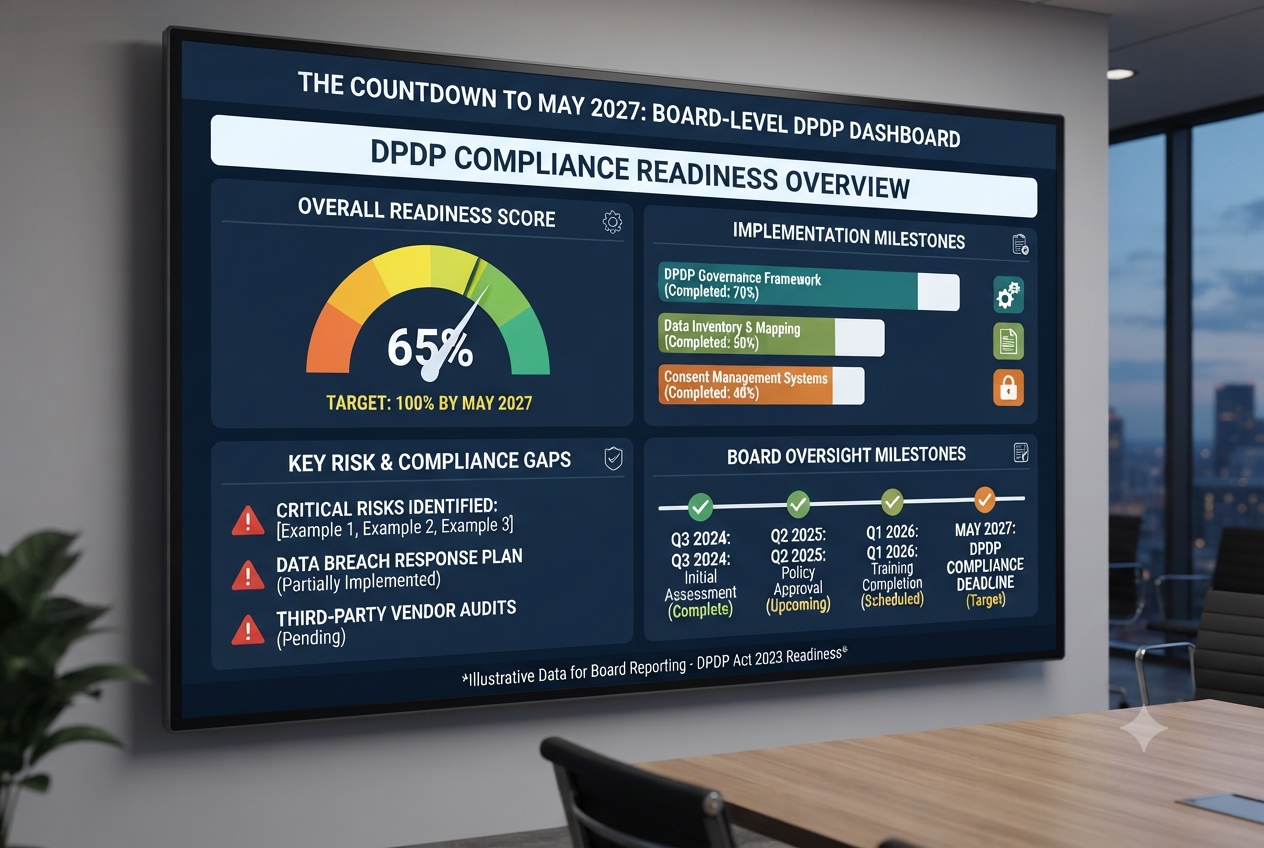
A board dashboard can help directors identify gaps before the obligations become operational. It is important to remember that the law does not prescribe a particular board-dashboard format. The dashboard is a recommended governance and oversight tool, not a statutory filing.
2. The seven essential components of a DPDP dashboard
1. Accountability and ownership
The first section should identify who is responsible for implementing DPDP compliance.
The board should be able to see:
- The designated senior executive responsible for privacy governance.
- The legal, IT, information security and business teams involved.
- The status of internal DPDP policies and procedures.
- Whether responsibilities are clearly assigned across departments.
- The escalation mechanism for significant privacy risks.
For organisations that receive SDF designation, Section 10 requires a Data Protection Officer based in India, responsible to the board or equivalent governing body. A company expecting possible SDF designation can assess its leadership and reporting structure in advance. However, this specific SDF appointment obligation should not be presented as already applicable to every large platform.
2. Personal data inventory and processing risks
A board should know what personal data the organisation collects and why.
The dashboard should show:
- Categories of personal data processed.
- Sources of collection and purposes of processing.
- Systems and locations where data is stored.
- Departments and business units accessing the data.
- High-risk processing activities, including profiling and automated decision-making.
This information helps management assess whether processing is necessary, proportionate and supported by an appropriate legal basis under the Act.
3. Vendor and Data Processor management
Section 8 makes the Data Fiduciary responsible for compliance even when processing is undertaken on its behalf by a Data Processor. It also requires engagement of a Data Processor for relevant activities under a valid contract.
The dashboard should therefore track:
- Number and category of vendors handling personal data.
- Whether appropriate data-processing contracts are in place.
- Vendor security assessments and unresolved findings.
- Data access granted to vendors.
- Sub-processors and onward sharing arrangements.
- Contractual and operational procedures for deletion and breach reporting.
A vendor’s failure to protect personal data can create serious regulatory and reputational exposure for the organisation. Outsourcing processing does not outsource the Data Fiduciary’s statutory responsibility.
4. Data Principal rights and grievance redressal
Sections 11–14 provide important rights to individuals. A board should receive periodic information about the organisation’s ability to handle these requests.
Useful dashboard indicators include:
- Requests for access to personal data.
- Requests for correction, completion, updating and erasure.
- Grievances received and resolved.
- Average response and resolution times.
- Pending requests and escalated complaints.
- Availability of accessible channels for exercising rights.
Rule 14 requires Data Fiduciaries to prominently publish the means through which Data Principals may exercise their rights and relevant information about the process. These systems should be tested before the implementation deadline.
5. Personal data breaches and security safeguards
Section 8 requires reasonable security safeguards to prevent personal data breaches and prescribes breach intimation to the Board and affected Data Principals.
The dashboard should report:
- Number of security incidents and confirmed personal data breaches.
- Severity and categories of affected data.
- Number of affected individuals, where known.
- Time taken to detect, contain and investigate incidents.
- Status of notifications and corrective measures.
- Results of security testing and vulnerability assessments.
The board should not receive only a count of incidents. It should understand the organisation’s ability to detect, respond to and learn from them.
6. SDF readiness, DPIA and independent audit
For a company that may be designated as an SDF, this section deserves particular attention.
Section 10 provides for an India-based DPO, an independent data auditor, periodic Data Protection Impact Assessments and audits. Rule 13 requires an SDF to conduct a DPIA and audit once every twelve months from the date of its designation or inclusion in a notified class. Significant observations must be reported to the Board.
The dashboard can track:
- Whether SDF designation has been officially notified.
- Readiness for appointment of an independent data auditor.
- DPIA methodology and high-risk processing assessments.
- Algorithmic systems reviewed for risks to Data Principals’ rights.
- Open audit findings and remediation deadlines.
- Any applicable government-specified restrictions on transfers of personal data and related traffic data outside India.
Importantly, a large platform is not automatically an SDF. Designation requires action by the Central Government under Section 10.
7. Evidence and implementation progress
Compliance should be demonstrable, not merely asserted.
The dashboard should record the status and availability of:
- Privacy notices and consent records.
- Data-processing contracts.
- Security policies and incident registers.
- Data retention and deletion records.
- Rights-request and grievance logs.
- DPIA and audit reports, where applicable.
- Staff training and internal compliance reviews.
A simple red-amber-green status can help directors identify unresolved issues, but every status should be supported by evidence and an accountable owner.
3. What should the board review before May 2027?
The board should receive a periodic DPDP readiness report, with priority given to high-risk processing, unresolved security issues, vendor exposure and gaps in rights-management systems.
Rule 4, concerning Consent Managers, is scheduled to commence on 13 November 2026. It is a separate milestone and does not bring the principal obligations under Sections 8 and 10–14 into force early. Those provisions fall within the eighteen-month phase.
Conclusion: Make privacy governance measurable
A board-level DPDP dashboard should do more than display whether policies have been drafted. It should show who is accountable, where personal data is exposed, whether individuals can exercise their rights, how vendors are controlled and whether the organisation can produce evidence of compliance.
The May 2027 milestone should therefore be treated as a governance deadline, not merely an IT implementation date. Organisations that establish clear ownership and measurable oversight now will be better placed to meet their obligations when the relevant provisions commence.