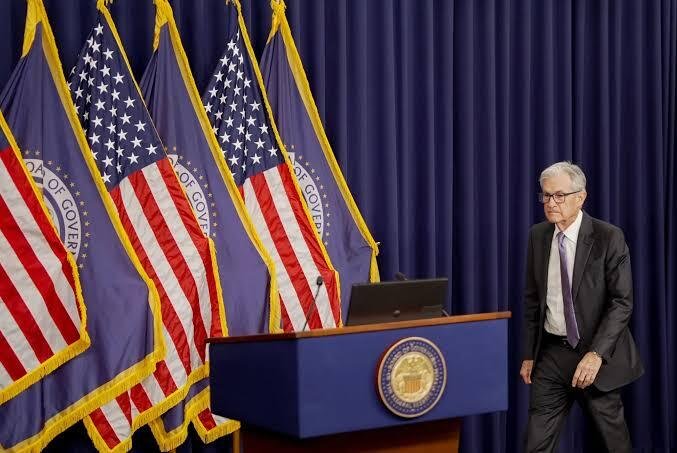
Federal Reserve Faces a Challenging Policy Outlook
The outlook for US interest rates remains uncertain as renewed inflation concerns complicate the monetary policy decisions facing the Federal Reserve. Economists surveyed by Reuters largely expected the US central bank to hold interest rates steady in October, while some anticipated a possible rate increase in December if inflationary pressures persisted.
These expectations reflect economists’ assessments of the economic outlook and should not be interpreted as confirmed Federal Reserve decisions. The central bank’s actual policy path will depend on incoming economic data, inflation trends, labour-market conditions and developments in global financial markets.
The uncertainty comes at a critical time for the US economy. Higher energy prices, persistent cost pressures and international geopolitical tensions are complicating efforts to maintain price stability without unnecessarily weakening economic activity.
For investors, businesses and households, the direction of interest rates will remain an important factor influencing borrowing costs, investment decisions, consumer spending and financial-market performance.
Renewed Inflation Concerns Shape Expectations
Inflation remains central to the Federal Reserve’s policy decisions. Although monetary tightening can help reduce demand-driven price pressures, increases in energy and other essential input costs can make the process more complicated.
Higher oil prices can raise petrol and transportation expenses, increasing costs for manufacturers, retailers and logistics companies. Businesses may pass some of these increases on to consumers, potentially extending inflationary pressure across the economy.
If energy-related price increases prove temporary, policymakers may be able to look beyond their immediate effects. However, if higher costs become embedded in wages, services prices and consumer expectations, inflation could remain elevated for longer than anticipated.
This distinction is particularly important because monetary policy operates with a time lag. Interest-rate changes influence borrowing, spending and investment gradually rather than immediately.
The Federal Reserve must therefore evaluate whether inflation is likely to return towards its 2% target or whether additional policy restraint may be necessary.
Why a December Rate Increase Is Being Considered
Economists’ expectations of a possible December rate increase reflect concern that inflation could remain more persistent than previously anticipated. A central bank facing renewed price pressures may decide that maintaining or increasing borrowing costs is necessary to prevent inflation expectations from rising.
Higher interest rates make loans more expensive for households and businesses. Mortgage payments, credit-card borrowing and corporate financing can become more costly, encouraging consumers and companies to reduce spending.
This can moderate demand and help bring inflation under control. However, higher rates also carry economic costs, particularly for interest-sensitive sectors such as housing, construction and business investment.
A potential rate increase would therefore depend on the balance of risks facing the US economy. If inflation remains elevated and employment conditions stay relatively strong, policymakers could face greater pressure to maintain a restrictive stance. If economic activity weakens significantly, the case for additional tightening could become less compelling.
Importantly, a December increase remains a possibility raised by surveyed economists, not a guaranteed outcome or an official commitment by the Federal Reserve.
Impact on Borrowers, Businesses and Financial Markets
The uncertainty surrounding US interest rates has implications far beyond monetary policy. Households may face higher borrowing costs if interest rates remain elevated, potentially affecting home purchases, vehicle financing and consumer credit.
Businesses could also reconsider expansion plans if financing becomes more expensive. Small and medium-sized enterprises, which often depend on bank loans, may be particularly sensitive to tighter credit conditions. Reduced investment could eventually affect hiring, productivity and economic growth.
Financial markets are equally responsive to interest-rate expectations. Anticipation of higher rates can push government bond yields upward and influence equity valuations, particularly for companies whose expected profits depend heavily on future growth.
The US dollar may also be affected as investors reassess the relative returns available from dollar-denominated assets. Currency movements can influence international trade, commodity prices and capital flows, creating additional consequences for economies around the world.
However, market reactions will depend on the reasons behind any policy change, not simply the direction of interest rates. A rate increase driven by persistent inflation may be interpreted differently from one reflecting stronger-than-expected economic activity.
Global Economic Consequences
Changes in US monetary policy have substantial international implications because the dollar plays a central role in global trade and finance.
If US interest rates remain high, emerging economies could face pressure from capital outflows, currency volatility and higher borrowing costs. Countries with significant dollar-denominated debt may find repayments more expensive, particularly if their currencies weaken against the dollar.
Higher US yields can also influence investment decisions worldwide, as international investors compare the returns available across different markets. This may make it more difficult for some developing economies to attract affordable financing.
For countries importing oil and other commodities, the interaction between energy prices and currency movements could intensify inflationary pressures. Central banks outside the United States may consequently face difficult decisions of their own, balancing domestic growth against price stability and exchange-rate risks.
At the same time, a measured and transparent approach by the Federal Reserve could help reduce uncertainty and support more orderly adjustments across international financial markets.
What Could Influence the Federal Reserve’s Next Move?
Several indicators will be important in determining the direction of US monetary policy.
First, inflation data will remain crucial, particularly measures that help policymakers assess underlying price pressures beyond volatile food and energy components. Evidence that inflation is easing could reduce the need for further tightening, while persistent increases may strengthen the case for maintaining restrictive conditions.
Second, employment figures will help establish whether the economy is cooling. A resilient labour market could give policymakers more room to focus on inflation, whereas weakening hiring and rising unemployment could increase concerns about economic growth.
Third, consumer spending, business investment and financial-market conditions will help determine whether borrowing costs are already restraining economic activity.
Finally, developments in global energy markets and geopolitical conditions could alter the inflation outlook rapidly. Policymakers will need to distinguish temporary supply shocks from pressures that threaten longer-term price stability.
The Worldonomics Times View
The Worldonomics Times believes that the uncertainty surrounding US interest rates highlights the difficult balance central banks must maintain between controlling inflation and protecting economic growth.
A possible December rate increase should not be treated as inevitable. The Federal Reserve will need to assess the evidence available at the time, including inflation, employment, consumer demand and financial conditions, before determining its next steps.
For businesses and investors, the prudent response is to prepare for multiple interest-rate scenarios rather than rely on a single forecast. Households should also remain mindful of borrowing costs, particularly when making long-term financial commitments.
International policymakers must recognise that US monetary decisions can influence currencies, capital flows and financing conditions across the global economy. Clear communication and credible policy frameworks can help reduce the risk of unnecessary market volatility.
Ultimately, the central challenge is to restore and preserve price stability without imposing excessive costs on employment, investment and economic activity. As the year approaches its final months, the Federal Reserve’s decisions will remain closely watched, but the direction of policy will depend on economic evidence rather than market expectations alone.