By Worldonomics Times
October 27, 2026
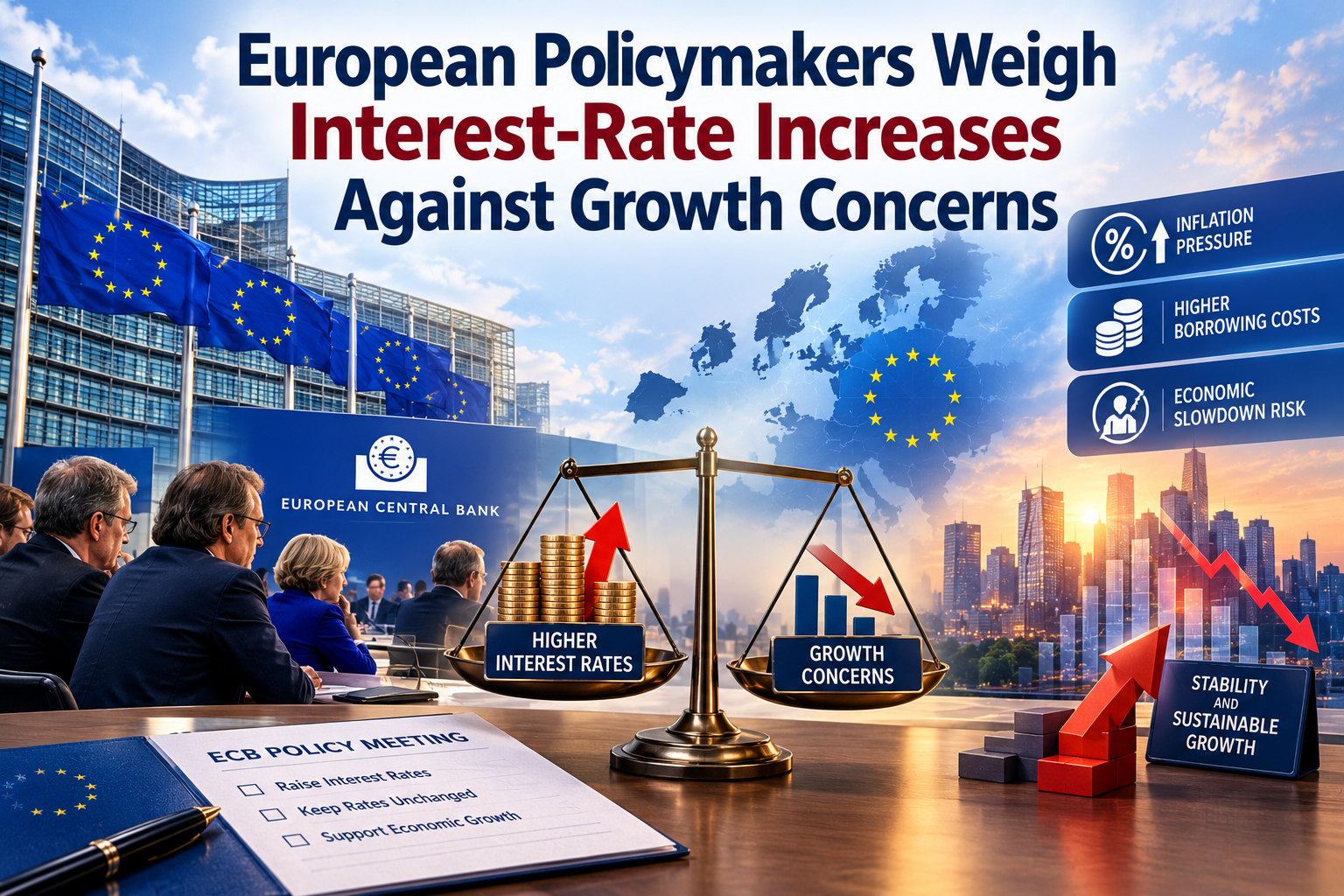
European policymakers are facing a difficult economic balancing act as they assess whether higher interest rates are necessary to control inflation or whether maintaining restrictive monetary policies could further weaken economic growth. With inflationary pressures, borrowing costs, energy-market uncertainty, and uneven business activity influencing the outlook, central banks must carefully evaluate their next steps to maintain price stability without placing excessive pressure on households and businesses.
The European Central Bank (ECB), which sets monetary policy for the euro area, plays a central role in this debate. Its decisions influence borrowing costs, consumer spending, business investment, and financial markets across member countries. Meanwhile, the Bank of England faces similar challenges in the United Kingdom, where inflation, wage growth, and domestic economic conditions continue to shape monetary policy discussions.
Inflation Remains a Central Concern
Inflation has been one of Europe’s most significant economic challenges in recent years. Energy-price fluctuations, supply-chain disruptions, labour costs, and geopolitical uncertainty have contributed to changing price pressures across the region. Although inflation differs between countries and sectors, policymakers remain concerned about the possibility that price increases could persist.
Higher interest rates are a traditional tool for controlling inflation. When borrowing becomes more expensive, households may reduce spending, while businesses may delay investments and expansion plans. This can moderate demand across the economy and reduce the pressure on companies to increase prices.
However, interest-rate increases also carry risks. Monetary policy generally affects the economy with a delay, meaning that decisions taken today may influence inflation, employment, and investment months later. If central banks raise rates too aggressively, they could weaken economic activity more than necessary. On the other hand, reducing rates prematurely could allow inflationary pressures to become entrenched.
Economic Growth Faces Mounting Challenges
Economic growth remains an important consideration for European policymakers. Businesses in several sectors face pressure from elevated financing costs, uncertain demand, and changing international trade conditions. Manufacturing, construction, and real estate are particularly sensitive to fluctuations in borrowing costs.
Higher interest rates increase the expense of financing machinery, infrastructure, property, and business expansion. Smaller enterprises may face additional difficulties because they often have limited access to affordable credit. When companies postpone investment, the consequences can extend beyond immediate business activity, affecting productivity, innovation, and employment opportunities.
Households also experience the effects of tighter monetary policy. Higher mortgage payments, more expensive consumer loans, and increased credit-card costs can reduce disposable income. As consumers become more cautious, spending on retail goods, travel, and other non-essential purchases may decline.
These developments create a difficult situation for policymakers. They must prevent inflation from undermining purchasing power while avoiding unnecessary damage to consumer confidence and business investment.
The European Central Bank’s Policy Dilemma
The ECB’s primary objective is to maintain price stability, with a medium-term inflation target of 2%. Its decisions depend on inflation projections, underlying price pressures, economic growth, and the effects of previous monetary-policy measures.
If inflation remains above target for an extended period, policymakers may consider further rate increases to prevent persistent price pressures. However, if economic activity weakens and inflation begins to moderate, maintaining excessively restrictive financial conditions could deepen the slowdown.
The challenge is complicated by differences among euro-area economies. Some countries have stronger domestic demand, while others face weaker industrial production or greater sensitivity to energy prices and borrowing costs. A common monetary policy must account for these different economic conditions.
Energy prices present another complication. An increase in oil or natural-gas prices can push inflation higher while simultaneously reducing household purchasing power and increasing production costs. Interest-rate changes cannot directly resolve energy shortages or geopolitical disruptions, although monetary policy can influence how these shocks affect broader prices and inflation expectations.
Implications for Businesses and Financial Markets
The direction of European interest rates will influence corporate investment decisions, financing strategies, and consumer demand. Businesses may need to reconsider expansion plans, manage debt carefully, and improve operational efficiency to remain competitive in a high-cost environment.
Financial markets will also respond to changes in monetary-policy expectations. Bond yields, equity valuations, and currency movements can shift as investors assess the likely direction of interest rates. Companies involved in international trade may be particularly affected by exchange-rate fluctuations and changing demand from European markets.
Governments can support economic resilience through targeted assistance for vulnerable households, investment in energy security, workforce development, and measures that improve productivity. Such policies can complement monetary policy, although broad-based spending that stimulates demand excessively could complicate efforts to control inflation.
The Worldonomics Times View
European policymakers must base their decisions on a careful assessment of incoming economic data rather than committing prematurely to a particular interest-rate path. Inflation trends, wage growth, employment figures, energy prices, and business confidence will remain important indicators in determining whether further tightening or monetary easing is appropriate.
The challenge is to establish financial conditions that restore price stability while allowing businesses to invest and households to maintain sustainable spending levels. Clear communication from central banks will also be essential to reducing uncertainty and helping markets understand the reasoning behind policy decisions.
Conclusion
Europe’s interest-rate debate reflects a broader challenge facing modern economies: balancing price stability with sustainable economic growth. Higher rates can help contain inflation, but they can also discourage investment, increase borrowing costs, and weaken consumption. Conversely, easing monetary policy too early may risk prolonging inflationary pressures.
The success of European policymakers will depend on their ability to respond flexibly to changing economic conditions while maintaining credible inflation objectives. A balanced approach, supported by productive investment, responsible fiscal policies, and stable financial institutions, will be important in strengthening Europe’s long-term economic prospects.
For households, businesses, and investors alike, the coming policy decisions will remain significant indicators of Europe’s economic direction and its capacity to navigate uncertainty without sacrificing long-term growth.