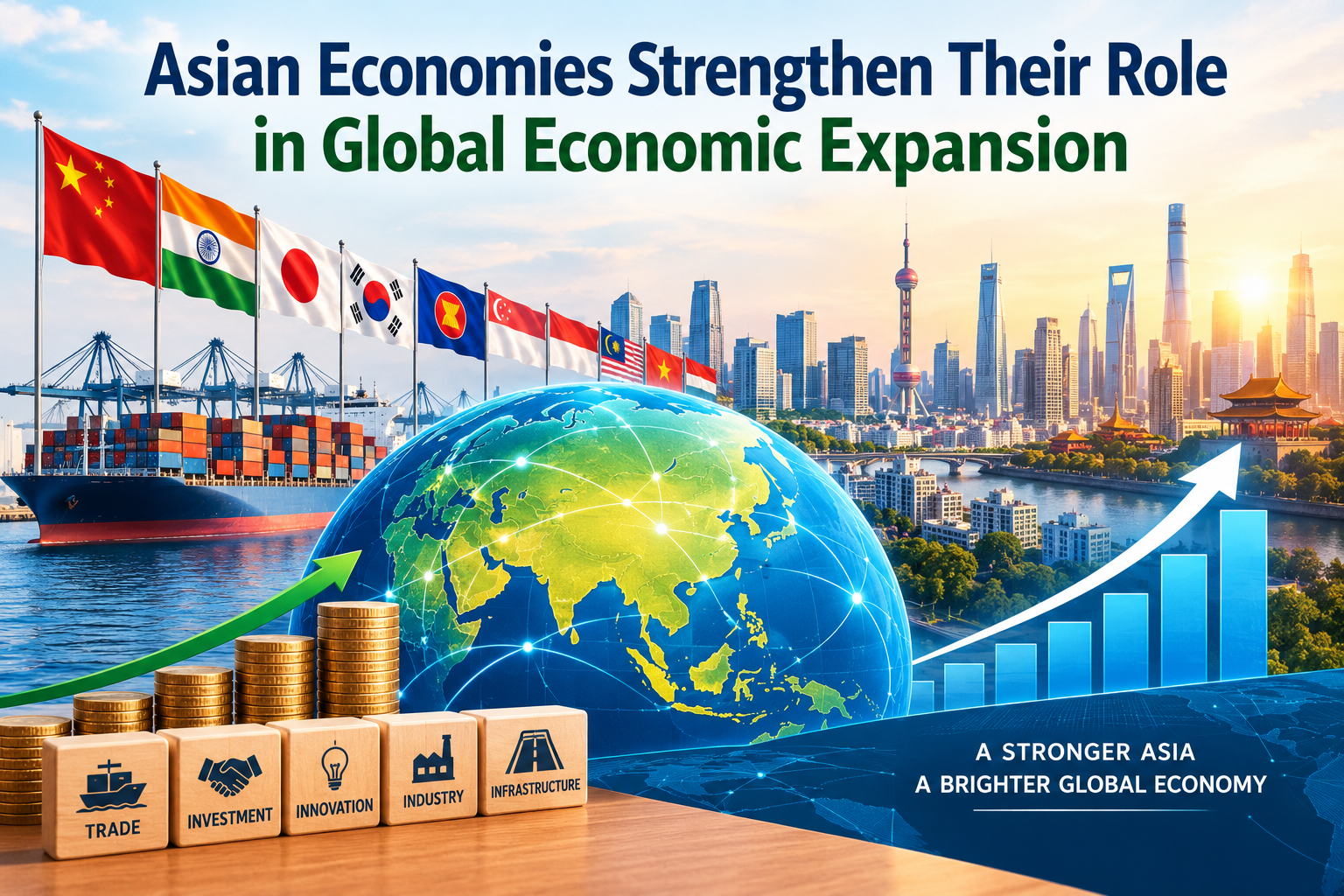
Rising energy costs, trade uncertainty and uneven gains from artificial intelligence are testing Asia’s economic resilience, even as the region remains a major contributor to global growth.
The Worldonomics Times | 28 October 2026
Asia’s Growth Outlook Faces Fresh Challenges
Asia-Pacific is expected to remain one of the world’s most important engines of economic growth, but its expansion is likely to lose momentum over the coming year. The International Monetary Fund (IMF), in its October 2026 Regional Economic Outlook, has projected slower growth as the region confronts higher energy costs, shifting global trade patterns and uncertainty surrounding the technology sector.
According to the IMF, Asia-Pacific growth is projected to moderate from 5.0% in 2025 to 4.8% in 2026 and 4.4% in 2027. Although the latest projections are stronger than earlier estimates, the Fund has warned that risks to the outlook remain tilted towards the downside.
The assessment highlights an important distinction: Asia’s economy has demonstrated resilience, but the forces supporting growth are not benefiting every country equally. Economies connected to strong technology demand are gaining momentum, while energy-dependent and financially vulnerable nations face mounting pressures.
Energy Prices Put Pressure on Businesses and Households
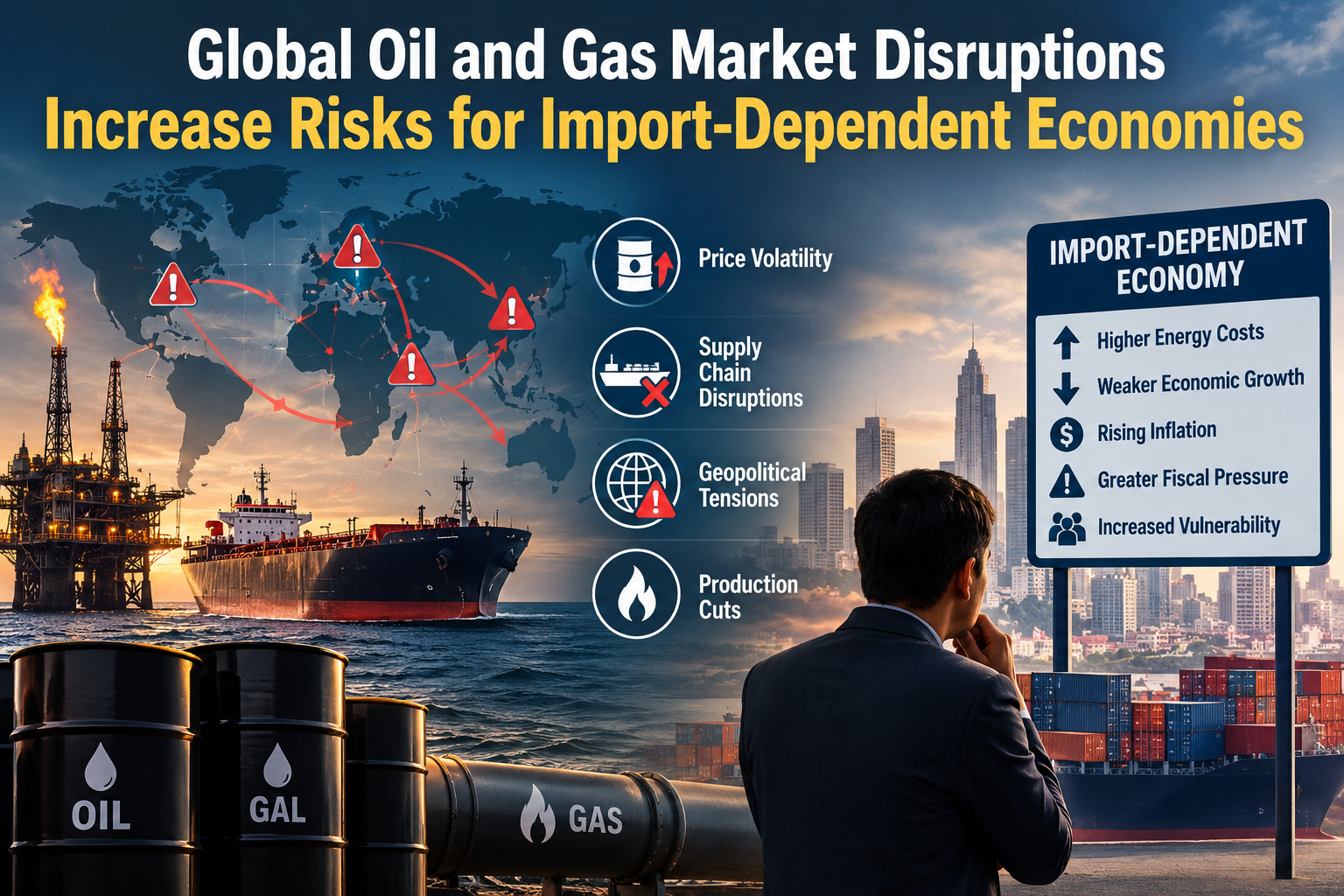
One of the most significant challenges identified by the IMF is the energy shock associated with conflict in the Middle East. Higher oil and fuel prices can increase transportation, electricity and manufacturing costs, affecting businesses throughout the region.
Countries that rely heavily on imported energy are particularly exposed. When international fuel prices rise, governments and companies may face larger import bills, while households experience higher expenses for transport, food distribution and other essentials.
These pressures can weaken consumer spending and reduce business profitability. Companies facing higher production costs may increase prices, absorb lower margins or postpone expansion plans. If inflation remains persistent, central banks could face pressure to maintain restrictive monetary policies, potentially raising borrowing costs and slowing investment.
The effects are likely to vary according to countries’ energy supplies, fiscal resources and capacity to diversify imports. The IMF has emphasised that adaptation has helped the region manage recent disruptions, but warned that these protective measures have limits.
Artificial Intelligence Creates Uneven Opportunities
The rapid expansion of artificial intelligence is providing a significant boost to parts of Asia’s economy. Demand for semiconductors, electronic components, data infrastructure and related technologies has supported activity in economies integrated into global technology supply chains.
However, the benefits are uneven. Countries and industries with strong positions in advanced manufacturing and digital services are better placed to benefit than economies with limited exposure to technology-related investment.
The IMF has also warned that a sharp correction in AI-related investment could create substantial risks. If expectations about future profitability decline, companies may reduce spending on technology infrastructure, affecting manufacturers, exporters and financial markets across the region.
At the same time, AI is changing labour markets. The Fund’s research, based on approximately 40 million online job postings across 19 Asian economies, found that employer demand had fallen by nearly 10% in occupations more exposed to AI compared with less-exposed occupations. This suggests that technological change could complicate employment prospects, particularly for young people entering the workforce.
Governments will need to strengthen digital education, vocational training and reskilling programmes so that workers can adapt as industries evolve.
Trade Uncertainty Continues to Shape Growth
Asia’s economic model has long depended on international trade, manufacturing and participation in global supply chains. Changes in tariffs, trade restrictions and the reorganisation of production networks are therefore influencing investment decisions across the region.
Some economies have benefited from supply-chain diversification as businesses seek alternative production locations. Others face uncertainty over export demand, market access and the future direction of international trade policy.
China’s economic performance remains particularly important for the region because of its extensive trading relationships with neighbouring economies. Slower Chinese growth can affect demand for commodities, industrial components and consumer goods, although some businesses may benefit from lower-priced intermediate products.
The IMF has highlighted services trade as an additional opportunity. Reducing unnecessary barriers to cross-border services, improving digital connectivity and strengthening regional cooperation could help Asian economies diversify exports and reduce their dependence on goods trade alone.
Financial Risks and Public Debt Require Attention
Another concern is the potential spillover from rising global bond yields and uncertainty surrounding US monetary policy. Higher yields in major financial markets can encourage investors to reassess their holdings in emerging economies, increasing volatility in exchange rates and bond markets.
Currency depreciation can make imported goods and foreign-currency debt more expensive. Governments with high borrowing requirements may also face rising debt-servicing costs, leaving less room to finance infrastructure and social programmes.
The IMF has urged policymakers to preserve financial stability, maintain credible monetary frameworks and ensure that fiscal support remains targeted and temporary. Broad subsidies or poorly designed spending measures could place additional pressure on public finances without addressing the underlying causes of higher prices.
Countries will need to balance immediate support for vulnerable households with longer-term efforts to rebuild fiscal buffers and maintain investor confidence.
The Worldonomics Times View
The IMF’s warning should not be interpreted as evidence that Asia is losing its economic importance. Rather, it highlights the need to strengthen resilience as the sources of growth become more uneven and external risks intensify.
Governments should prioritise energy diversification, investment in renewable power, stronger social safety nets and policies that encourage productive private investment. Greater regional integration and fewer unnecessary barriers to services trade could also create new opportunities for businesses and workers.
Equally important is ensuring that the benefits of technological progress reach beyond a narrow group of industries. Education, digital skills and workforce development will be essential to help workers adapt to AI-driven changes and enable more economies to participate in the technology boom.
Asia’s long-term prospects will depend on how effectively its economies respond to these challenges. With prudent fiscal management, credible monetary policies and sustained structural reforms, the region can navigate slower growth while protecting employment, financial stability and living standards.