By Worldonomics Times
October 27, 2026
Introduction
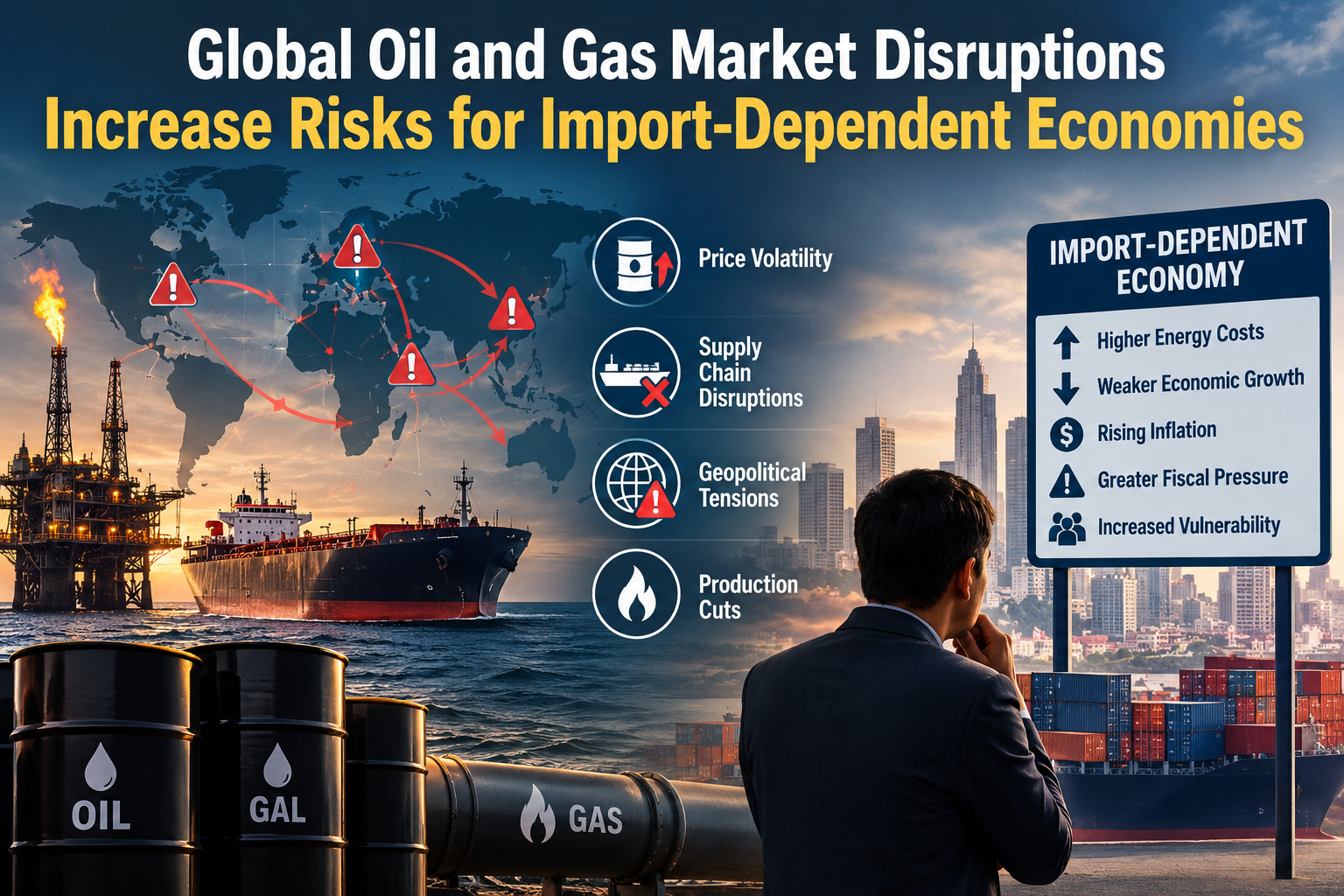
Global oil and gas markets remain highly sensitive to geopolitical tensions, supply-chain disruptions, production decisions, and fluctuations in international demand. For economies that depend heavily on imported energy, these developments create significant economic risks, affecting inflation, currency stability, industrial production, and government finances. As energy continues to underpin transportation, manufacturing, agriculture, and electricity generation, disruptions in global supplies can have consequences far beyond the energy sector.
Recent volatility in international energy markets has reinforced the importance of energy security and diversified supply sources. Import-dependent economies face a particularly difficult challenge: ensuring reliable access to essential fuels while protecting households and businesses from sudden increases in energy costs. Managing these risks has become a central priority for governments, policymakers, and industries worldwide.
Geopolitical Tensions and Supply Disruptions
Geopolitical instability is one of the major factors influencing global oil and gas markets. Conflicts in energy-producing regions, international sanctions, trade restrictions, and disruptions to shipping routes can limit supplies or increase transportation costs. Even the possibility of an interruption can trigger market uncertainty, encouraging traders to adjust prices in anticipation of tighter availability.
Strategic maritime routes are particularly important to international energy trade. The Strait of Hormuz, for example, is a critical passage for global oil and liquefied natural gas shipments. Any significant disruption to shipping through such routes can affect energy deliveries, insurance premiums, freight costs, and market confidence.
Production decisions by major oil-producing countries also influence global prices. Changes in output, maintenance-related shutdowns, infrastructure damage, and unexpected declines in production can tighten supply. Meanwhile, natural gas markets face additional challenges because transportation often depends on specialised pipelines and liquefied natural gas facilities.
These interconnected factors make energy markets vulnerable to sudden changes, leaving importing nations exposed to price movements beyond their direct control.
Economic Pressures on Import-Dependent Countries
Countries that rely substantially on imported oil and gas are particularly vulnerable when international prices rise. Higher energy import bills increase the cost of meeting domestic demand and can place pressure on national current-account balances. If import spending rises significantly, governments and businesses may face greater foreign-exchange requirements, potentially weakening domestic currencies.
Currency depreciation can intensify the problem by making dollar-denominated energy imports more expensive in local-currency terms. This creates an additional inflationary channel, particularly in countries where transportation, electricity generation, and industrial production depend heavily on imported fuels.
India, Japan, and several European economies illustrate different dimensions of this challenge. India must manage the cost of importing crude oil while supporting the energy needs of a large and growing economy. Japan relies on overseas supplies for much of its fossil-fuel consumption, while many European countries have worked to diversify natural gas supplies and strengthen energy resilience.
For these economies, sustained increases in oil and gas prices can widen trade deficits, raise production costs, and complicate monetary and fiscal policy decisions.
Inflation and Pressure on Households
Energy-price increases frequently spread through the wider economy. Higher fuel costs raise transportation and logistics expenses, making it more expensive to move food, industrial materials, and consumer goods. Businesses may pass these additional costs on to customers, contributing to broader inflation.
Households can face higher prices for public and private transport, cooking fuels, electricity, and everyday essentials. Lower-income families are often particularly affected because energy and food account for a larger share of their budgets.
Governments may respond through fuel-tax adjustments, subsidies, price controls, or targeted financial assistance. Although these measures can provide temporary relief, prolonged and broad-based subsidies may strain public finances and reduce incentives to conserve energy.
Central banks must also consider whether an energy-price shock is temporary or likely to influence inflation expectations and wage negotiations. Tightening monetary policy in response to supply-driven inflation can weaken economic activity, while ignoring persistent second-round price effects may create longer-term challenges.
Implications for Industry and International Trade
Industrial sectors that depend heavily on energy, including chemicals, steel, fertilisers, cement, aviation, and shipping, are particularly exposed to fuel-price volatility. Higher operating costs can reduce profit margins, delay investment, and weaken international competitiveness.
Small and medium-sized enterprises may face greater difficulties absorbing sudden cost increases because they often have limited financial reserves and less bargaining power when negotiating energy contracts. Export-oriented manufacturers can also lose competitiveness if domestic production costs rise faster than those of international rivals.
Disruptions to natural gas supplies can affect fertiliser production and electricity generation, with potential consequences for agricultural productivity and food prices. Similarly, rising shipping and aviation fuel costs can increase the expense of international trade, affecting supply chains across multiple industries.
As a result, energy-market instability can slow economic growth even in countries that do not directly experience geopolitical disruptions.
Strategies for Strengthening Energy Security
Import-dependent economies can reduce their exposure through a combination of short-term safeguards and long-term structural reforms. Diversifying suppliers and transportation routes can reduce reliance on individual producers or vulnerable shipping corridors. Strategic petroleum reserves can provide temporary protection during supply emergencies, while flexible procurement arrangements can help governments and companies respond to changing market conditions.
Investment in renewable energy, nuclear power where appropriate, electricity grids, energy storage, and efficiency improvements can gradually reduce dependence on imported fossil fuels. Expanding domestic energy production, where economically and environmentally viable, may also strengthen supply resilience.
Regional cooperation can further improve energy security through shared infrastructure, coordinated emergency planning, and cross-border electricity connections. However, diversification requires investment, and alternative supplies may not always be available at competitive prices during periods of global disruption.
The Worldonomics Times View
Global oil and gas disruptions demonstrate that energy security is inseparable from economic stability. Import-dependent economies must prepare for price volatility rather than relying solely on short-term responses after a crisis emerges. Diversified supply networks, adequate strategic reserves, prudent fiscal management, and sustained investment in cleaner energy technologies can help reduce vulnerability.
Governments must also balance immediate affordability with long-term resilience, ensuring that support for households and businesses remains financially sustainable. International cooperation and transparent energy policies will be essential to managing shared risks.
Conclusion
The growing uncertainty surrounding global oil and gas markets presents a continuing challenge for import-dependent economies. Supply disruptions can increase inflation, weaken currencies, raise industrial costs, and place pressure on public finances. Although governments cannot eliminate every external risk, they can reduce their exposure through better preparation, diversified energy sources, and investment in efficiency and alternative technologies.
Ultimately, economies that combine reliable energy access with sound economic planning will be better positioned to withstand future market shocks. Energy resilience is no longer merely a sectoral concern; it is a fundamental requirement for sustainable growth, international competitiveness, and long-term economic security.